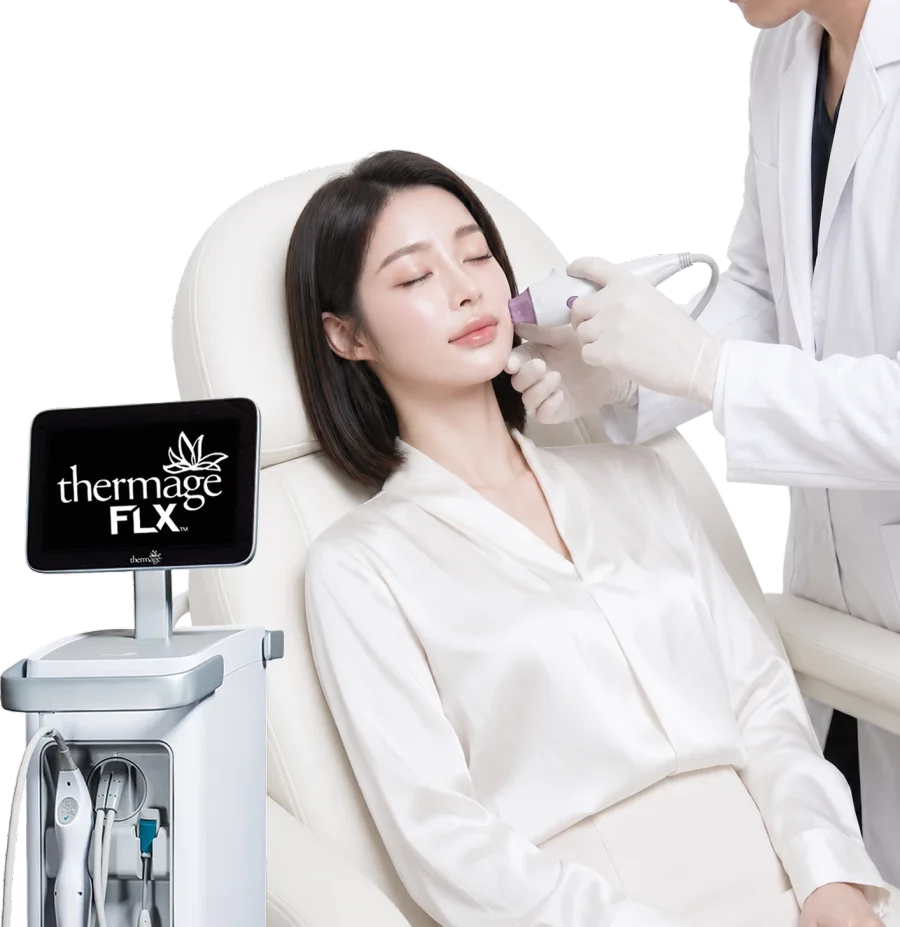
Solta Medical · AccuREP Technology
Thermage FLX
Thermage FLX in Gangnam, Seoul. AccuREP real-time feedback, Comfort Pulse, board-certified dermatologist. Over two decades of clinical evidence.
Lifting Comparison
Thermage FLX vs Ultherapy Prime — how RF and micro-focused ultrasound differ in mechanism, depth, and evidence. Seoul dermatologist decision guide.
Your Journey
Thermage FLX vs Ultherapy Prime — how RF and micro-focused ultrasound differ in mechanism, depth, and evidence. Seoul dermatologist decision guide.

Both are non-surgical, FDA-cleared, single-session treatments with 1–2 year duration. Both are marketed in Seoul as "lifting." But they use fundamentally different energy types and target different tissue layers — and the patients who understand that difference make much better treatment decisions than the patients who just see "the popular lifting device."
The short version:
A treatment that works "at the SMAS" is not automatically better than one that works in the dermis — it depends on what is actually changing in your face. A patient whose main complaint is thin, crepey skin does not need SMAS work. A patient with jowl descent and jawline loss will not get structural correction from surface-only tightening.

This guide walks through the clinical evidence for each, what the comparison table actually supports, and how a dermatologist decides which one — or both — fits a given face.
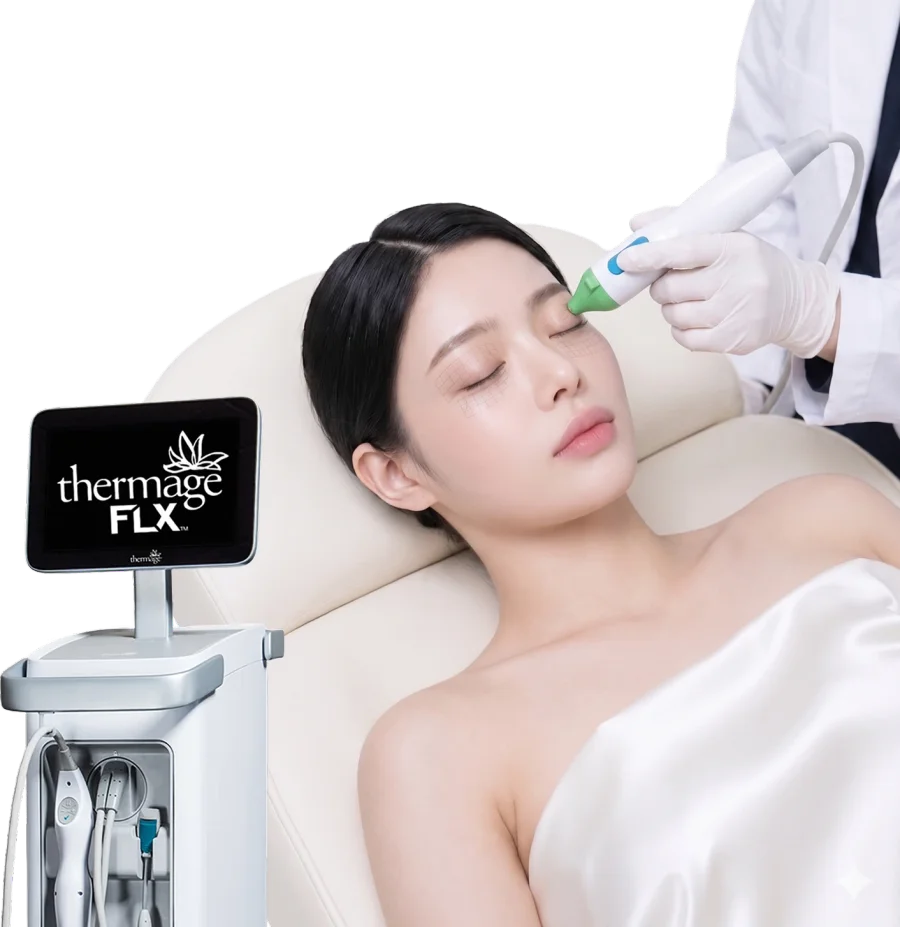
Thermage is the brand name for Solta Medical's monopolar radiofrequency platform. It has been FDA-cleared since 2002 for non-invasive skin tightening, making it one of the longest-running energy-based aesthetic devices in the world. The current 4th-generation device is Thermage FLX, cleared under FDA 510(k) K170758 in 2017.
How monopolar RF works:
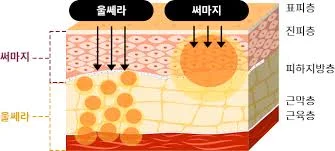
Unlike a laser (which delivers light absorbed by a specific chromophore), monopolar RF uses an electrical current that flows between a treatment tip and a return pad placed on the patient's back. The resistance of the dermis to this current generates bulk heat — roughly 65–75°C in the mid-dermis and subdermis. The skin surface is protected by a cryogen spray that fires immediately before and after each pulse.
Two things happen in tissue:

Four generations of Thermage:

Patients treated with earlier-generation devices often remember significant pain. Modern Thermage FLX is substantially more comfortable but is not painless — it remains a heat-based treatment and typically ranks around 4–6 on a 10-point pain scale in most published series.
Clinical evidence:
The multicenter pivotal trial (Fitzpatrick R, Geronemus R, Goldberg D, et al. Lasers in Surgery and Medicine. 2003;33(4):232-242) established that a single monopolar RF treatment produced measurable periorbital tightening with acceptable safety in 86 subjects. This was the data that supported the initial FDA clearance.
Subsequent clinical experience established the shift from a single-pass high-fluence protocol to multi-pass lower-fluence delivery, which substantially improved comfort and reproducibility compared to the original approach.
A 2015 review of noninvasive skin tightening techniques (Fabi SG. Clinical, Cosmetic and Investigational Dermatology. 2015;8:47-52) concluded that the evidence supports consistent moderate improvement for monopolar RF with an excellent safety profile when protocols are followed correctly.
Honest caveats:
Korean-specific note: Solta Medical operates a TTT (Thermage Therapy Trainer) Master certification program in Korea. Clinics with TTT Master-certified dermatologists have completed advanced protocol training from the manufacturer. This certification is worth asking about directly when comparing Seoul clinics.
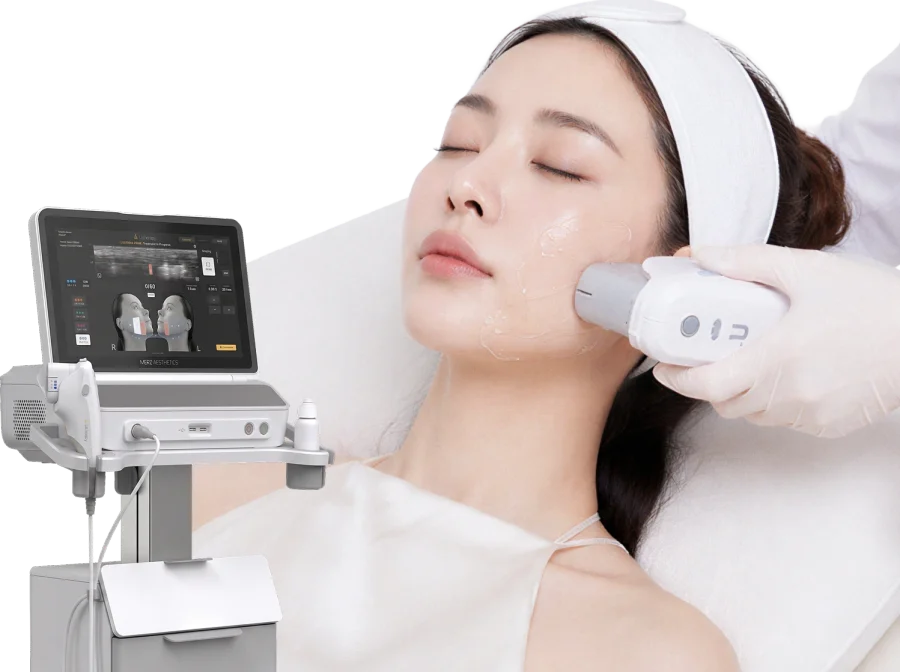
Ultherapy is the brand name for Merz Aesthetics' micro-focused ultrasound device (current platform: Ultherapy Prime). It is the only FDA-cleared device that uses real-time ultrasound imaging to guide non-invasive skin lifting.
Regulatory history:
How MFU-V works:
Focused ultrasound creates discrete thermal coagulation points (TCPs) — tiny volumes of tissue briefly heated to 60–70°C at a precise predetermined depth. Unlike RF, which heats tissue in bulk, MFU-V creates arrays of small coagulation points with untreated tissue in between. This pattern appears to drive a different kind of wound-healing response.
The distinctive feature is DeepSEE visualization — integrated real-time ultrasound imaging to 8 mm depth, allowing the practitioner to see tissue layers, blood vessels, and (near the mandibular border) nerves before firing. No other focused ultrasound device has integrated imaging.
Ultherapy delivers energy at three standard depths:

Reaching the SMAS non-invasively is Ultherapy's signature claim and is the reason the device is positioned specifically as "lifting" rather than "tightening."
Clinical evidence:
The anonymous-survey caveat:
Chang et al. (2019, Lasers in Surgery and Medicine, PMID: 30664263) surveyed 459 Ultherapy patients anonymously and found overall satisfaction was 53.1% — meaningfully lower than the 80–95% reported in non-anonymous industry-sponsored trials. Many Ultherapy efficacy studies are co-authored by investigators with financial ties to Merz Aesthetics, and patients in open-label trials may feel pressure to report better outcomes than they actually experienced.
This does not mean Ultherapy does not work — the objective rater-blinded imaging data (Alam 2010) is real. But it does mean that patients deserve honest pre-treatment counseling about realistic results rather than marketing-driven expectations.
The most important disclosure in this entire guide:
There are no published head-to-head randomized trials comparing Thermage with Ultherapy. Every comparison in the literature — including this one — is indirect. Separate studies of separate cohorts with different protocols, different outcome measures, and different follow-up windows. Anyone who tells you "Thermage is better" or "Ultherapy is better" on the basis of published evidence is overstating what the data actually support.

What we can compare from available data:
| Thermage FLX | Ultherapy Prime | |
|---|---|---|
| Energy type | Monopolar radiofrequency | Micro-focused ultrasound (MFU-V) |
| Heating mode | Bulk dermal heating (tissue resistance) | Discrete thermal coagulation points |
| Primary depth | ~2–3 mm (dermis, subdermis) | 1.5 / 3.0 / 4.5 mm (dermis + SMAS) |
| Real-time imaging | No (surface temperature only) | Yes (DeepSEE ultrasound to 8 mm) |
| Primary clinical effect | Tightening, dermal thickening, contour sharpening | Structural lifting at SMAS, collagen remodeling |
| FDA clearance | 2002 (original), K170758 (FLX, 2017) | 2009 (brow) / 2012 (neck) / 2014 (décolletage) / 2025 (arms, abdomen) |
| Session time (full face) | 45–60 min (FLX) | 60–90 min |
| Pain (published mean) | Moderate — ~4–6/10 with FLX vibration | Moderate to high — ~4–5/10 with modern protocols |
| Typical protocol | Single session, repeat every 1–2 years | Single session, repeat every 1–2 years |
| Evidence base | 20+ years of cohort data, original pivotal trial (Fitzpatrick 2003), large real-world series | 50+ peer-reviewed studies, meta-analysis of 42 trials (Amiri 2025) |
| Seoul average price (Gangnam) | ~800k–1.5M KRW (full face) | ~1.0–2.0M KRW (full face + neck) |
A note on pricing: Seoul prices are typically 30–50% of US prices for both devices. The wide range within Seoul reflects three factors: (1) tip or transducer count, (2) certification status (TTT Master for Thermage, Gold Standard for Ultherapy), and (3) whether the session includes additional areas like neck and décolletage. We discuss red flags around unusually low prices in the Seoul context section of our related HIFU vs Ultherapy evidence guide.
The honest answer to "Thermage or Ultherapy?" is that they address different problems. A good consultation looks at your face and your goals first, then recommends based on what is actually changing — not based on which device the clinic happens to own.
Thermage tends to fit when the main concern is:

Ultherapy tends to fit when the main concern is:
Combination protocols:
Because the two devices target different tissue layers with different mechanisms, they are not competitors — they are complementary. A common Seoul protocol for patients in their late 40s or 50s:
Many clinics offer combination packages at a discount over separate sessions. This is one of the few times the discount is medically rational rather than purely marketing-driven — the two treatments genuinely reinforce each other.
When neither is the right answer:
At Gangnam Delight Dermatology, we carry both Thermage FLX and Ultherapy Prime, and the consultation decides which one (or both) fits — not device loyalty.
FAQ
If your main complaint is jowl descent, brow heaviness, or jawline loss, Ultherapy tends to be the better first choice because it reaches the SMAS — the fibromuscular layer that produces structural lift. If your main complaint is thin skin texture, envelope laxity without significant descent, or you want full-face coverage in a single session, Thermage tends to fit better. Most Seoul dermatologists will tell you honestly which one matches your face if you ask the question that way instead of "which is better."
Yes, and many Seoul patients in their late 40s and 50s do. The typical approach is Ultherapy first for structural lift, then Thermage 2–4 weeks later for dermal tightening. Because the two devices target different tissue layers with different mechanisms, they reinforce each other rather than compete. Combination packages are commonly priced lower than the two sessions booked separately — one of the few times a clinic discount is medically rational rather than purely marketing-driven.
Both devices are generally described as producing results lasting 1–2 years, though individual response varies. Werschler & Werschler (2016) followed Ultherapy patients to 1 year and found 95% still showed improvement. Thermage long-term published data is less consistent but the clinical consensus is similar — most patients repeat every 1–2 years for maintenance. Underlying aging does not stop, so a single session is not permanent.
Three factors. (1) Tip or transducer count — Thermage tips are consumables sold in 300, 600, or 900-pulse configurations; a 900-pulse full-face session is more expensive than 600. Some budget clinics split a single tip across multiple patients, which is both unethical and clinically ineffective — worth asking about directly. (2) Certification — TTT Master (Thermage) and Gold Standard (Ultherapy) certified clinics charge more because their dermatologists have completed advanced manufacturer protocol training. (3) Treatment area — face alone costs less than face + neck + décolletage.
Both have favorable safety profiles when performed by trained dermatologists following protocol. Both have documented rare complications. Thermage's documented risks include subcutaneous fat atrophy with incorrect settings, transient neuropathic pain, and surface burns when the return pad is improperly placed. Ultherapy's documented risks (Friedmann 2018) include transient nerve paresthesia near the mandibular border, rare motor nerve injury, and fat atrophy when energy is delivered too superficially. Both risk profiles are minimized by physician-performed treatment and correct device settings — which is one more reason Korean law requiring physician-only administration matters for patients travelling to Seoul.
Related Procedures
If you need more detail about treatment approach, recovery, or suitability, continue into these procedure pages.

Solta Medical · AccuREP Technology
Thermage FLX in Gangnam, Seoul. AccuREP real-time feedback, Comfort Pulse, board-certified dermatologist. Over two decades of clinical evidence.

Non-surgical Lifting
Ultherapy Prime in Gangnam by a board-certified dermatologist. FDA-cleared non-surgical lifting for jawline, neck, and brow — same-day treatment available.

Periorbital Tightening
Eye Thermage treatment in Seoul for under-eye laxity, crow's feet, and eyelid support with doctor-led treatment planning in Gangnam.

Anti-Aging Package
Neck tightening package in Seoul — Botox for platysmal bands plus filler for neck creases. Board-certified dermatologist in Gangnam.