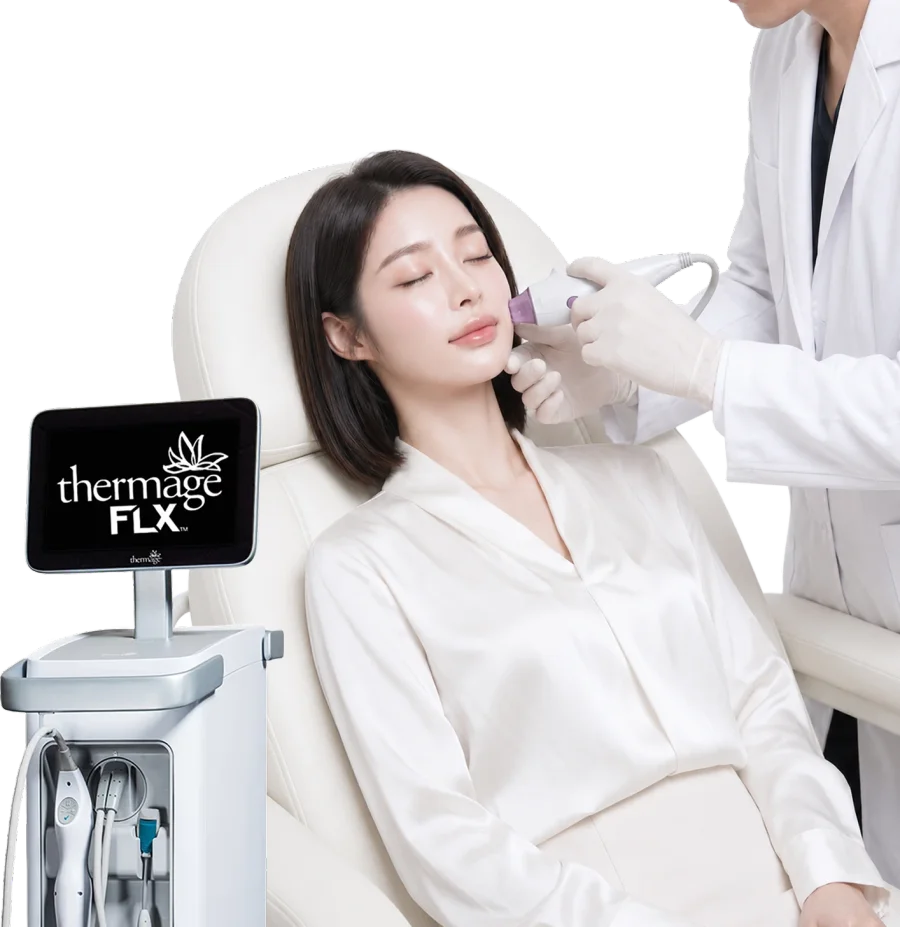
Lifting Comparison

Thermage vs Ultherapy Seoul | Evidence-Based Comparison

Thermage FLX vs Ultherapy Prime — how RF and micro-focused ultrasound differ in mechanism, depth, and evidence. Seoul dermatologist decision guide.

Your Journey

Follow each step to prepare for your visit.

Thermage FLX vs Ultherapy Prime — how RF and micro-focused ultrasound differ in mechanism, depth, and evidence. Seoul dermatologist decision guide.

Thermage vs Ultherapy Seoul | Evidence-Based Comparison
Why Thermage and Ultherapy are the two most compared lifting devices
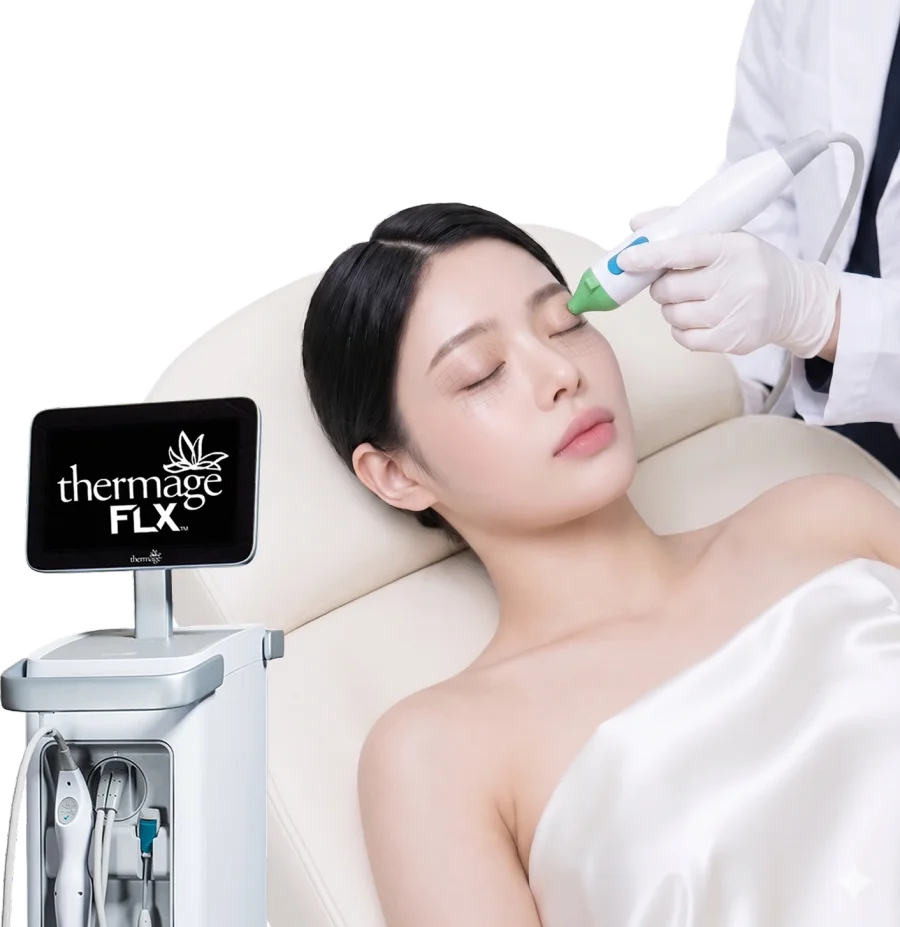
Thermage FLX — monopolar RF and four generations of refinement
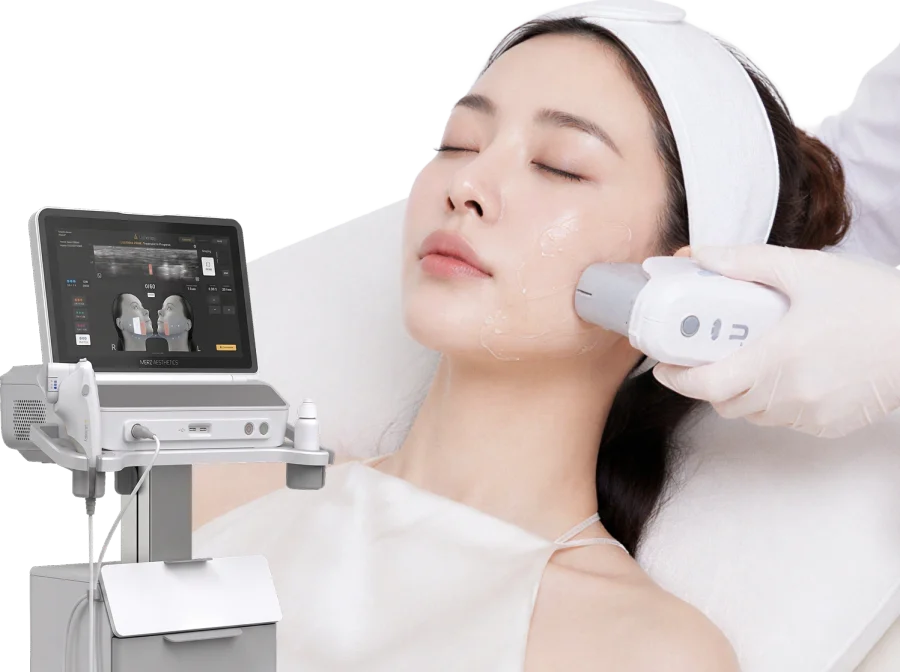
Ultherapy Prime — micro-focused ultrasound with visualization
Head-to-head — what the evidence supports, and what it does not
Which concern → which device → or both
Sources
1
ขั้นตอน 1 / 6

Why Thermage and Ultherapy are the two most compared lifting devices

Both are non-surgical, FDA-cleared, single-session treatments with 1–2 year duration. Both are marketed in Seoul as "lifting." But they use fundamentally different energy types and target different tissue layers — and the patients who understand that difference make much better treatment decisions than the patients who just see "the popular lifting device."

The short version:

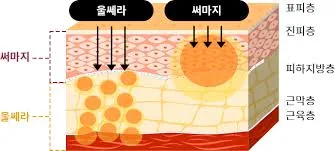
  • Thermage = monopolar radiofrequency (RF). Bulk-heats the dermis and subdermis. Primary effect is tightening and thickening the skin envelope.
  • Ultherapy = micro-focused ultrasound with visualization (MFU-V). Delivers discrete thermal coagulation points at three depths including the SMAS. Primary effect is structural lifting.

A treatment that works "at the SMAS" is not automatically better than one that works in the dermis — it depends on what is actually changing in your face. A patient whose main complaint is thin, crepey skin does not need SMAS work. A patient with jowl descent and jawline loss will not get structural correction from surface-only tightening.

Thermage vs Ultherapy — energy type and depth comparison
Thermage and Ultherapy target different tissue layers with different forms of energy. Neither is categorically "better" — they address different concerns.

This guide walks through the clinical evidence for each, what the comparison table actually supports, and how a dermatologist decides which one — or both — fits a given face.

FAQ

Frequently Asked Questions

Which should I choose first if I can only do one?

If your main complaint is jowl descent, brow heaviness, or jawline loss, Ultherapy tends to be the better first choice because it reaches the SMAS — the fibromuscular layer that produces structural lift. If your main complaint is thin skin texture, envelope laxity without significant descent, or you want full-face coverage in a single session, Thermage tends to fit better. Most Seoul dermatologists will tell you honestly which one matches your face if you ask the question that way instead of "which is better."

Can I do both Thermage and Ultherapy?

Yes, and many Seoul patients in their late 40s and 50s do. The typical approach is Ultherapy first for structural lift, then Thermage 2–4 weeks later for dermal tightening. Because the two devices target different tissue layers with different mechanisms, they reinforce each other rather than compete. Combination packages are commonly priced lower than the two sessions booked separately — one of the few times a clinic discount is medically rational rather than purely marketing-driven.

How long do results actually last?

Both devices are generally described as producing results lasting 1–2 years, though individual response varies. Werschler & Werschler (2016) followed Ultherapy patients to 1 year and found 95% still showed improvement. Thermage long-term published data is less consistent but the clinical consensus is similar — most patients repeat every 1–2 years for maintenance. Underlying aging does not stop, so a single session is not permanent.

Why is there such a wide price range for both devices in Seoul?

Three factors. (1) Tip or transducer count — Thermage tips are consumables sold in 300, 600, or 900-pulse configurations; a 900-pulse full-face session is more expensive than 600. Some budget clinics split a single tip across multiple patients, which is both unethical and clinically ineffective — worth asking about directly. (2) Certification — TTT Master (Thermage) and Gold Standard (Ultherapy) certified clinics charge more because their dermatologists have completed advanced manufacturer protocol training. (3) Treatment area — face alone costs less than face + neck + décolletage.

Is one safer than the other?

Both have favorable safety profiles when performed by trained dermatologists following protocol. Both have documented rare complications. Thermage's documented risks include subcutaneous fat atrophy with incorrect settings, transient neuropathic pain, and surface burns when the return pad is improperly placed. Ultherapy's documented risks (Friedmann 2018) include transient nerve paresthesia near the mandibular border, rare motor nerve injury, and fat atrophy when energy is delivered too superficially. Both risk profiles are minimized by physician-performed treatment and correct device settings — which is one more reason Korean law requiring physician-only administration matters for patients travelling to Seoul.

Related Procedures

Related procedure pages to review next.

If you need more detail about treatment approach, recovery, or suitability, continue into these procedure pages.

Thermage FLX ที่กรุงโซล

กระชับและไทท์เทนนิ่ง

Thermage FLX

การเลือก Thermage ไม่ควรเป็นเพียงเพราะเป็นเครื่องที่มีชื่อเสียง แต่ควรเริ่มจากการทำความเข้าใจก่อนว่าปัญหาหลักของคุณคือเรื่องความกระชับ ผิวพรรณ หรือวอลลุ่มที่ลดลง

ผิวหย่อนคล้อยและสูญเสียความกระชับโดยรวมต้องการไทท์เทนนิ่งที่ดูเป็นธรรมชาติ ไม่เกินไปไม่แน่ใจว่าควรจัดลำดับ Thermage, Ultherapy หรือสกินบูสเตอร์อย่างไร
ดูหน้าหัตถการ
Ultherapy Prime ที่กรุงโซล

ยกกระชับโดยไม่ผ่าตัด

Ultherapy Prime

เมื่อพิจารณาการยกกระชับโดยไม่ผ่าตัด สิ่งที่สำคัญกว่าชื่อเครื่องมือคือการประเมินสภาพความยืดหยุ่นที่ลดลง ความเปลี่ยนแปลงของเส้นกราม ความหนาของผิว และลำดับความสำคัญในแผนการรักษาโดยรวม

เส้นกรามเริ่มไม่ชัดและใบหน้าส่วนล่างดูหย่อนคล้อยต้องการยกกระชับอย่างเป็นธรรมชาติโดยไม่ต้องผ่าตัดไม่แน่ใจว่าจะเปรียบเทียบ Ultherapy, HIFU และ Thermage อย่างไร
ดูหน้าหัตถการ
อายเทอร์มาจที่กรุงโซล

กระชับรอบดวงตา

อายเทอร์มาจ

ความแก่รอบดวงตาส่งผลต่อภาพรวมใบหน้าอย่างมาก อายเทอร์มาจใช้หัวทิปที่เล็กและแม่นยำกว่าทิปปกติ เพื่อส่งพลังงานที่เหมาะกับผิวรอบดวงตาที่บาง

ตีนกาและริ้วรอยเล็ก ๆ รอบดวงตาหนังตาหย่อนหรือรู้สึกหนักตาริ้วรอยและผิวย่นใต้ตา
ดูหน้าหัตถการ
แพ็กเกจเน็คไทท์เทนนิ่งที่กรุงโซล

แพ็กเกจต่อต้านวัย

เน็คไทท์เทนนิ่ง

หลายคนดูแลใบหน้าแต่บริเวณคอกลับเผยวัย แพทย์ผิวหนังเฉพาะทางจะวินิจฉัยและออกแบบการผสม Botox กับฟิลเลอร์ที่เหมาะสมเฉพาะบุคคล

ริ้วรอยคอแนวนอนเส้นคอแนวตั้ง (Platysma Band)ความแตกต่างระหว่างใบหน้าที่ดูแลดีกับคอที่ดูแก่กว่า
ดูหน้าหัตถการ
คังนัม, โซล

บริการผิวหนังเฉพาะบุคคลในคังนัมสำหรับผู้ป่วยในประเทศและต่างประเทศ

คลินิก Delight Dermatology เน้นการปรึกษาโดยแพทย์ บริการอบอุ่น และแผนการรักษาเฉพาะบุคคล

ข้อมูลคลินิก

딜라이트피부과의원

ชั้น 4 อาคาร B, 509 Gangnam-daero, Seocho-gu, Seoul

มีที่จอดรถในอาคาร

02-517-9991

จันทร์-ศุกร์ 10:00 - 20:00

พักเที่ยง 13:00 - 14:00

เสาร์ 10:00 - 16:00

อาทิตย์และวันหยุดนักขัตฤกษ์ ปิดทำการ

ชื่อคลินิก: 딜라이트피부과의원ผู้แทน: 윤상열โทร. 02-517-9991เลขทะเบียนธุรกิจ: 357-15-02460นโยบายความเป็นส่วนตัวข้อกำหนดการใช้งาน
สถานพยาบาลจดทะเบียนรับผู้ป่วยต่างชาติ
จดทะเบียนกับกระทรวงสาธารณสุขและสวัสดิการแห่งสาธารณรัฐเกาหลี (เลขทะเบียน M-2024-01-08-8248)

ข้อมูลทางการแพทย์บนเว็บไซต์นี้เป็นข้อมูลอ้างอิงเท่านั้น ไม่ใช่คำแนะนำทางการแพทย์ ผลลัพธ์อาจแตกต่างกันในแต่ละบุคคล กรุณาปรึกษาแพทย์ผิวหนังเฉพาะทางสำหรับการวินิจฉัยและวางแผนการรักษา