Lifting Comparison

Thermage vs Ultherapy Seoul | Evidence-Based Comparison

Thermage FLX vs Ultherapy Prime — how RF and micro-focused ultrasound differ in mechanism, depth, and evidence. Seoul dermatologist decision guide.

Your Journey

Follow each step to prepare for your visit.

Thermage FLX vs Ultherapy Prime — how RF and micro-focused ultrasound differ in mechanism, depth, and evidence. Seoul dermatologist decision guide.

Thermage vs Ultherapy Seoul | Evidence-Based Comparison
Why Thermage and Ultherapy are the two most compared lifting devices
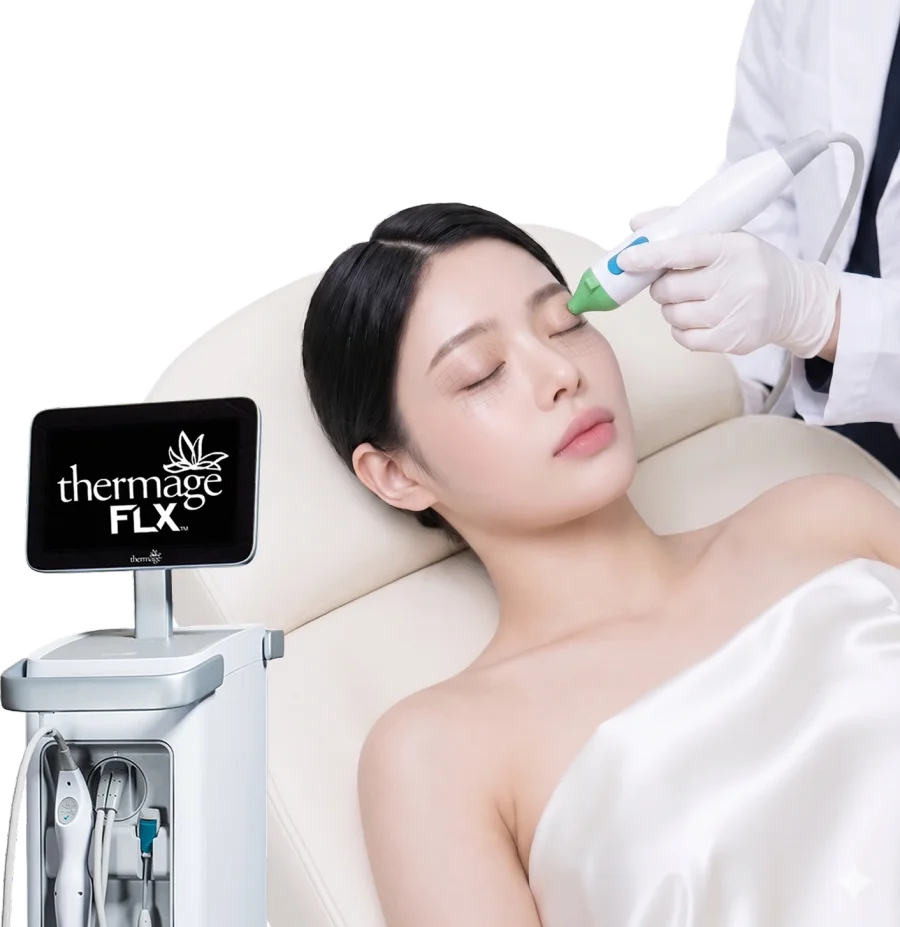
Thermage FLX — monopolar RF and four generations of refinement
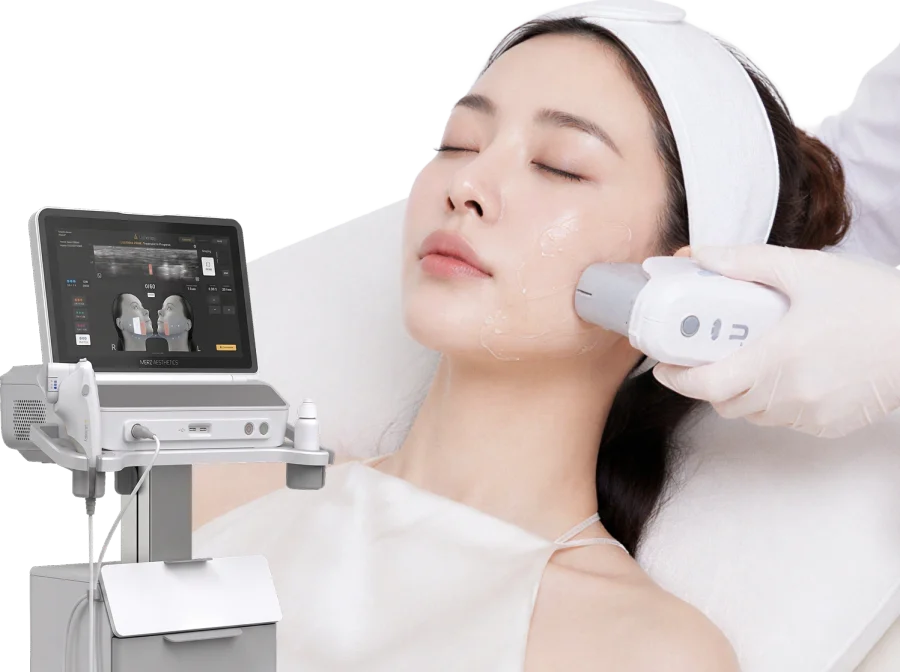
Ultherapy Prime — micro-focused ultrasound with visualization
Head-to-head — what the evidence supports, and what it does not
Which concern → which device → or both
Sources
1
Bước 1 / 6

Why Thermage and Ultherapy are the two most compared lifting devices

Both are non-surgical, FDA-cleared, single-session treatments with 1–2 year duration. Both are marketed in Seoul as "lifting." But they use fundamentally different energy types and target different tissue layers — and the patients who understand that difference make much better treatment decisions than the patients who just see "the popular lifting device."

The short version:

  • Thermage = monopolar radiofrequency (RF). Bulk-heats the dermis and subdermis. Primary effect is tightening and thickening the skin envelope.
  • Ultherapy = micro-focused ultrasound with visualization (MFU-V). Delivers discrete thermal coagulation points at three depths including the SMAS. Primary effect is structural lifting.

A treatment that works "at the SMAS" is not automatically better than one that works in the dermis — it depends on what is actually changing in your face. A patient whose main complaint is thin, crepey skin does not need SMAS work. A patient with jowl descent and jawline loss will not get structural correction from surface-only tightening.

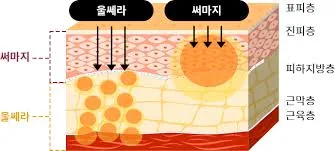
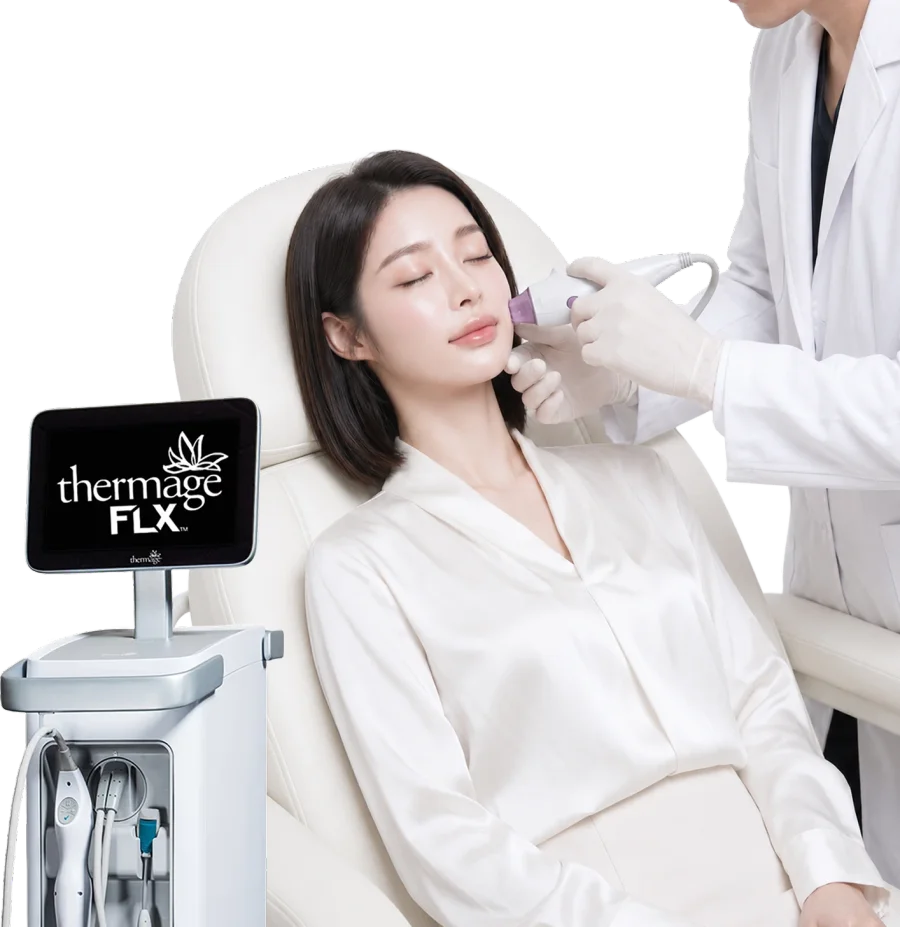
Thermage vs Ultherapy — energy type and depth comparison
Thermage and Ultherapy target different tissue layers with different forms of energy. Neither is categorically "better" — they address different concerns.

This guide walks through the clinical evidence for each, what the comparison table actually supports, and how a dermatologist decides which one — or both — fits a given face.

FAQ

Frequently Asked Questions

Which should I choose first if I can only do one?

If your main complaint is jowl descent, brow heaviness, or jawline loss, Ultherapy tends to be the better first choice because it reaches the SMAS — the fibromuscular layer that produces structural lift. If your main complaint is thin skin texture, envelope laxity without significant descent, or you want full-face coverage in a single session, Thermage tends to fit better. Most Seoul dermatologists will tell you honestly which one matches your face if you ask the question that way instead of "which is better."

Can I do both Thermage and Ultherapy?

Yes, and many Seoul patients in their late 40s and 50s do. The typical approach is Ultherapy first for structural lift, then Thermage 2–4 weeks later for dermal tightening. Because the two devices target different tissue layers with different mechanisms, they reinforce each other rather than compete. Combination packages are commonly priced lower than the two sessions booked separately — one of the few times a clinic discount is medically rational rather than purely marketing-driven.

How long do results actually last?

Both devices are generally described as producing results lasting 1–2 years, though individual response varies. Werschler & Werschler (2016) followed Ultherapy patients to 1 year and found 95% still showed improvement. Thermage long-term published data is less consistent but the clinical consensus is similar — most patients repeat every 1–2 years for maintenance. Underlying aging does not stop, so a single session is not permanent.

Why is there such a wide price range for both devices in Seoul?

Three factors. (1) Tip or transducer count — Thermage tips are consumables sold in 300, 600, or 900-pulse configurations; a 900-pulse full-face session is more expensive than 600. Some budget clinics split a single tip across multiple patients, which is both unethical and clinically ineffective — worth asking about directly. (2) Certification — TTT Master (Thermage) and Gold Standard (Ultherapy) certified clinics charge more because their dermatologists have completed advanced manufacturer protocol training. (3) Treatment area — face alone costs less than face + neck + décolletage.

Is one safer than the other?

Both have favorable safety profiles when performed by trained dermatologists following protocol. Both have documented rare complications. Thermage's documented risks include subcutaneous fat atrophy with incorrect settings, transient neuropathic pain, and surface burns when the return pad is improperly placed. Ultherapy's documented risks (Friedmann 2018) include transient nerve paresthesia near the mandibular border, rare motor nerve injury, and fat atrophy when energy is delivered too superficially. Both risk profiles are minimized by physician-performed treatment and correct device settings — which is one more reason Korean law requiring physician-only administration matters for patients travelling to Seoul.

Related Procedures

Related procedure pages to review next.

If you need more detail about treatment approach, recovery, or suitability, continue into these procedure pages.

Thermage FLX tại Seoul

Đàn hồi và siết chặt

Thermage FLX

Thay vì chọn Thermage chỉ vì nổi tiếng, điều quan trọng hơn nhiều là xác định rõ vấn đề chính của Quý khách là độ đàn hồi, kết cấu da hay mất thể tích.

Da toàn bộ mất đàn hồi, trông lỏng lẻo hơnƯu tiên siết chặt nhẹ nhàng thay vì thay đổi quá lớnPhân vân thứ tự nên xem Thermage, Ultherapy hay Skin Booster trước
Xem trang liệu trình
Ultherapy Prime tại Seoul

Nâng cơ không phẫu thuật

Ultherapy Prime

Khi cân nhắc nâng cơ không phẫu thuật, điều quan trọng hơn tên thiết bị chính là đánh giá mức độ chùng da hiện tại, sự thay đổi đường hàm, độ dày của da và thứ tự ưu tiên trong toàn bộ kế hoạch điều trị.

Đường hàm mờ đi, phần dưới khuôn mặt trông chùng hơn trướcMuốn kiểm tra hướng nâng cơ tự nhiên trước mà không cần phẫu thuậtChưa biết nên so sánh Ultherapy, HIFU và Thermage theo tiêu chí nào
Xem trang liệu trình
Eye Thermage tại Seoul

Siết chặt vùng mắt

Eye Thermage

Lão hóa vùng mắt thường ảnh hưởng đến ấn tượng tổng thể khuôn mặt. Eye Thermage sử dụng đầu tip nhỏ hơn và chính xác hơn so với Thermage thông thường, phù hợp với da mỏng quanh mắt.

Chân chim và nếp nhăn nhỏ quanh mắtMí mắt chùng hoặc trông nặngNếp nhăn dưới mắt và kết cấu da nhăn nheo
Xem trang liệu trình
Gói siết chặt da cổ tại Seoul

Gói chống lão hóa

Siết chặt da cổ

Khuôn mặt được chăm sóc nhưng cổ lại lộ tuổi — đây là tình trạng phổ biến. Bác sĩ da liễu chuyên khoa trực tiếp chẩn đoán và phối hợp Botox với filler cho chương trình siết chặt cổ tùy chỉnh.

Nếp nhăn ngang và rãnh trên cổDải cổ dọc (cơ bám da cổ)Chênh lệch lão hóa giữa khuôn mặt được chăm sóc và vùng cổ
Xem trang liệu trình
Gangnam, Seoul

Dịch vụ da liễu cá nhân hóa tại Gangnam cho bệnh nhân trong nước và quốc tế.

Phòng khám Delight Dermatology chú trọng tư vấn do bác sĩ dẫn dắt, dịch vụ tận tâm và kế hoạch điều trị cá nhân hóa.

Thông tin phòng khám

딜라이트피부과의원

Tầng 4, Tòa B, 509 Gangnam-daero, Seocho-gu, Seoul

Có bãi đỗ xe trong tòa nhà.

02-517-9991

Thứ 2 - Thứ 6: 10:00 - 20:00

Nghỉ trưa: 13:00 - 14:00

Thứ 7: 10:00 - 16:00

Chủ nhật và ngày lễ: Nghỉ

Tên phòng khám: 딜라이트피부과의원Đại diện: 윤상열ĐT. 02-517-9991Mã số kinh doanh: 357-15-02460Chính sách bảo mậtĐiều khoản sử dụng
Cơ sở y tế đăng ký tiếp nhận bệnh nhân quốc tế
Đăng ký chính thức tại Bộ Y tế và Phúc lợi Hàn Quốc (Số đăng ký M-2024-01-08-8248)

Thông tin y tế trên trang web này chỉ mang tính tham khảo, không thay thế tư vấn y tế. Kết quả có thể khác nhau tùy cá nhân. Vui lòng tham khảo bác sĩ da liễu chuyên khoa để chẩn đoán và lập kế hoạch điều trị.