
Autologous Regenerative Therapy
PRP
Growth Factors from Your Own Blood
Board-Certified Dermatologist
Dr. SangYoul Yun
AAD International Fellow
IFAAD
- Duration
- 30-45 min
- Sessions
- 3-4 at 4-wk intervals
- Downtime
- ~24 hours redness


PRP Treatment in Seoul
PRP therapy in Seoul uses concentrated growth factors from your own blood to naturally stimulate collagen, repair damaged tissue, and improve overall skin quality.
- Duration
- 30–45 min
- Sessions
- 3–4 at 4-wk intervals
- Downtime
- ~24 hours redness
- Peak Result
- 4–8 wk (skin) / 3–6 mo (hair)
Results Over Time
PRP therapy concentrates platelets from your own blood to naturally stimulate collagen, deeply improving skin texture, tone, and firmness without synthetics.
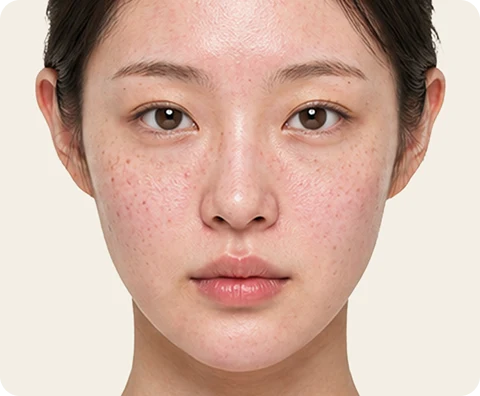 01
01Days 0–1
Mild redness and pinpoint swelling at injection sites; resolves within 24 hours.
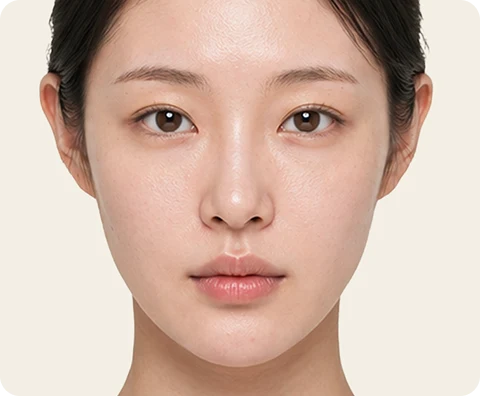 02
02Weeks 2–4
Early improvement in skin texture and tone begins as the growth-factor response builds.
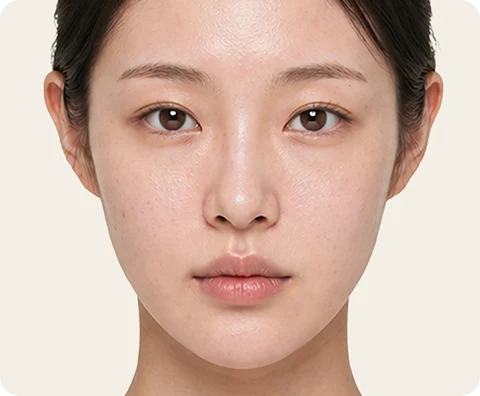 03
03Weeks 4–8
Collagen response develops; skin feels firmer. Results vary between individuals.
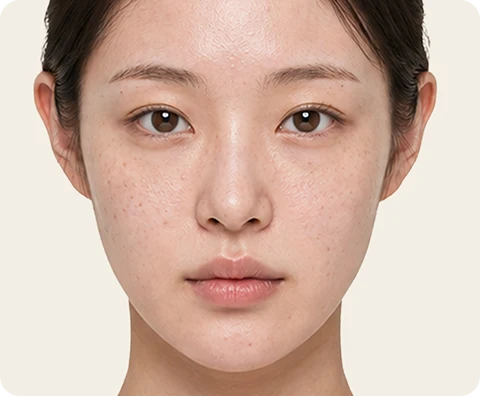 04
04Months 3–6 (scalp)
Increased hair density reported for androgenetic alopecia across a treatment course.
Images are AI-generated for illustrative purposes only.
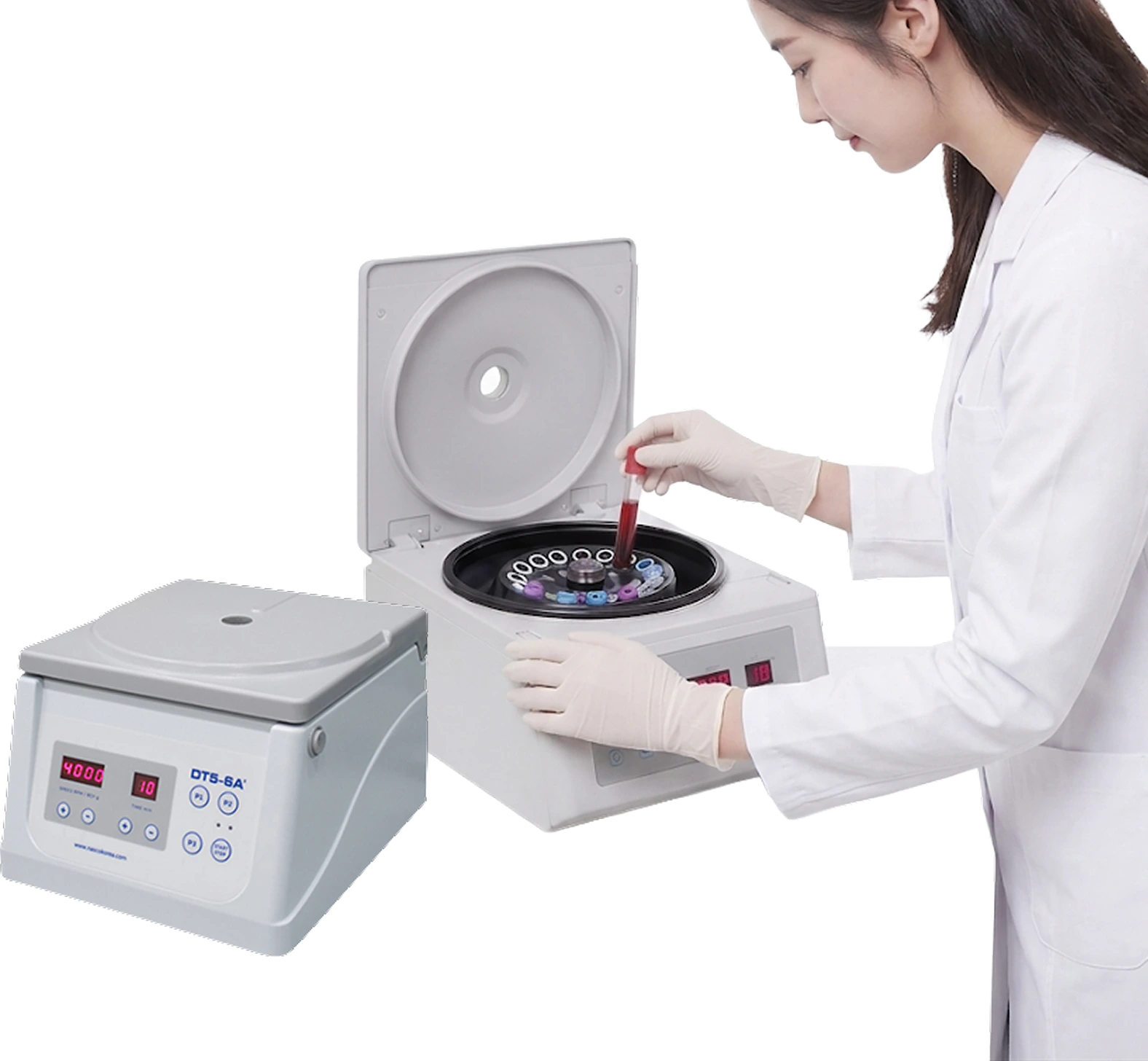
PRP Device & Preparation
PRP uses platelet-rich plasma prepared from the patient's own blood by centrifugation, delivering concentrated growth factors for skin rejuvenation, collagen remodeling, and scalp care.
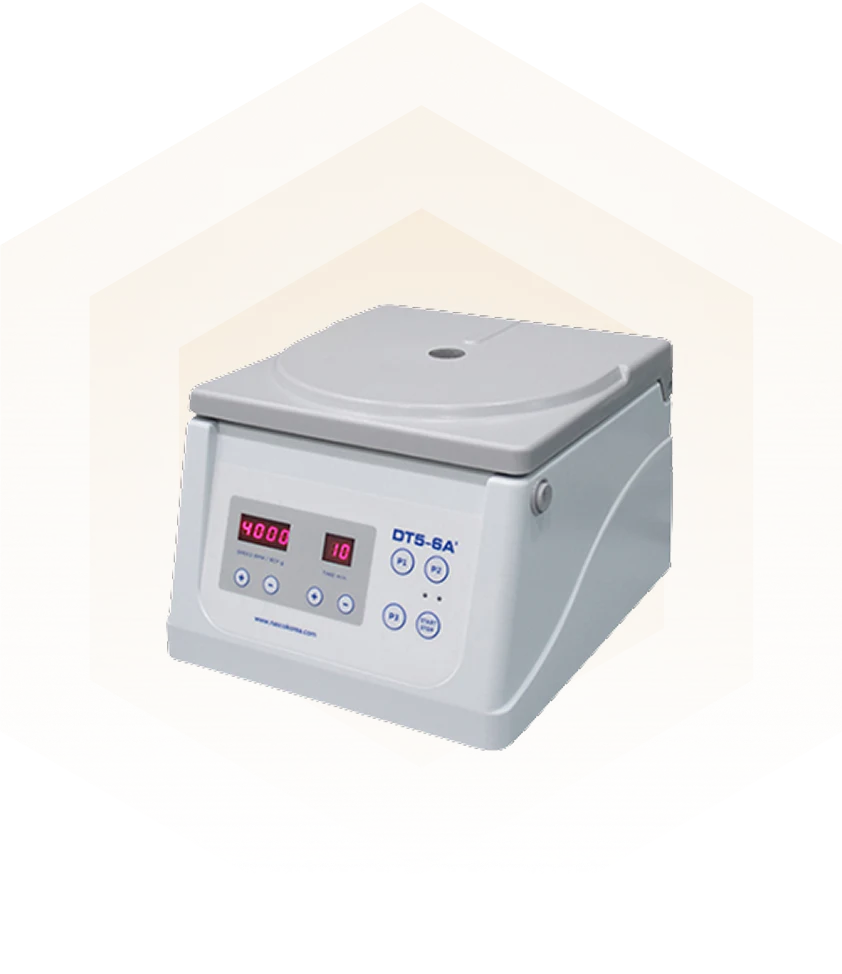
Autologous
Prepared from the patient's own blood, PRP reduces the concern of foreign-material reactions versus synthetic injectables.
Regenerative
Concentrated platelets release growth factors that support collagen remodeling, tissue repair, and scalp revitalization.
Versatile
Used for facial skin quality, post-procedure recovery, and scalp care, depending on the treatment plan.
Treatment Process
 01
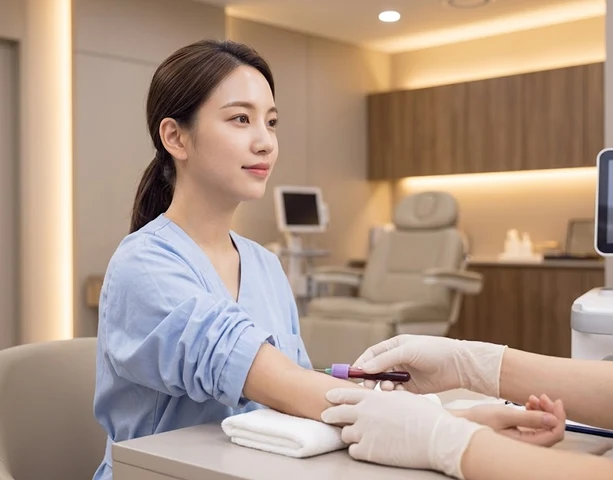
01Blood Collection
A small 15–20 mL blood sample is safely drawn from your arm for processing.
 02
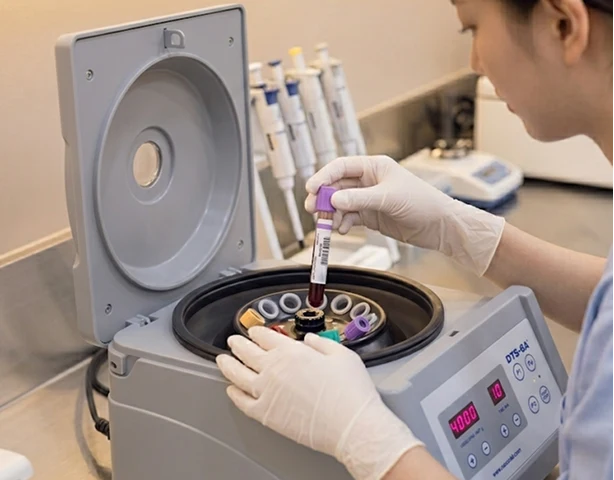
02Centrifuge Processing
Blood is processed in a centrifuge to concentrate platelets and growth factors.
 03
03Precision Treatment
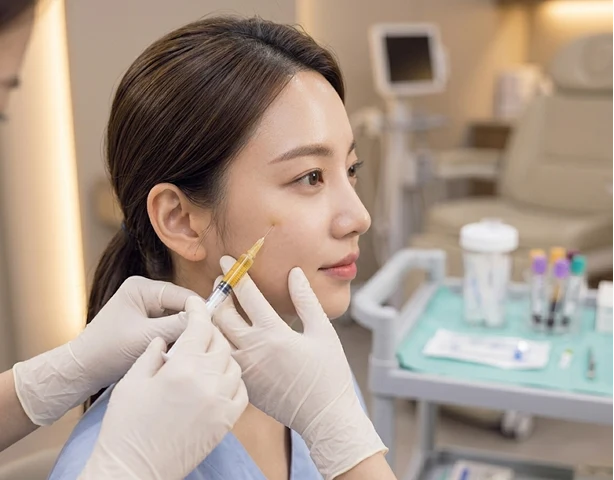
PRP is precisely delivered into the skin or scalp using micro-injections.
 04
04Results & Timeline
The 30–45 min session triggers natural collagen renewal over 4–8 weeks.
Recovery & Care
First 24 hours
Mild redness resolves; avoid makeup, vigorous rubbing, and heat on the treated area.
First week
Avoid blood-thinning medications (per your physician), alcohol, and intense sun exposure.
Between sessions
Sessions spaced 4 weeks apart; a full 3–4 session course is typically recommended.
Maintenance (scalp)
Hair-loss PRP typically needs maintenance every 4–6 months to sustain density.
Frequently Asked Questions
Q.Does PRP work for hair loss?
Scalp PRP has the strongest evidence among PRP indications: randomized-trial meta-analyses show increased hair density at three and six months in pattern hair loss, with certainty graded low-to-moderate. It is used alongside proven drug therapy (finasteride, minoxidil), not as a replacement. Individual results vary.
Q.Does PRP work for facial skin?
Modestly. In a rigorous split-face randomized trial, PRP was no better than saline on objective, dermatologist-rated measures, although patients often reported smoother texture. It can be a reasonable natural option for skin quality, but it is not a dramatic treatment. Individual results vary.
Q.Is PRP safe?
Because PRP uses a concentrate from your own blood, there is no risk of an allergic reaction or foreign-body response, which makes it one of the gentler regenerative options. Mild redness at the injection sites usually settles within a day; your dermatologist reviews any bleeding-related conditions beforehand.
Q.How many PRP sessions will I need?
A course of 3-4 sessions about four weeks apart is typical. Skin changes develop over 4-8 weeks; scalp density over 3-6 months. Your dermatologist assesses your response before recommending maintenance. Individual results vary.
References2
The clinical claims on this page (device specs, efficacy timelines, safety profile) are supported by the primary sources below. Each citation links to the original paper or regulatory record.
- [1]Effect of Platelet-Rich Plasma Injection for Rejuvenation of Photoaged Facial Skin: A RCT. JAMA Dermatology (Alam M et al.): split-face randomized trial of intradermal PRP for facial skin; no significant difference vs saline on objective (dermatologist-rated) measures, patient self-assessment favored PRP for texture at 6 months (2018).
- [2]Platelet-Rich Plasma for Androgenetic Alopecia: Systematic Review and Meta-Analysis of RCTs. J Cutan Med Surg (Zhang X et al.): 9 RCTs, increased hair density at 3 and 6 months (2023).
Notice
- Active infection or inflammation at the treatment site
- Platelet dysfunction, thrombocytopenia, or other bleeding disorders
- Anticoagulant therapy (relative, requires physician review)
- Active malignancy or hematologic disorder
- Pregnancy or lactation (precautionary)
Session summary & comparison
| Item | Details |
|---|---|
| Treatment time | About 30-45 minutes, including the blood draw and preparation |
| What it is | Platelet-rich plasma concentrated from your own blood, then injected into skin or scalp to support repair. Because it is from your own body, there is no allergy or foreign-material risk |
| Course & onset | A course of 3-4 sessions about four weeks apart; skin changes develop over 4-8 weeks, scalp density over 3-6 months. Individual results vary |
| Downtime | Minimal: mild redness usually settles within 24 hours |
| Where evidence is strongest | For hair density in pattern hair loss; for facial skin the benefit is more modest |
| Category | PRP | Exosome | Rejuran |
|---|---|---|---|
| Source | Autologous: concentrated from your own blood draw | Cell-free vesicles from cultured cells | Polynucleotide (PDRN) from salmon DNA |
| Evidence | Strongest for hair density in pattern hair loss (RCT meta-analyses, low-to-moderate certainty); modest for facial skin | Preliminary: mostly small studies, effect sizes modest | Growing but limited; mostly small studies for skin quality |
| Regulatory status | Autologous blood product prepared chairside: no synthetic implant | Cosmetic ingredient in Korea, the US and the EU: no approved exosome drug | MFDS Class IV, CE-marked; not FDA-approved as an injectable |
| How it fits | A regenerative option in its own right | An adjunct layered on top of established therapy, not a standalone | A skin-quality booster rather than a volume or lifting treatment |
Related procedures
Evidence & comparison guides
Need another answer before deciding?
You do not need to read every guide. Open the question that still matters to your decision.
Optional decision guides
- Interactive routeFit a dermatologist visit into your itineraryCompare a day trip, overnight visit, or longer stay by travel buffer and typical visible recovery.Open the trip planner →
- Comparison guideSculptra vs Skin Boosters Seoul | Evidence-Based GuideCompare Sculptra with Rejuran PN, Skinvive and Profhilo by treatment goal, published evidence, U.S. FDA status and practical questions to ask in Seoul.
Notice: Individual results may vary depending on skin condition, treatment history, and recovery factors. All treatment plans are determined through individual consultation with a board-certified dermatologist. The information on this page is for reference only and does not constitute medical advice or guarantee specific outcomes.
Next Step