Should I stop Ozempic / Wegovy / Mounjaro / Zepbound before treatment?
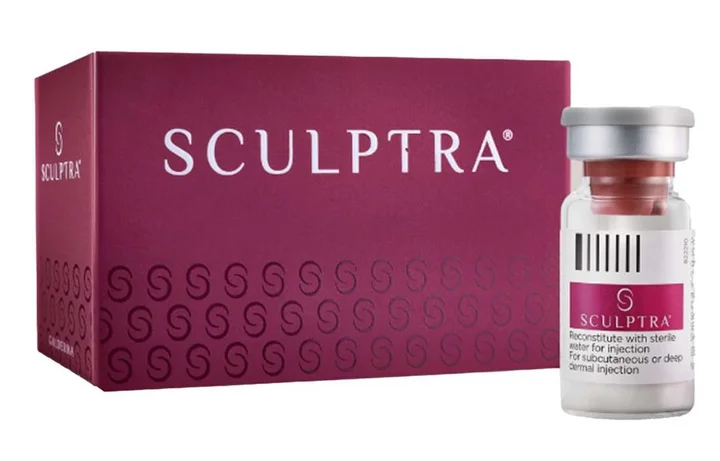
Honest answer: usually no. Moradi 2026 (PMID 41768029) multi-clinician experience-based guidance explicitly states that eligibility for nonsurgical aesthetic modalities does not typically differ greatly in GLP-1 weight loss patients compared with other aesthetic patients. You do NOT need to discontinue Ozempic, Wegovy (semaglutide), Mounjaro, Zepbound (tirzepatide), liraglutide, or any other GLP-1 receptor agonist before Sculptra, HA filler, Thermage, hyperdilute Radiesse, or skin booster sessions at our clinic. The optimization question is TIMING within the weight loss journey, not whether to treat at all. We coordinate with your prescribing physician on injection schedule when relevant — some patients prefer to space subcutaneous GLP-1 injection day away from in-office Sculptra day for comfort, but this is preference not safety. Disclose your full GLP-1 medication regimen at consultation including drug name, dose, start date, and current weight trajectory so we can plan the restoration sequence appropriately.
Can the full restoration be done in a single Seoul trip?
Honest answer: no. The Sculptra biostimulator arc alone is 3 sessions × 4-6 weeks apart, with peak combined result at Month 6-12. That does NOT fit a single Seoul trip. A single 5-7 day trip realistically covers consultation + Sculptra Session 1 + Thermage single session + targeted HA filler if needed + 48-hour vascular watch before flying. The remaining Sculptra Sessions 2 and 3 must be completed either at a return Seoul visit (most common — multi-trip cadence with Trip 2 at Week 4-6 later and Trip 3 at Week 8-12 later) OR at a home-country PLLA injector if you have access to a competent local provider for continuity. Hyperdilute body protocols add 2-3 additional sessions × 4-6 weeks apart. Patients who can commit a 6-12 week Seoul stay can complete the full arc in one extended visit; patients without that flexibility plan multi-trip cadence. We will not pretend a single trip delivers the finished result.
Will my facial volume come back if I stop the GLP-1?
Partially, passively, only if you regain substantial weight. Most published cohorts assume ongoing GLP-1 therapy long-term for metabolic indications — diabetes management, cardiovascular risk reduction, or sustained weight management. If you stay on the medication and maintain weight, the facial deflation pattern is the new baseline you are restoring from. If you discontinue and regain weight passively, some facial volume can return — but this is unpredictable, and the underlying collagen scaffold change does NOT reverse with weight regain. Karakasis 2024 (PMID 39719170) network meta-analysis documented that GLP-1 weight loss includes approximately 25% lean mass loss component — that lean mass is not restored automatically with weight regain either. The restoration plan addresses the structural change directly rather than relying on weight regain to fix it.
What's the sequence — should I do Sculptra, Radiesse, HA filler, or Thermage first?
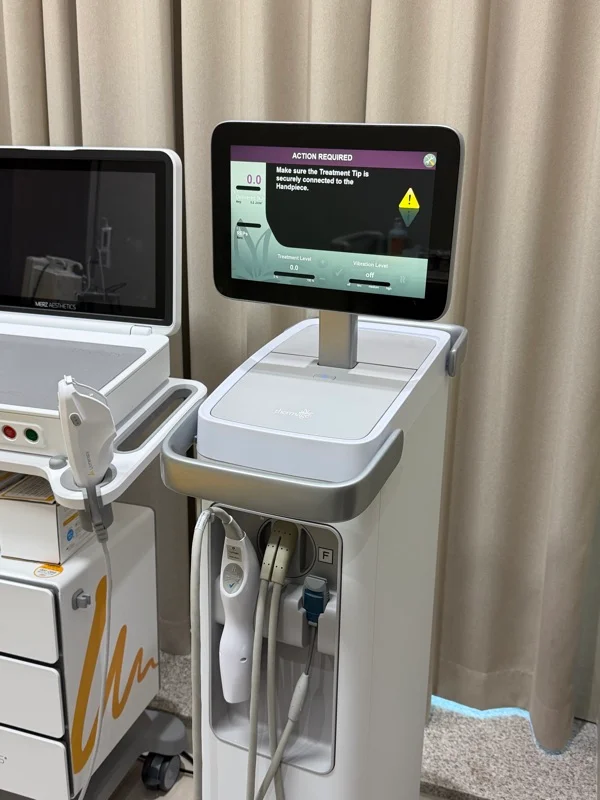
Layered, not single-modality. Per Moradi 2026 (PMID 41768029) framework: (1) Sculptra biostimulator foundation FIRST because the underlying pathology is volume + collagen scaffold loss — Sculptra addresses both layers and needs the longest timeline (4-6 months) to mature. (2) Targeted HA filler at Session 1 OR scheduled 1-2 weeks later for any compartment that needs immediate visible correction (deep nasolabial, marionette, chin). HA filler is reversible and works on a different timeline, so it is complementary rather than competitive with Sculptra. (3) Thermage 4-8 weeks after Sculptra Session 1 (or in parallel as a separate visit) to address the skin laxity layer with monopolar RF — once volume is being restored, the loose skin envelope still needs to retract. (4) Hyperdilute Radiesse for body / neck / décolletage in parallel sessions if body laxity is a meaningful component. (5) Skin booster series (Rejuran PN, HA-based, or PRP / exosome) monthly during the Sculptra arc for the surface luminosity layer. The exact sequence is tailored to your specific deflation map at consultation — not a one-size-fits-all template.
What about body skin laxity — arms, abdomen, buttocks after weight loss?
We treat body skin laxity with hyperdilute Radiesse (1:1 to 1:6 saline dilution per Goldie 2018 consensus PMID 30358631) using 22G blunt cannula in subdermal plane, fanning microboluses to recruit fibroblasts across wider tissue volume. We also use Thermage body tip (separate device head) for the larger body zones. Honest framing — the body laxity evidence base is WEAKER than the face evidence base. The face-restoration literature is solid (Moradi 2026 PMID 41768029 multi-center experience; Catalfamo 2025 PMID 40806889 bipolar RF n=24 with 12-month follow-up — note this trial is face-only). The body laxity evidence for hyperdilute Radiesse is based on Goldie 2018 global expert consensus + Lorenc 2022 (PMID 34192299) hyperdilute CaHA consensus + Galadari 2024 (PMID 38390986) systematic review — class-level consensus, not GLP-1-specific RCT. We will not pretend the body protocol has the same evidence strength as the face protocol. Patients with substantial post-weight-loss skin redundancy seeking true volumetric body augmentation or definitive contouring are referred to plastic surgery for fat grafting or surgical lift evaluation — NOT sold a hyperdilute Radiesse course that cannot deliver that result.
Is hyperdilute Radiesse a non-surgical Brazilian butt lift (BBL)?
Honest answer: no. The Lorenc 2022 consensus (PMID 34192299) and Galadari 2024 systematic review (PMID 38390986) are explicit — hyperdilute Radiesse is a skin-quality and laxity protocol, NOT volumetric augmentation. It improves the surface tightness and crepiness of post-weight-loss buttock and thigh skin, but it does NOT project volume or reshape silhouette the way fat grafting or true BBL surgery does. If you want a volumetric BBL we refer you to plastic surgery for fat grafting evaluation. If you want skin tightening after GLP-1 or bariatric weight loss, hyperdilute Radiesse across 2-3 monthly sessions is a reasonable choice — protocol is Radiesse at 1:1 to 1:6 dilution with saline + lidocaine via 22G blunt cannula fanning in subdermal plane. We will be direct at consult about which bucket your goal is in.
Should I treat during active GLP-1 weight loss or wait until I plateau?
Either is published-supported, with optimization differences. Moradi 2026 (PMID 41768029) experience-based guidance explicitly includes patients in active weight-loss phase — the published clinician experience does not defer treatment until plateau. The OPTIMIZATION questions are: (1) If you are still actively losing 1-2 kg per month and your face is still changing, restoration done now may need a top-up sooner because further deflation will continue under the rebuilt scaffold. (2) If you have plateaued for 3-6 months, the deflation pattern is stable and the restoration plan can be more aggressive at first session. (3) If you have not yet started GLP-1 but are about to, pre-emptive treatment is generally not recommended — wait for the deflation to manifest so the restoration plan is mapped to your actual change. We discuss your current trajectory at consult and stage the plan accordingly.
Why come to Seoul for this instead of treating in my home city?
Five honest reasons. (1) Korean dermatology has dense specialist competition — many high-volume Board-Certified dermatologists in a small geographic area means high single-physician continuity at moderate price points relative to NYC / LA / London / Dubai. (2) Multi-modality access in one consult — Sculptra + Thermage + Radiesse + HA + Rejuran all available at one clinic vs needing referral chain across multiple providers in some markets. (3) Cannula-first technique adoption in vascular-risk zones (vs needle default in some markets) plus aspiration discipline. (4) Hyperdilute body protocol familiarity — more common in Korea than in some Western markets where the technique is newer. (5) Single-physician Board-Certified dermatologist planning across the full layered framework rather than nurse-injector delegation common in some markets. Honest caveat — Sculptra and Radiesse are widely available globally (NYC, LA, London, Tokyo, Dubai, Shanghai late 2025), so if your home city has a competent Board-Certified dermatologist familiar with the GLP-1 restoration framework, Seoul is not the only option. We will say so honestly.
How is this priced — does insurance cover any of it?
Cosmetic — quoted in writing at consultation per Korean cosmetic-medicine convention. No insurance coverage in Korea or in your home market for cosmetic GLP-1 recovery restoration — the indication is aesthetic, not medical disease treatment. Even though the underlying weight loss may have been for a medical indication (diabetes, obesity), the facial and body restoration is classified as cosmetic everywhere we are aware. Quote includes per-session breakdown (Sculptra per session, HA filler per syringe, Thermage flat fee, hyperdilute body per session, skin booster per session) plus consultation fee. Multi-session packages discount the per-session price. Pre-trip virtual consultation produces a written quote schedule before you commit to travel. Pricing is intentionally not posted publicly because the right plan depends on your specific deflation map — a chip-board single price would mislead patients with different presentations.
Is Ozempic / Wegovy / Mounjaro a Korean-approved indication for this?
Important distinction. GLP-1 receptor agonists (semaglutide Ozempic / Wegovy, tirzepatide Mounjaro / Zepbound, liraglutide, others) ARE approved in Korea by MFDS for type 2 diabetes and for chronic weight management in adults with obesity or overweight with weight-related comorbidities — these are existing pharmaceutical indications under endocrinology / internal medicine practice scope. The RESTORATION services we offer (Sculptra, Thermage, HA filler, hyperdilute Radiesse, skin booster) are NOT GLP-1-specific indications — they are existing aesthetic indications used in patients who happen to be on GLP-1 therapy, per the Moradi 2026 (PMID 41768029) experience-based framework. We do NOT prescribe GLP-1 medications ourselves — that is endocrinology / internal medicine specialty scope, not dermatology. Patients seeking GLP-1 prescription should consult an endocrinologist or internal medicine physician separately; we will coordinate with your prescribing physician on procedure timing.
Hijab and GCC family chaperone OK at the clinic?
Yes. Fully female-staffed treatment room (physician, assistant, prep tech) arranged on request including private prep space for hijab or niqab patients. GCC family chaperone accommodation — companion seating in consult room, prayer space accommodation, women-only treatment time blocks available with advance booking. Ramadan-friendly scheduling: post-iftar injection sessions preferred to maintain hydration for healing; fasting + anticoagulation timing coordinated; GLP-1 injection timing during Ramadan coordinated with your prescribing physician. Halal-compatible product selection where applicable — Sculptra (PLLA) is plant / synthetic-derived; Radiesse (CaHA + CMC) is synthetic + plant-derived; HA fillers are bacterial-fermentation source; check with us on specific product if halal certification matters for your decision.
What languages are supported at consultation?
Korean / English / Japanese / Mandarin Chinese / Vietnamese / Thai / Arabic via clinic translator. English is fluent at all consults. Japanese and Mandarin typically same-week availability. Arabic, Vietnamese, Thai prefer 1-2 week lead time for translator scheduling. Pre-trip virtual consultation is available before flight booking — submit intake form in your preferred language. Messenger follow-up at 1-week, 4-week, 12-week, and 6-month post-treatment in your language via KakaoTalk / LINE / Zalo / WhatsApp / WeChat. We accept written summary in your language for handoff to your home dermatologist.
Can I have HA filler the same day as Sculptra Session 1?
Yes, this is common. HA filler and Sculptra work on different layers and different timelines — HA delivers immediate visible volume in targeted compartments (deep nasolabial, marionette, chin), Sculptra seeds gradual collagen scaffold over 4-6 months across broader tissue volume. Same-session combination is well-tolerated and is a standard pattern in the Moradi 2026 (PMID 41768029) framework. The honest counsel: do NOT over-correct on the HA filler component in expectation that the Sculptra will not deliver — the Sculptra response will accumulate over the following months, and an over-filled HA result combined with a maturing Sculptra scaffold can produce a heavy, less natural finish. We start conservative on the HA at Session 1, see the Sculptra response at the 4-6 week Sculptra Session 2 visit, and adjust at that time if more HA is appropriate.
What does the realistic 6-month, 12-month, and 24-month outcome look like?
Honest milestones. Month 1-3: Sculptra appears to 'soften' as saline carrier resorbs and PLLA begins biostimulator response — patients without proper counseling worry the injection 'failed'; this is the expected mechanism. HA filler in stable position. Thermage RF remodeling actively building. Month 3-6: Sculptra collagen response begins visibly. Thermage remodeling at peak. Surface quality improving with skin booster series. Month 6-12 (peak combined effect): Sculptra + Thermage + HA + booster all mature. Restoration most visible. This is the 'finished' state of the layered protocol — and is the realistic outcome timeline patients should expect. Month 12-24: durability extends past 24 months for Sculptra per Narins 2010 (PMID 20159311) 25-month nasolabial fold correction. Annual maintenance review. Most patients return for touch-up at 12-18 months. If GLP-1 therapy continues with stable weight, the result is durable.
What is the most serious risk of these procedures?
Vascular occlusion from HA filler or Radiesse injection — intra-arterial injection causing skin necrosis or, rarely, vision loss. Kapoor 2019 (PMID 31822960) documented Korea as one of the highest filler vision-loss cohorts globally. Our emergency protocol: immediate cessation, warm compress and topical nitroglycerin, hyaluronidase flooding (reverses HA component directly; off-label for CaHA per DeLorenzi 2017 / Cohen consensus, supports vasodilation and dispersion benefit even in pure CaHA cases), aspirin loading, and immediate ophthalmology referral for any visual symptom within the 60-90 minute retinal-artery-occlusion window. Hyperbaric oxygen is adjunctive at Seoul tertiary centers (Asan Medical Center, Samsung Medical Center, Seoul National University Hospital) — not first-line. Sculptra-specific serious risk is nodule formation (modern higher-dilution 7-9 mL per vial protocol has substantially reduced nodule rates vs historical 3-4 mL protocol). Thermage RF specific serious risk is burns at electrode-skin contact — comfort pulse + cooling system minimize but not eliminate this. We discuss all of this honestly before any injection and provide a 24/7 emergency contact for the first 72 hours after each session.
Do you offer IV exosome, IV GLP-1 booster, IV NAD+, or stem cell injection for GLP-1 recovery?
No. We keep this hub within the Korean MFDS regulatory framework. We do NOT offer IV exosome anti-aging cocktail (the separate /procedures/exosome-seoul/ page covers topical exosome adjunct under MFDS framework only). We do NOT offer IV GLP-1 booster (no FDA or MFDS approval for IV GLP-1 in cosmetic indication). We do NOT offer stem cell injection (Korea-specific regulatory restrictions on autologous stem cell therapy outside specific approved indications). We do NOT offer IV NAD+ marketed for cosmetic anti-aging in healthy patients (the Shoji 2025 PMID 40459998 nicotinamide riboside trial was for Werner syndrome rare disease, NOT cosmetic anti-aging). Our basic-skin-care-seoul page covers IV Drip (vitamin C / glutathione / Cindella) under explicit MFDS off-label cosmetic-medicine framework with written informed consent — that is a separate decision, not the foundation of GLP-1 face and body recovery. The restoration framework we offer here is the Moradi 2026 (PMID 41768029) layered multi-modal approach with FDA / MFDS-approved devices and products used per their existing aesthetic indications.