Is exosome FDA-approved?
Honest answer: no. The US FDA has approved ZERO exosome products for any indication — cosmetic or therapeutic — as of 2026. The FDA issued a Public Safety Notification on Stem Cell and Exosome Products in December 2019, and has issued enforcement warning letters in 2024-2025 targeting IV exosome operators (Evolutionary Biologics December 2024, New Life Medical September 2025). ASCE+ (ExoCoBio) is registered as a COSMETIC ingredient in the US under FDA cosmetic notification — NOT drug approval, NOT therapeutic biologic clearance. The Korean MFDS has no approved exosome drug either — S&E Bio received Korea's first exosome IND clinical trial authorization in 2024, indicating trial-stage status, not approval. Any clinic marketing 'FDA-approved exosome,' 'FDA-cleared exosome,' or 'health-authority-approved exosome therapy' is using factually wrong language, and we will not.
Is exosome the same as stem cell therapy?
Honest answer: no. Exosomes are 30-150 nm extracellular vesicles secreted by mesenchymal stromal cells, carrying microRNA / mRNA / growth-factor cargo (Krylova 2023, Hade 2021). They are cell-free byproducts of MSC culture — NOT the live cells themselves. The distinction matters because (a) regulatory categories are different (cell-free secretome ≠ live cell therapy), (b) safety profiles are different (no donor-cell engraftment, but also no live-cell self-renewal benefit), and (c) the mechanism is paracrine vesicle signaling, not cell replacement. Marketing language that calls exosome therapy 'stem cell therapy,' 'stem cell injection,' or 'stem cell magic' is biologically wrong and regulatorily misleading. We will not use that framing, and if you require that framing this is not the right clinic.
Do you offer IV exosome or 'stem cell drip'?
Honest answer: no — explicit and universal refusal. This clinic does NOT offer IV exosome, systemic exosome infusion, or any 'stem cell drip' protocol under any circumstance, and we will not change this policy on patient request. The reasons are explicit: (1) the FDA issued a Public Safety Notification on Stem Cell and Exosome Products in December 2019, (2) the FDA has issued 2024-2025 enforcement warning letters targeting IV exosome operators (Evolutionary Biologics December 2024, New Life Medical September 2025), (3) the Nebraska 2019 cluster of bacterial infections (E. coli, S. aureus, others) following unapproved IV exosome injections is the documented harm signal we will not contribute to, and (4) IV exosome offers no therapeutic evidence base that justifies the risk profile. If you are flying to Seoul specifically for IV exosome, we are not the right clinic and we will tell you so at virtual consult.
Does exosome replace minoxidil and finasteride for hair loss?
Honest answer: no. For androgenetic alopecia, the first-line evidence-based regimen remains minoxidil 5% topical daily plus finasteride 1 mg daily for men, or alternative regimen for women (spironolactone, oral minoxidil, topical minoxidil 2-5%, or off-label dutasteride per home physician). Chen 2020 (PMID 32229330) confirmed the combination superiority over either monotherapy. Microneedling plus minoxidil also outperforms minoxidil alone per Abdi 2023 (PMID 37752778) meta-analysis. Exosome scalp adjunct evidence is preliminary — Estupiñán 2025 (PMID 39623543) showed exosome NON-INFERIOR to PRP (not superior), Kost 2022 (PMID 35253292) explicitly stated 'data lacking' for exosome hair, Gupta 2023 (PMID 37533235) reviewed 15 preclinical and only 1 clinical AGA exosome study, and Queen & Avram 2024 (PMID 38842810) tracked 9 alopecia studies with only 125 patients and 10 serious adverse events across broader dermatology exosome literature. We will NOT offer scalp exosome protocols to patients refusing baseline pharmacotherapy — exosome sits on top of established therapy as an adjunct, not in place of it.
How is exosome different from PRP?
Both are autologous-or-allogeneic biologics applied as adjuncts to laser or microneedling, but the source and evidence profile differ. PRP (platelet-rich plasma) is AUTOLOGOUS — drawn from your own blood, centrifuged, and reinjected the same session. PRP has a longer clinical track record in androgenetic alopecia and a moderate evidence base. Exosome is ALLOGENEIC — derived from donor mesenchymal stromal cell culture (adipose for ExoCoBio ASCE+, umbilical cord for some others), supplied as a freeze-dried product with reconstituted topical application. Exosome avoids the blood draw step but introduces donor-product provenance considerations (which is why we verify ExoCoBio direct distribution per shipment). Head-to-head evidence: Estupiñán 2025 (PMID 39623543) split-face trial showed exosome NON-INFERIOR to PRP for hair density — not superior. If you have not yet tried PRP and want an autologous option, PRP is a reasonable first adjunct; if you have plateaued on PRP and want to try an allogeneic alternative, exosome topical adjunct may be appropriate. We will discuss both options at consult without pushing the higher-margin choice.
Can I complete an exosome course in a single Seoul trip?
Depends entirely on the protocol. Single-session skin protocols (fractional laser + topical exosome, microneedling + topical exosome, or RF-microneedling + topical exosome) ARE single-trip viable — one combined session fits a 3-day Seoul itinerary. A 3-session skin adjunct course is feasible split across two trips spaced 4-6 weeks apart. A full 5-session scalp AGA exosome course requires monthly intervals over 5 months and is NOT single-trip viable. We will NOT compress 5 monthly scalp sessions into a single Seoul trip — biological response interval cannot be shortcut, and high-frequency scalp exosome stacking has no evidence base. Realistic multi-trip structure for scalp: trip 1 session 1 + establish baseline minoxidil and finasteride continuity with home physician, trip 2 (1 month later) sessions 2-3, trip 3 (2 months later) sessions 4-5. Alternative: trip 1 session 1 only, then continue with competent home-country dermatologist where available.
What is the most serious risk of exosome adjunct?
Three distinct serious risk profiles. (1) Sterility and infection risk if exosome is administered via unapproved IV or systemic injection routes — the Nebraska 2019 bacterial infection cluster (E. coli, S. aureus, others) following unapproved IV exosome injections is the documented severe-harm signal, and FDA enforcement warning letters December 2024 and September 2025 reflect ongoing concern. We DO NOT offer IV exosome under any circumstance, so this risk does not apply to our topical adjunct protocol — but you should know it applies to clinics that do offer IV. (2) Allergic or hypersensitivity reaction to exosome product or MSC-derived material — uncommon but documented in the broader exosome literature (Queen & Avram 2024 tracked 10 serious AEs across 125 alopecia patients), and we screen for prior reactions at consult and document hypersensitivity history. (3) Counterfeit product harm — counterfeit Korean exosome circulates in international markets and we cannot speak to its sterility or content; we use ExoCoBio direct-distribution product with shipment-level serial verification and show patients the paperwork on request.
Why is exosome registered as cosmetic and not as a drug?
Honest regulatory answer: because no exosome product has completed the clinical trial process required for drug approval in any major jurisdiction (US FDA, EU EMA, Korean MFDS, EU under ATMP framework). ASCE+ (ExoCoBio) is registered as a COSMETIC ingredient in Korea (MFDS cosmetic registration), the US (FDA cosmetic notification), and the EU (cosmetic regulation registration) because the cosmetic pathway permits topical application without requiring the multi-phase randomized controlled trial efficacy and safety data that drug approval requires. Korean MFDS has no approved exosome drug — S&E Bio received Korea's first exosome IND (Investigational New Drug) clinical trial authorization in 2024, which means an exosome candidate is now ALLOWED TO ENTER clinical trials in Korea, not that it is approved. EU has no CE-marked exosome therapeutic under the ATMP (Advanced Therapy Medicinal Product) framework. Until drug-grade randomized controlled trial data is filed and approved, exosome remains a cosmetic-pathway adjunct. We disclose this in writing at every consult — the cosmetic-not-drug distinction is the honest regulatory framing, not a technicality.
How much improvement should I realistically expect?
Modest, on top of baseline therapy. Skin acne scars: Kwon 2020 (PMID 32134443) Korean RCT n=25 showed ADSC-Exos + fractional CO2 produced 32.5% scar-improvement score vs 19.9% in the fractional CO2 + saline control arm (p<0.01) — a 12.6 percentage point delta, modest not dramatic. Skin photoaging: Park 2023 (PMID 36919393) Korean RCT n=28 showed ADSC-Exos + microneedling produced GAIS (clinician global aesthetic improvement scale) improvement p=0.005 — a positive signal but a subjective clinician scale rather than a quantitative metric. Scalp AGA: even more preliminary — Estupiñán 2025 (PMID 39623543) split-face exosome vs PRP non-inferior for hair density (not superior), Kost 2022 (PMID 35253292) 'data lacking,' Gupta 2023 (PMID 37533235) 15 preclinical + 1 clinical AGA study, Queen & Avram 2024 (PMID 38842810) 9 alopecia studies + 125 patients. Honest endpoint language at consult: 'modest improvement on top of baseline pharmacotherapy and standard procedure.' We will NOT use 'regrow' / 'cure' / 'permanent' / 'guaranteed' / 'miracle' / 'stem cell magic' language. If you are seeking dramatic transformation, exosome adjunct is not the right modality.
Is exosome safe? What does the systematic review evidence say?
Available human-study evidence is small. Al Shammrie 2025 systematic review of exosome in dermatology identified 6 human studies with combined n=99 patients and reported mild adverse events overall (transient erythema, mild swelling, occasional pruritus) — no severe adverse events in that aggregated dataset. Queen & Avram 2024 (PMID 38842810) reviewed the broader dermatology exosome literature including hair and reported 9 alopecia studies with combined 125 patients and 10 serious adverse events across the broader set. The published safety signal in TOPICAL APPLICATION (which is our protocol) is favorable in the small datasets available, but the total exposed-patient count is low and long-term follow-up is limited. The published safety signal in IV exosome (which we do NOT offer) is unfavorable — Nebraska 2019 bacterial infection cluster and FDA enforcement actions are explicit harm signals. We use topical application only, screen for hypersensitivity history, verify ExoCoBio direct distribution per shipment, and counsel on the limited-evidence framing at every consult.
How is exosome priced in Seoul?
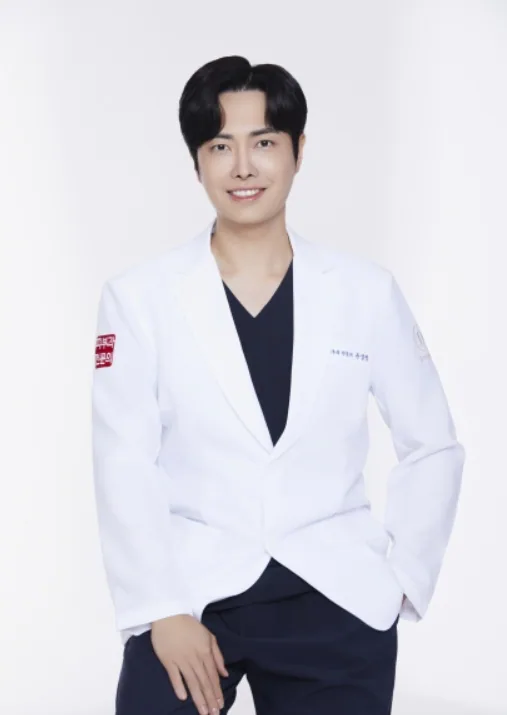
The Korean market range for exosome adjunct sessions runs roughly: ASCE+ topical adjunct paired with fractional laser, microneedling, or RF-microneedling for skin ₩300,000-₩600,000 per session (physician-delivered with ExoCoBio direct-distribution product verification — note that some Korean clinics offer lower-tier nurse-delivered protocols at ₩99,000-₩229,000 split-tier pricing, but we do not operate that tier). ASCE+ HRLV scalp single session ₩200,000-₩600,000 per session. A 5-session scalp AGA course package typically runs ₩1,500,000-₩2,500,000. Pricing varies with product version, paired procedure, and clinic positioning. We quote our pricing in writing at consult based on your specific concern, paired procedure selection, and session count — quoted after consultation per Korean cosmetic-medicine convention. Loss-leader chain-clinic exosome pricing often reflects shorter sessions, nurse delivery, less rigorous product verification, and high-volume throughput; Dr. Yun's small-practice protocol prioritizes regulatory honesty, ExoCoBio direct verification, and adjunct-not-replacement framing.
Can exosome help with melasma?
Honest answer: cautiously, as an adjunct only — not as primary therapy. Wang 2022 melasma trial (n=60 hUCMSC-Exos) is the primary preliminary evidence for exosome in melasma, with a modest signal. Cui 2025 documented the miR-125b-5p / TGF-β / Smad mechanism for ADSC-Exos in pigment biology. However, melasma is a chronic relapsing inflammatory pigmentary disorder, and the foundation of melasma management remains: (a) primary topical therapy (hydroquinone 4%, tranexamic acid topical or oral, azelaic acid, vitamin C, niacinamide), (b) strict mineral SPF 50+ broad-spectrum daily, (c) sun avoidance and trigger management, (d) optional Cosmelan mask protocol with 6-month home regimen for committed patients. Exosome adjunct alongside microneedling can be discussed for patients already on optimized baseline therapy who want an additional modality — we will frame it as preliminary-evidence adjunct, not replacement. We will NOT offer exosome as a melasma standalone or as a substitute for sun protection and topical therapy.
Why does this clinic refuse certain exosome protocols other clinics offer?
Because the safety margin in exosome therapy lives in operator discipline — honest regulatory framing (ASCE+ COSMETIC registration, not drug; FDA has approved ZERO exosome products), explicit refusal of IV exosome (FDA enforcement warning letters 2024-2025 + Nebraska 2019 bacterial infection cluster), refusal of the 'stem cell therapy' framing (exosomes are extracellular vesicles, not live cells), insistence that exosome is an ADJUNCT not a REPLACEMENT for first-line AGA pharmacotherapy (Chen 2020 minoxidil + finasteride combination superiority), ExoCoBio direct distribution with shipment-level serial verification (counterfeit Korean exosome documented in international markets), and modest-effect-size endpoint counseling (Kwon 2020 12.6 percentage point delta, Estupiñán 2025 non-inferior to PRP not superior). Korean specialist requirement for clinic operation is a clinic-naming and clinic-credentialing rule (의료법 Article 27 + Article 42), not a statutory per-product license. We position a Board-Certified dermatologist at the planning and verification of every exosome session as a clinical-quality choice. Factory-style high-volume exosome marketing, IV exosome, 'stem cell magic' framing, and 'exosome regrows hair' overpromises are how operator-dependent complications and patient harm accumulate — small-practice discipline with explicit refusals is how they do not.
Is consultation available in my language and can I have a virtual consult before flying?
Yes to both. Pre-trip virtual consultation is available before flight booking — submit intake form with concern photos (scalp dermoscopy or full-scalp well-lit photos for AGA patients, face photos in multiple angles for skin patients) and brief history including baseline minoxidil and finasteride duration (AGA), prior laser or microneedling or exosome history, current topicals, and isotretinoin or other medication history. Dr. Yun reviews and we email a per-session quote schedule plus realistic 1-trip or multi-trip plan recommendation before you commit to travel — including the honest assessment of whether exosome adjunct is appropriate for your concern or whether an alternative modality should be considered first. Languages supported via clinic translator: Korean / English / Japanese / Mandarin Chinese / Vietnamese / Thai / Arabic. Japanese and Mandarin typically same-week availability; Arabic, Vietnamese, Thai prefer 1-2 week lead time. English is fluent at all consults. A fully female-staffed treatment room (physician, assistant, prep tech) is arranged on request including private prep space for hijab or niqab patients. Messenger follow-up at 1-week, 4-week, and 12-week post-treatment in your language via KakaoTalk / LINE / Zalo / WhatsApp / WeChat.