Which chemical peel is right for my concern — acne, PIH, melasma, or scars?
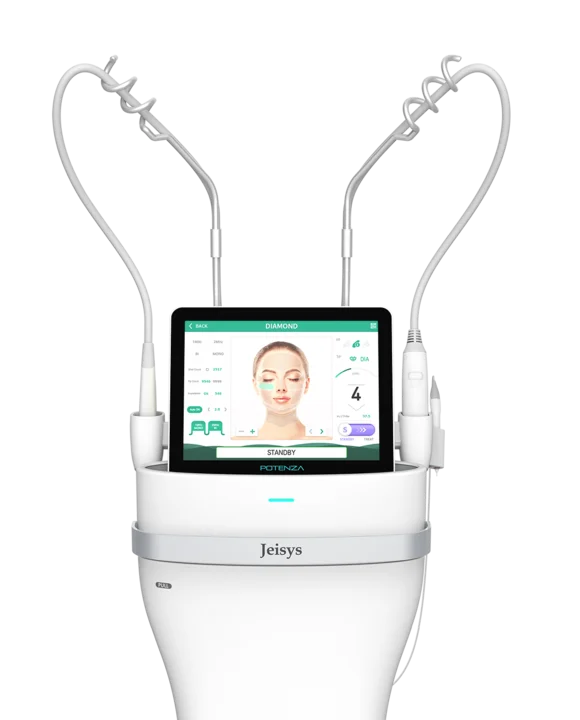
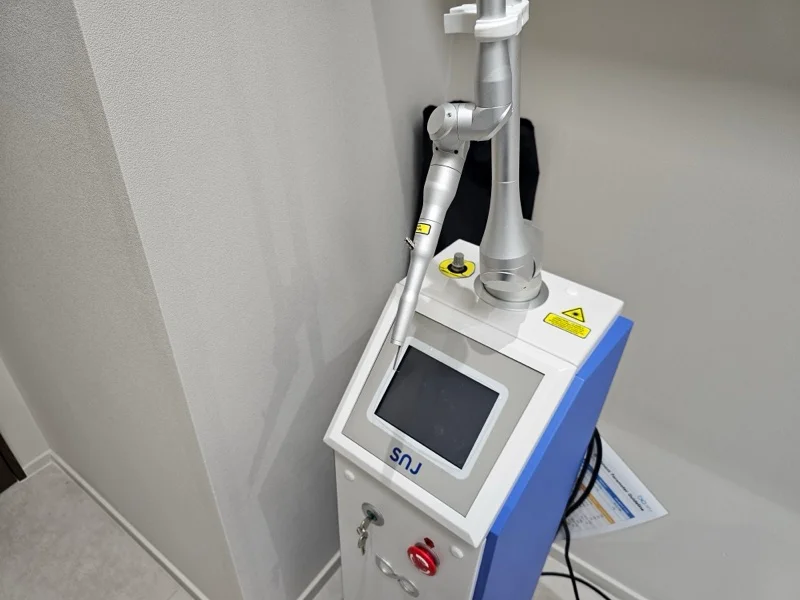
Different concerns map to different tiers. Active inflammatory acne and post-acne PIH respond to superficial salicylic acid 20-30% BHA peels — Lee 2003 (PMID 14725662) documented salicylic 30% efficacy and Ahn 2006 (PMID 16640681) documented a 12-week salicylic 30% course for Korean melasma and PIH. Diffuse melasma without ice-pick scarring is best matched to Cosmelan mask plus a 6-month home regimen, with the honest disclosure that Cosmelan has 0 PubMed randomized trials and that melasma is chronic relapsing rather than curable. Atrophic ice-pick acne scars (narrow deep punctate scars) match to focal TCA CROSS 70-100% — Lee 2002 Yonsei (PMID 12460296) and Agarwal 2015 (PMID 25899884) documented 66% of patients achieving over 50% improvement across multiple sessions, but boxcar and rolling scars do not respond and we route those to subcision plus Potenza microneedling RF or fractional CO2. Photoaging texture and dullness match to medium TCA 15-30% or PRX-T33 with the PRX-T33 limited-evidence caveat. We assess your specific concern individually at consult rather than running uniform protocols.
What is PRX-T33 — is it really 'no-downtime medium-depth'?
Honest answer: PRX-T33 (TCA 33% + hydrogen peroxide + kojic acid, WiQo Italy formulation, CE Class I) is commonly marketed in Korea as a 'no-frost no-downtime medium-depth' peel — but that phrasing is a physiologic contradiction. Medium-depth chemical injury by definition produces frost and downtime; if PRX-T33 produces no frost and no downtime, then by definition it is not delivering medium-depth chemical injury. PubMed search returns 0 randomized controlled trials for PRX-T33 — only manufacturer literature and small case series exist. We use PRX-T33 selectively for patients who explicitly accept the limited-evidence framing, and we do not allow PRX-T33 to be cross-claimed against the TCA medium-depth evidence base (which rests on TCA 15-35% Jessner+TCA protocols with documented frost and 5-10 day downtime). If your goal is the evidence-backed medium-depth result, conventional TCA 15-30% is the choice; if your goal is gentle layered improvement with minimal downtime and you accept the limited-evidence framing, PRX-T33 may be appropriate.
What is Cosmelan — does it cure melasma?
Honest answer: no. Melasma is a chronic relapsing inflammatory pigmentary disorder and there is no cure in 2026 — only management. Cosmelan (mesoestetic, Spain) is a depigmenting mask protocol with 0 PubMed randomized controlled trials and case-series evidence only. The in-clinic mask is applied for 8-12 hours, and the result depends almost entirely on the 6-month home regimen — Cosmelan-2 maintenance cream nightly, daily mineral SPF 50+, strict sun avoidance, and home-dermatologist continuity. Without home adherence, Cosmelan produces rebound melasma. The original Dermamelan formulation contained hydroquinone (HQ); long-term HQ use carries documented ochronosis risk (Nagler 2014 PMID 25526333, Bhattar 2015 PMID 26677264). Current EU reformulation is HQ-free; US OTC HQ products were discontinued September 2020. We verify current Korea-market Cosmelan formulation per shipment and disclose it in writing. We refuse Cosmelan for patients who cannot commit to home regimen plus home-clinic continuity.
Will TCA CROSS work for my rolling and boxcar acne scars?
Honest answer: no. TCA CROSS 65-100% works specifically for ice-pick scars — narrow deep punctate scars where focal protein coagulation in the scar base triggers focal collagen remodeling. Lee 2002 Yonsei (PMID 12460296) and Agarwal 2015 (PMID 25899884) document this specific indication. Boxcar scars (wider shallow depressions with vertical walls) and rolling scars (broad undulating depressions over tethered fibrosis) do NOT respond to CROSS per Chilicka 2022 (PMID 35628870) review — they require subcision (to release fibrous tethers) plus fractional CO2 laser, fractional erbium glass, or radiofrequency microneedling (Potenza) for resurfacing. We assess scar morphology individually at consult — typically a mix of scar types is present, and we will recommend CROSS for the ice-pick component plus a separate Potenza or fractional protocol for the boxcar and rolling components.
Can I complete a chemical peel course in a single Seoul trip?
Depends entirely on the protocol. Single-session options ARE single-trip viable: one PRX-T33 session, one Cosmelan in-clinic mask application (with 6-month home regimen continued at home), one superficial salicylic peel, or one TCA CROSS session for a small number of ice-pick scars. A full 5-session superficial peel course (typically over 2-3 months) is NOT single-trip viable. A full TCA CROSS scar course (typically 4-10 sessions over 6-18 months) is NOT single-trip viable. A medium TCA 15-30% multi-session plan (typically 2-3 sessions over 2-4 months) is NOT single-trip viable. We tell patients this at consult, not after deposit, and we will not start a course you cannot complete safely. Realistic multi-trip options: start the course on this trip and continue at a competent home-market dermatologist (especially feasible for superficial peels which are widely available globally), or plan 2-3 trips to Seoul spaced 4-12 weeks apart.
What is the most serious risk of chemical peeling?
Three distinct serious risks. (1) Post-inflammatory hyperpigmentation (PIH) in FST III-VI skin — Vemula 2018 (PMID 29518457) documented an odds ratio of 5.14 for PIH in FST VI even with superficial peels, peaking at 2-4 weeks and persisting up to 12 weeks. Pre-peel priming with hydroquinone or retinoid, conservative concentration, and strict daily SPF reduce risk but do not eliminate it. (2) Ochronosis from extended hydroquinone use — Nagler 2014 (PMID 25526333) and Bhattar 2015 (PMID 26677264) documented paradoxical gray-brown darkening from low-dose HQ over months, especially relevant to original Dermamelan formulation and Cosmelan-2 home regimens that include HQ. We verify Korea-market Cosmelan formulation per shipment. (3) Rebound melasma from Cosmelan or other depigmenting protocols without strict 6-month home adherence and home-dermatologist continuity — melasma returns more aggressively than baseline. We screen for adherence willingness pre-treatment and refuse Cosmelan for patients who cannot commit to the regimen.
I'm Fitzpatrick Skin Type V or VI — what peels are safe for me?
Superficial-only protocols and conservative concentrations. Vemula 2018 documented elevated PIH risk for FST VI even with superficial peels (OR 5.14), so even superficial work requires pre-peel priming with hydroquinone or retinoid for 2-4 weeks plus strict daily mineral SPF 50+. Our FST V-VI protocol: lactic acid or mandelic acid preferred over glycolic acid (gentler AHA profile with less PIH risk in darker skin), salicylic acid 20% (lower-end concentration) for acne and PIH, conservative dwell times, response-based titration with the willingness to stop early at the first sign of uneven frost or excessive erythema. Medium TCA 15-30% and PRX-T33 are relative contraindications for FST V-VI without explicit prior superficial-tier qualification — we do not run medium-depth uniform peels on dark skin without documented response history to superficial protocols first. TCA CROSS focal application is safer than uniform medium peels because the chemical injury is confined to the scar pit, but PIH risk in surrounding skin still applies and we counsel explicitly.
How is chemical peeling different from laser resurfacing?
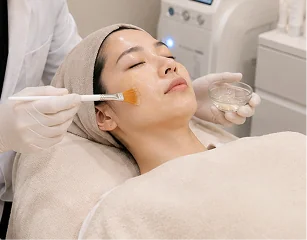
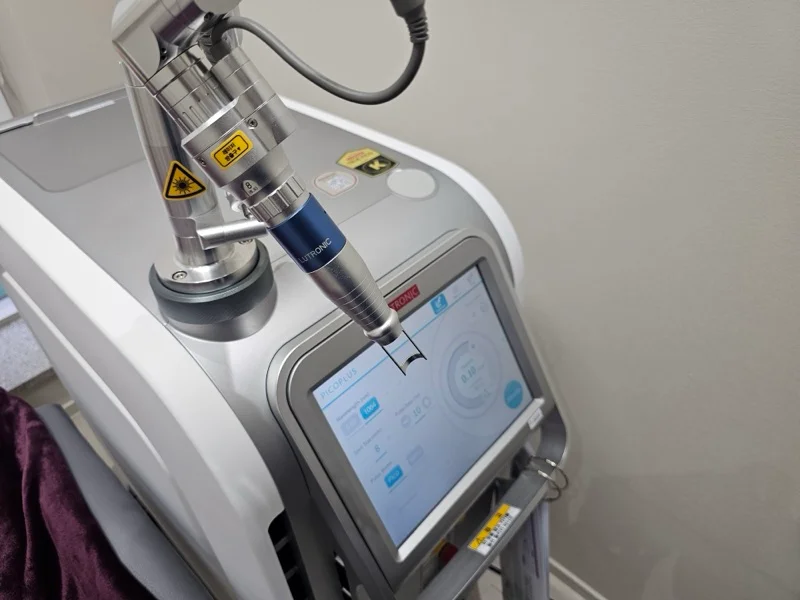
Different mechanism, different control profile, complementary rather than substitute. Chemical peeling produces uniform chemical injury across the entire treatment area — the agent + concentration + pH + dwell time + skin priming determine depth (Truchuelo 2016), and the result is uniform across the treated zone. Laser resurfacing (fractional CO2, fractional erbium glass, Q-switched, picosecond) targets specific chromophores — melanin, oxyhemoglobin, or water — with controlled spot sizes and pulse durations, often in a fractional pattern (treated micro-zones interspersed with untreated zones). Chemical peels are operator-dependent in a different way (manual application, real-time endpoint judgment) while lasers are device-dependent (fixed pulse parameters, automated scanning). For acne PIH and gentle resurfacing, superficial chemical peels are often first-line. For deep textural scars and uniform photoaging, fractional laser or radiofrequency microneedling (Potenza) typically outperforms peels. For ice-pick scars, TCA CROSS is the specific evidence-backed match. For melasma, neither lasers nor peels alone are curative — chronic topical therapy plus strict sun protection is the foundation, with adjunct devices and peels for limited improvement.
How long do peel results last?
Depends on indication and maintenance. Superficial AHA/BHA peel results for acne PIH (Ahn 2006 Korean 12-week salicylic 30% data) are typically durable with maintenance topicals and strict daily sun protection — the underlying acne and pigment pattern do not regenerate spontaneously. Medium TCA texture and photoaging results are durable for years with continued sun protection, though new photodamage accumulates with cumulative UV exposure. TCA CROSS scar improvement is durable — once the scar base elevates and collagen remodels, it does not reverse. Cosmelan melasma results are NOT durable without continued 6-month home regimen plus indefinite maintenance topicals — melasma is chronic relapsing and recurrence within 6-12 months without maintenance is the documented norm rather than the exception. We frame results honestly at consult with 'durable with maintenance' rather than 'permanent' or 'cure' language.
How is chemical peeling priced in Seoul?
The Korean market range for single-session chemical peels runs roughly: glycolic acid 20-50% ₩50,000-₩150,000 · salicylic acid 20-30% ₩70,000-₩180,000 · Jessner solution ₩100,000-₩250,000 · TCA 15-30% medium-depth ₩150,000-₩400,000 · TCA CROSS focal application ₩70,000-₩250,000 (depends on scar count) · PRX-T33 ₩150,000-₩400,000 · Cosmelan complete protocol (in-clinic mask plus 6-month home kit) ₩600,000-₩1,500,000. 5-session packages for superficial peels run ₩300,000-₩900,000 and 5-session medium or PRX-T33 packages run ₩750,000-₩1,800,000. We quote our pricing in writing at consult based on your specific concern, depth selection, and session count — quoted after consultation per Korean cosmetic-medicine convention. Chain-clinic loss-leader pricing often reflects shorter sessions, less individualized depth selection, and high-volume throughput; Dr. Yun's small-practice protocol prioritizes pre-peel priming, depth individualization, and cumulative-dose discipline.
Can I do chemical peel and laser in the same session or close together?
Generally no for medium-depth peels and ablative laser, occasionally yes for superficial peels and gentle laser. Stacking medium TCA peels with fractional CO2 or fractional erbium glass within the same session creates compounded thermal and chemical injury that elevates PIH and scarring risk — we space these by 4-8 weeks minimum. Superficial salicylic or glycolic peels can sometimes be combined with gentle laser toning (low-fluence Q-switched Nd:YAG for melasma, long-pulse 1064 nm Genesis for redness) in the same session or 1-2 weeks apart, but only with conservative settings and pre-peel priming in FST III-V skin. TCA CROSS focal application can be combined with subcision and gentle resurfacing on the same day for complex scar patients, but cumulative-dose discipline applies. We plan multi-modal scar and pigmentation protocols at consult rather than stacking by request.
Are chemical peels safe during pregnancy or breastfeeding?
No published safety data exists for elective cosmetic chemical peeling during pregnancy or lactation, so all elective peels are deferred until after pregnancy and breastfeeding are complete. Salicylic acid systemic absorption is a specific concern for medium and deep salicylic peels — even though the systemic dose is small, the precautionary principle applies. Hydroquinone in Cosmelan-2 home regimen (if present in the current Korea-market formulation) is contraindicated in pregnancy due to systemic absorption concern. Postpartum melasma (chloasma) and post-acne PIH from pregnancy-related hormonal acne are common and we can discuss treatment planning at consult, typically starting topical therapy first (azelaic acid, vitamin C, niacinamide) and adding peels after breastfeeding is complete.
Is consultation available in my language and can I have a virtual consult before flying?
Yes to both. Pre-trip virtual consultation is available before flight booking — submit intake form with concern photos (well-lit, no filter, multiple angles, both standard and Wood's-lamp equivalent if you can manage indoor versus angled lighting) and brief history including acne or PIH or melasma duration, prior peel or laser history, current topicals, and isotretinoin or other medication history. Dr. Yun reviews and we email a per-session quote schedule plus realistic 1-trip or 2-trip plan recommendation before you commit to travel. Languages supported via clinic translator: Korean / English / Japanese / Mandarin Chinese / Vietnamese / Thai / Arabic. Japanese and Mandarin typically same-week availability; Arabic, Vietnamese, Thai prefer 1-2 week lead time. English is fluent at all consults. Pre-trip messenger follow-up at 1-week, 4-week, and 12-week post-treatment in your language is included via KakaoTalk / LINE / Zalo / WhatsApp / WeChat.
Why is Dr. Yun a small-practice dermatologist instead of a high-volume chain?
Because the safety margin in chemical peeling on Asian skin lives in operator individualization — depth selection by indication (Conforti 2019 3-tier classification), pre-peel priming for FST III-V PIH discipline (Vemula 2018 OR 5.14 risk data), endpoint-driven application (Truchuelo 2016 five operator-dependent variables), cumulative-dose tracking across sessions, honest limited-evidence framing for PRX-T33 and Cosmelan, and the willingness to refuse Cosmelan for non-adherent patients or refuse TCA CROSS for non-ice-pick scars rather than chase a sale. Korean specialist requirement for clinic naming is a clinic-naming rule under 의료법 Article 27 and Article 42, not a statutory per-procedure device-operation gate; we position a Board-Certified dermatologist at the planning, depth selection, and review of every peel session as a clinical-quality choice. Factory-style high-volume chemical peeling is how operator-dependent complications (PIH from uniform medium peels on un-primed FST V skin, ochronosis from extended HQ regimens without screening, rebound melasma from Cosmelan without adherence framing, non-response from CROSS applied to boxcar scars) accumulate; small-practice discipline is how they do not.