
InMode Forma · Fx
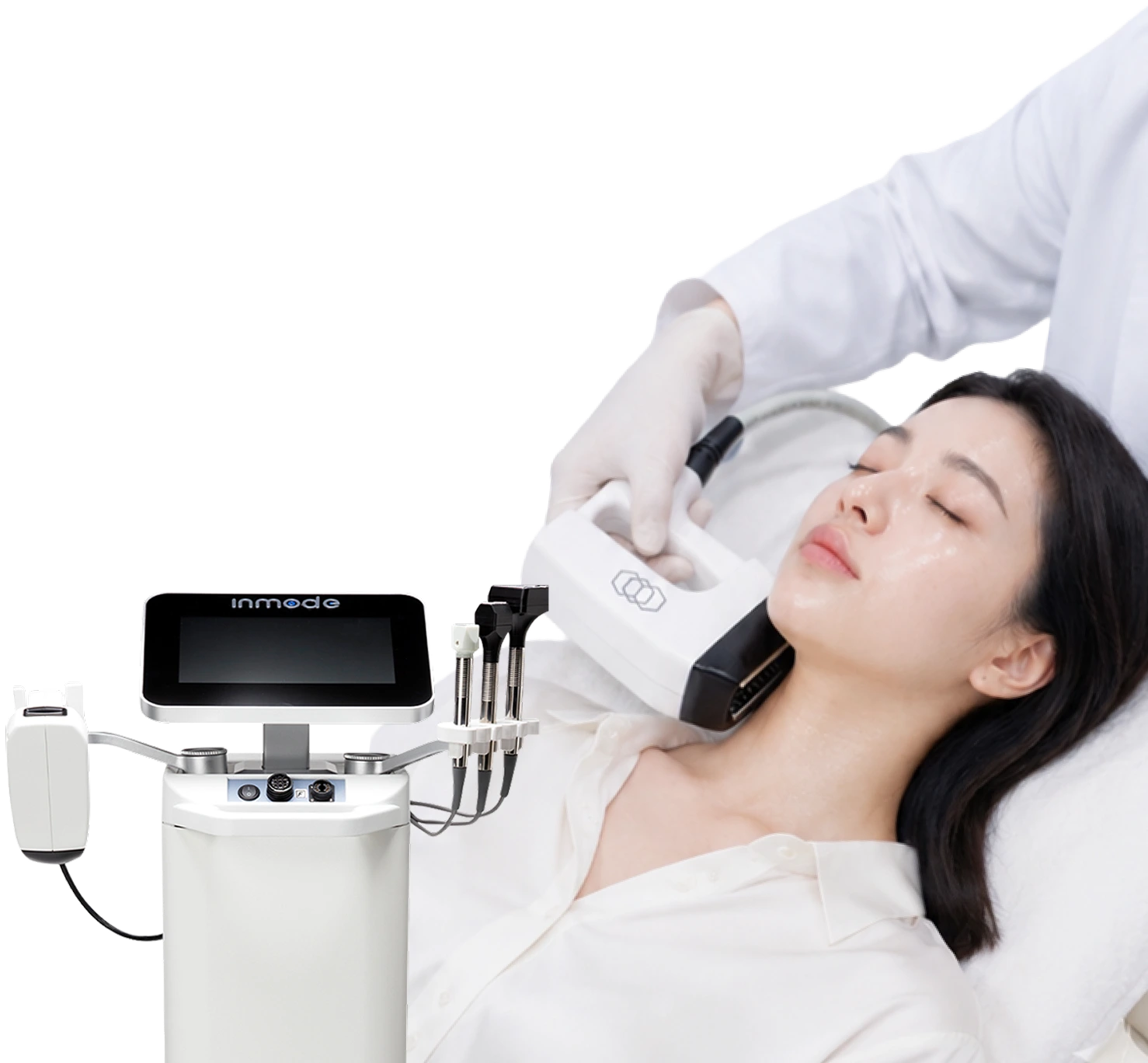
InMode Forma + Fx
Forma RF Tightening + Fx RF Fat Reduction
Board-Certified Dermatologist
Dr. SangYoul Yun
AAD International Fellow
IFAAD
- Duration
- Forma 30-45 min · Fx 30-45 min
- Sessions
- 3-5 sessions monthly · maintenance every 4-6 months after initial course
- Downtime
- Varies by applicator, settings, treatment area, and individual response


InMode Forma+ Fx Treatment in Seoul
InMode Forma and Fx are bipolar radiofrequency modalities considered for selected skin-tightening and contour concerns. Discomfort, recovery, treatment interval, and suitability vary by applicator and individual assessment.
- Duration
- Forma / Fx 30–45 min
- Sessions
- 3–5 sessions, monthly
- Downtime
- Varies by applicator and response
- Peak Result
- End of the 3–5 session course
Results Over Time
Forma targets shallow dermal collagen for texture, elasticity, and pores; Fx targets subdermal fat for jawline, double chin, and midface contouring.
 01
01Day 0–3
Temporary redness, warmth, swelling, tenderness, or bruising can occur; recovery varies by applicator and settings.
 02
02Sessions 2–3
Subtle contouring that builds with each monthly session.
 03
03End of course: Forma
Visible collagen layering for the jawline, cheeks, and periorbital area.
 04
04End of course: Fx
Modest jawline definition and reduced double chin without surgery.
 05
05Long-term
Response and any future treatment are reviewed individually rather than assumed from a fixed maintenance timetable.
Images are AI-generated for illustrative purposes only.
InMode Forma + Fx
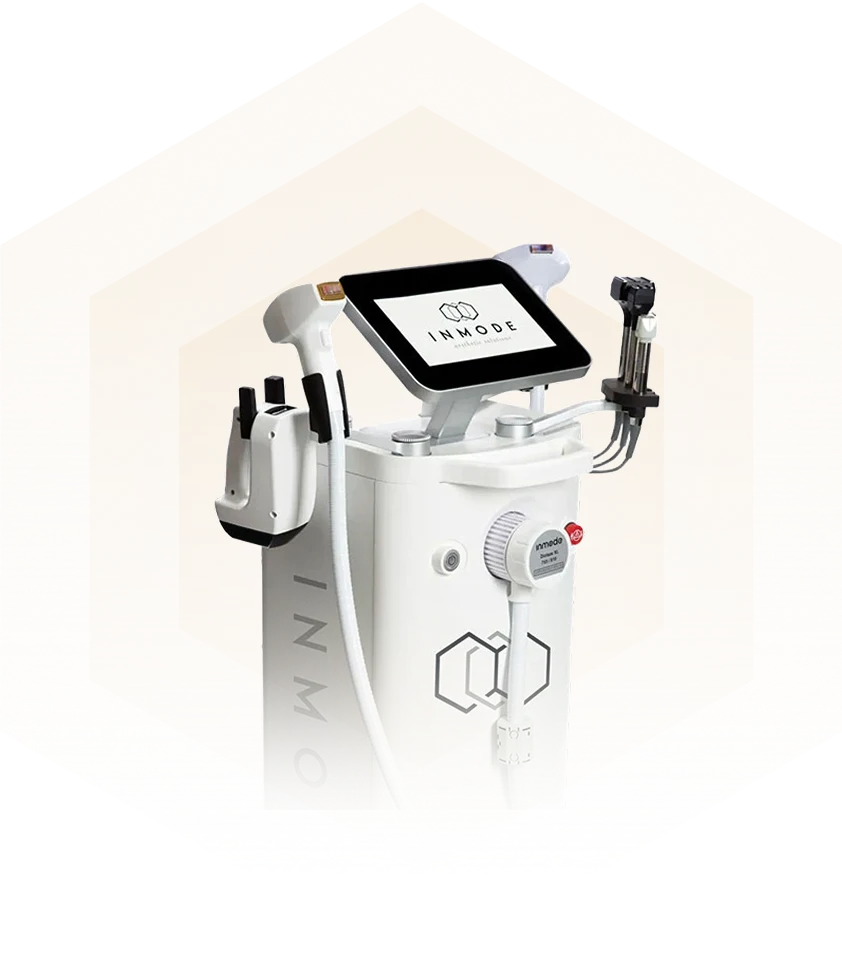
Forma and Fx use different bipolar RF applicators. Their expected effect, discomfort, recovery, regulatory indication, and evidence should be discussed separately before a plan is selected.
Forma: Skin Tightening
Forma delivers bipolar RF with temperature feedback for selected skin-quality and firmness concerns; discomfort and response vary.
Fx: Contour Planning
Fx uses bipolar RF and suction for selected contour concerns. It does not replace liposuction and is not suitable for every patient.
HVP + Vacuum
The applicator combines electrical energy and suction. Settings, material risks, and off-label aspects require clinician review.
Treatment Process
 01
01Clinical Consultation
Consultation maps laxity, jawline, submental fat, and midface volume: Forma alone / Fx alone / combo / alternative.
 02
02Regulatory Disclosure
Off-label cosmetic use of a device cleared for electrocoagulation is disclosed at consent.
 03
03Preparation
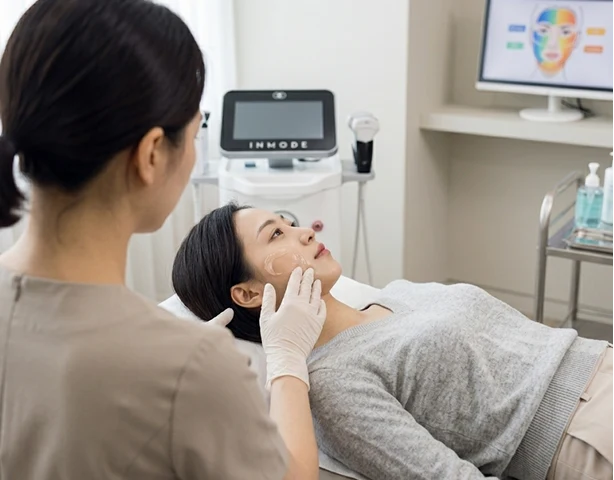
Pre-treatment cleansing + ultrasound gel; makeup off; baseline photos.
 04
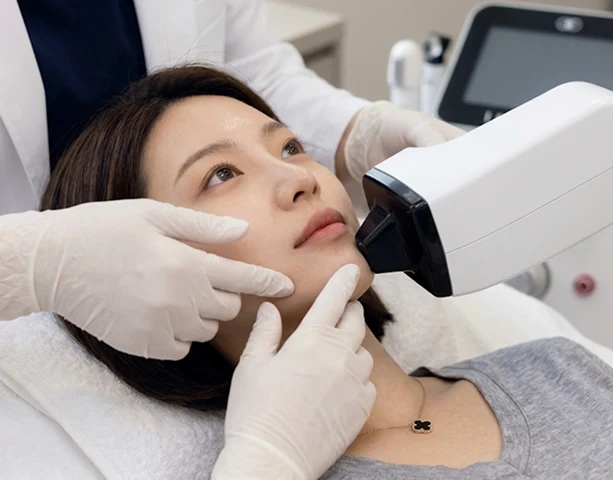
04Forma Application
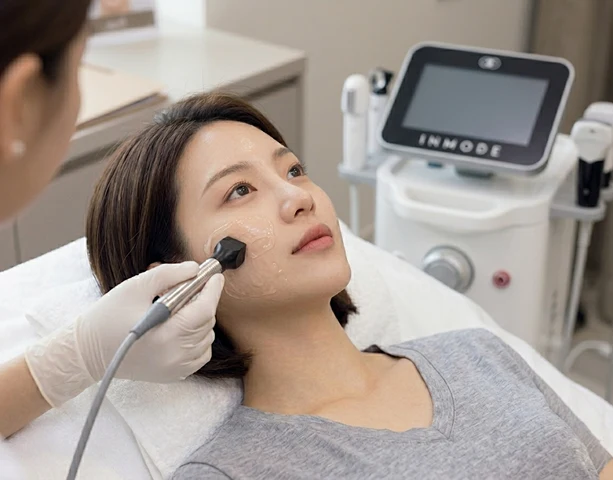
Bipolar RF handpiece, slow even strokes, closed-loop thermistor at a 40–43 °C target.
 05
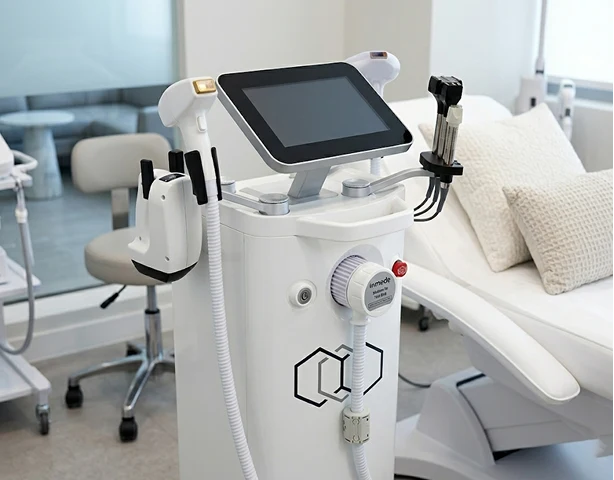
05Fx Treatment
Deeper energy profile for subdermal fat targeting.
 06
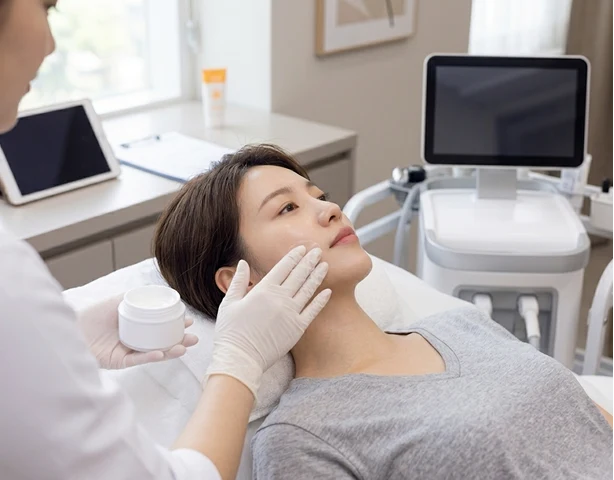
06Treatment sequencing
Whether Forma, Fx, or another option should be used or combined, and the timing, require individual assessment. No fixed same-day combination protocol is published.
 07
07Aftercare Routine
Post-treatment cooling, emollient, SPF 50+. Monthly cadence × 3–5 sessions.
 08
08Progress Review
Cumulative session review. The course is paused if needed rather than chasing an endpoint.
Recovery & Care
Same day
Temporary redness, warmth, swelling, tenderness, or bruising can occur. Follow the treating clinician's instructions before applying makeup.
First 24 hours
Avoid excessive heat and vigorous exercise; keep skin hydrated.
Follow-Up
Review the skin response before another session; do not compress a course to fit travel.
Future Treatment
Any future treatment interval is individualized after response, goals, and alternatives are reassessed.
Frequently Asked Questions
Q.Forma vs Thermage vs Ultherapy?
Forma: bipolar RF, shallow dermal, monthly course, near-zero pain. Thermage: monopolar RF, mid-dermal, single high-dose session. Ultherapy: HIFU at SMAS depth, closest non-invasive analog to surgical lifting. Complementary, not substitutes. Plan discussed at consult.
Q.Can I complete a Forma + Fx course in one Seoul trip?
No. 3-5 monthly sessions cannot be compressed into one trip. Options: 1-2 Seoul sessions + written protocol for home InMode dermatologist · multiple Seoul trips · or Thermage instead (single-session, higher per-visit dose, better fits travel).
Q.Is Forma FDA-cleared for skin tightening?
The InMode RF System is FDA-cleared for electrocoagulation / hemostasis. Cosmetic skin tightening is off-label use of the cleared device, disclosed in writing at consent. Off-label use is common in aesthetic dermatology and supported by published studies (e.g., Boisnic histology).
Q.Morpheus8 vs Potenza?
Both are RF microneedling. Overlapping specs; no published superiority data. Outcomes are operator-dependent. See our Potenza page for full discussion.
Q.Do you offer FaceTite or BodyTite?
No. RFAL with an incision and 5-14 day downtime, with motor nerve injury risk reported on internal probes. In Korea these fall within the scope of plastic surgery. We refer rather than improvise.
Q.Will Fx replace deoxycholic acid or liposuction?
No. Fx is non-surgical contouring and does not replace liposuction. Suitability, discomfort, recovery, and alternatives require individual assessment.
Q.Why combine Forma with Thermage / Ultherapy?
Different depths give a more natural and durable result. Common Korean protocol: Ultherapy or Thermage as the foundation, then periodic Forma maintenance across the months between deeper sessions.
Q.Is Forma + Fx safe for Fitzpatrick V-VI?
Yes. Both are chromophore-independent, so no PIH risk like laser or IPL. Burn cases stem from too-long dwell at a site or dry skin contact over bony prominences, prevented by slow even strokes and closed-loop feedback.
Q.Thermage 2 years ago, Forma maintenance now?
Likely yes if you have noticed gradual loss. Forma monthly course extends collagen support without re-treating SMAS. Alternatives: second Thermage for refresh, or Ultherapy if laxity has progressed.
Q.Maintenance cadence?
Every 4-6 months after the initial 3-5 session course. Without maintenance, results fade over 6-12 months. Maintenance often best delivered by home-country dermatologist with InMode after Seoul calibration.
Q.Will Forma replace a facelift?
No. No non-invasive device replicates a surgical SMAS facelift. For moderate-to-severe laxity we refer to plastic surgery rather than sell a device that cannot deliver the result.
Q.Do I need to stop skincare before Forma or Fx?
Retinoids and acid exfoliants paused 3-5 days before. Recent HA filler (< 2 weeks) at site defers RF. Personalized pre-treatment checklist sent after intake form.
References16
The clinical claims on this page (device specs, efficacy timelines, safety profile) are supported by the primary sources below. Each citation links to the original paper or regulatory record.
- [1]First clinical series of bipolar RF Forma for facial skin tightening. J Drugs Dermatol (Nelson) (2015).
- [2]Bipolar RF split-face histology: collagen synthesis without elastin change. J Cosmet Laser Ther (Boisnic) (2017).
- [3]Effectiveness and safety of radiofrequency for face and neck rejuvenation: systematic review. Lasers Surg Med (Austin et al.; RF category evidence, not an InMode-only review) (2022).
- [4]Monopolar RF for non-invasive facial skin tightening. Aesthet Surg J (Abraham) (2007).
- [5]Non-surgical skin tightening devices review and comparison. Curr Opin Otolaryngol (Greene) (2014).
- [6]Thermal denaturation thresholds for dermal collagen. Lasers Surg Med (Hayashi) (2001).
- [7]Porcine RF wound healing and dermal contraction histology. Lasers Med Sci (Lim) (2013).
- [8]Mono-bipolar CrossLIFT RF combination protocol in Asian skin. Skin Res Technol (Oku) (2025).
- [9]IPL for photoaging and pigmentation: clinical review. Dermatol Surg (Goldman) (2005).
- [10]IPL for solar lentigines and ephelides in Asian skin. Dermatol Surg (Negishi) (2002).
- [11]IPL versus Q-switched alexandrite for Asian pigmented lesions. Dermatol Surg (Wang) (2006).
- [12]Bipolar RF combined with IPL for Chinese skin rejuvenation. J Cosmet Laser Ther (Yang) (2016).
- [13]Selective photothermolysis: selective absorption of pulsed radiation. Science (Anderson) (1983).
- [14]Aesthetic laser treatments for Asian skin: PIH risk by device. Am J Clin Dermatol (Ho) (2009).
- [15]ASDS isotretinoin consensus: insufficient evidence for a mandatory delay before nonablative lasers. Dermatol Surg (Waldman et al.; ASDS task force) (2017).
- [16]Radiofrequency after hyaluronic-acid filler: clinicohistological analysis at different time points. J Cosmet Dermatol (Jurairattanaporn et al.) (2023).
Notice
- Pregnancy or breastfeeding
- Active implanted cardiac device or electrical implant in the RF field
- Active skin infection, HSV, or open wound at the site
- Active skin malignancy or melanoma history at the site
- Recent HA filler within 2 weeks, sequence reviewed at consultation
- Therapeutic anticoagulation or systemic immunosuppression requires physician clearance
- Implants or recent surgery under the treatment area, deferred or sequenced
Session summary & comparison
| Item | Details |
|---|---|
| Duration | Forma 30-45 min · Fx 30-45 min |
| Sessions | 3-5 sessions monthly · maintenance every 4-6 months after initial course |
| Downtime | Varies by applicator, settings, treatment area, and individual response |
| Peak result | End of 3-5 session course · peak dermal collagen and contouring 3-6 months after the initial course |
Related procedures
Evidence & comparison guides
Need another answer before deciding?
You do not need to read every guide. Open the question that still matters to your decision.
Optional decision guides
Notice: Individual results may vary depending on skin condition, treatment history, and recovery factors. All treatment plans are determined through individual consultation with a board-certified dermatologist. The information on this page is for reference only and does not constitute medical advice or guarantee specific outcomes.
Next Step