
Scalp Regenerative Support
Hair Loss Treatment in Seoul
Non-Surgical Scalp & Follicle Support
Board-Certified Dermatologist
Dr. SangYoul Yun
AAD International Fellow
IFAAD
- Duration
- 30-60 min (consultation + scalp injection visit)
- Sessions
- Drug therapy daily; PRP × 3 at 4-week intervals, then every 3-6 months
- Downtime
- Minimal (mild scalp tenderness 24-48 h after injection)


Hair Loss Treatment in Seoul
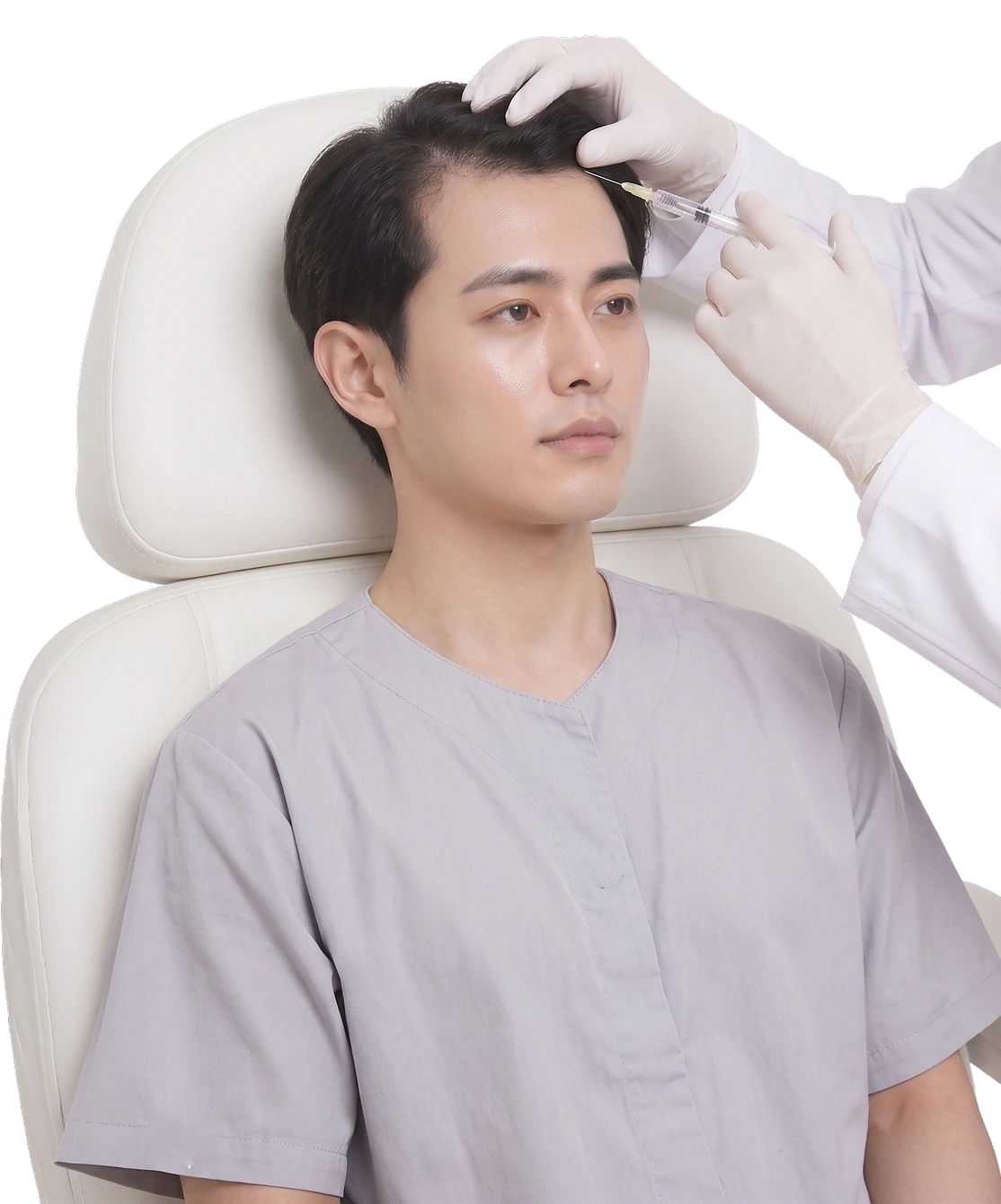
PRP hair-loss treatment is a non-surgical scalp support treatment that uses platelet-rich plasma prepared from your own blood.
- Duration
- 30–60 min
- Sessions
- 3–4 (every 4–6 weeks)
- Downtime
- Short (improves in a few days)
- Peak Result
- 4–6 months (after the series)
Results Over Time
PRP hair-loss treatment may help support the scalp environment and weakened hair follicles in patients with early thinning or reduced density.
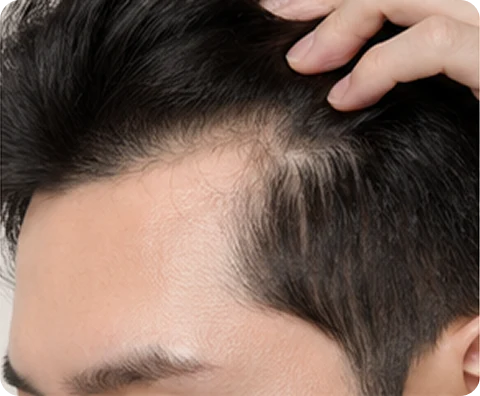 01
01Same day
Mild redness, stinging, or small injection marks may appear. Avoid intense exercise, sauna, and alcohol on the day.
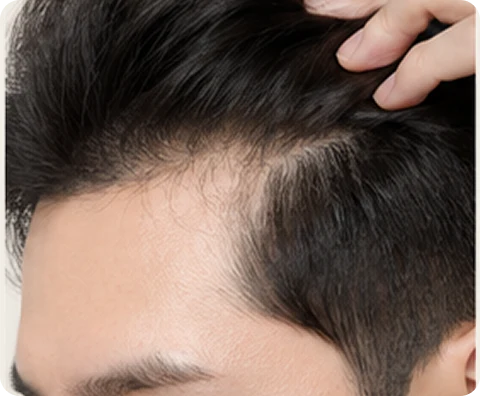 02
02Week 1
Temporary sensitivity or mild bruising usually improves. Visible density changes are not expected immediately.
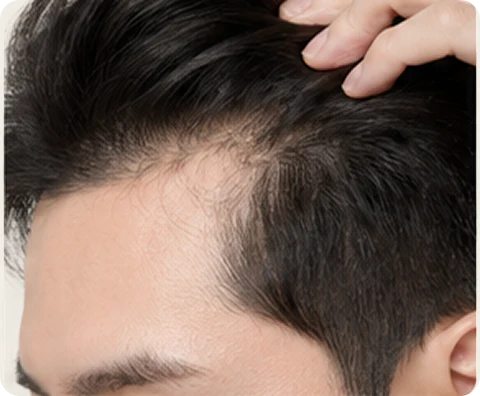 03
03Month 1
The scalp environment begins responding, though visible changes are limited. Continue sessions as planned.
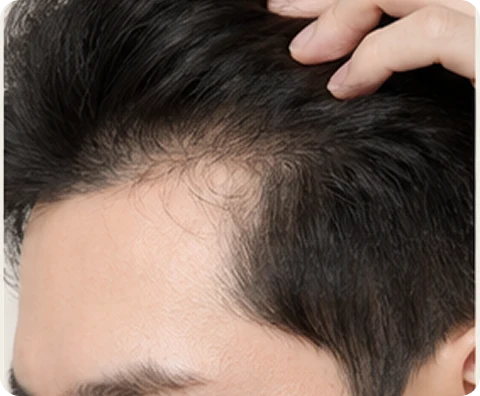 04
04Months 2–3
Some patients may notice reduced shedding, improved scalp comfort, or subtle changes in hair thickness.
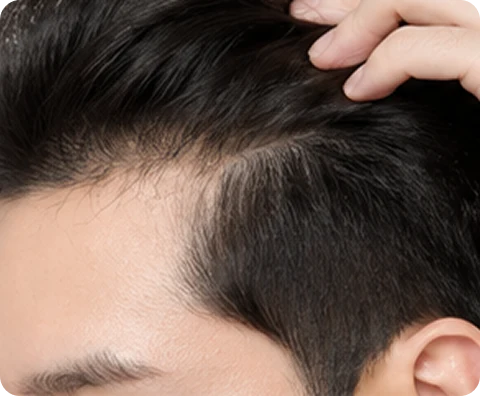 05
05Months 4+
This is the ideal time to evaluate visible improvement. Periodic reassessment and maintenance may be discussed.
Images are AI-generated for illustrative purposes only.
Treatment Process
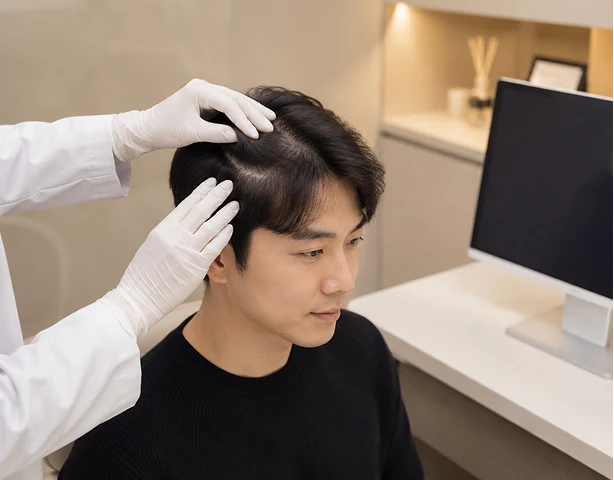 01
01Consultation
A dermatologist checks your hair-loss pattern and scalp condition.
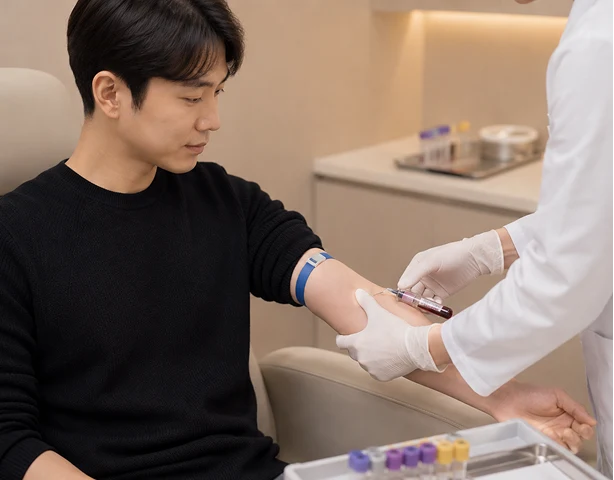 02
02Blood Collection
A small amount of blood is drawn and processed to prepare PRP.
 03
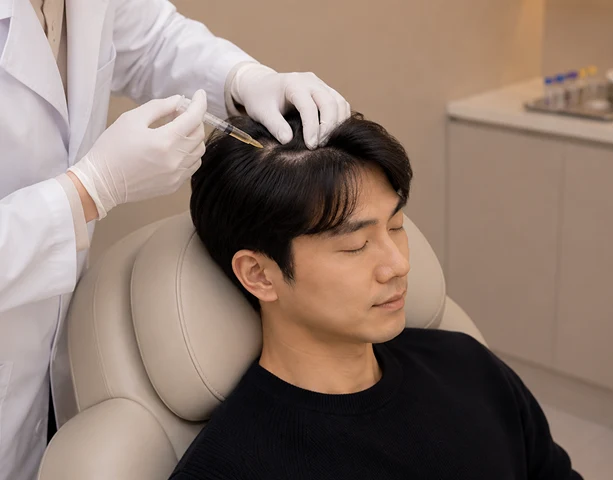
03PRP Injections
The prepared platelet-rich plasma is injected into the scalp.
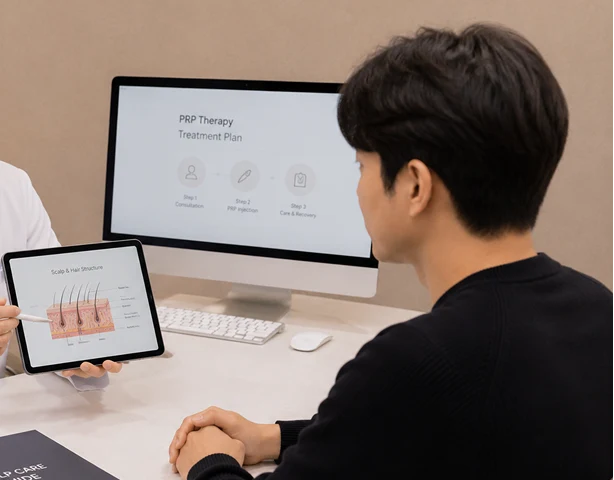 04
04Aftercare & Guidance
You receive scalp-care guidance and a plan for future sessions.
Recovery & Care
First 24 hours
Avoid touching, rubbing, or scratching the scalp. Skip intense exercise, saunas, alcohol, and harsh hair products.
Days 1–3
Follow the clinic's shampooing guide. Avoid hair dye, perms, and strong massages. Contact us if you feel severe pain.
Week 1
Temporary scalp sensitivity usually improves. Avoid unnecessary scalp procedures unless approved by your doctor.
Ongoing care
PRP results develop gradually over months. Continuous management and maintenance can be discussed based on response.

Frequently Asked Questions
Q.Will one treatment cure my hair loss?
No single treatment cures all hair loss. The dermatologist classifies your hair loss type during consultation, then selects the appropriate combination (drugs, scalp injections, or biostimulators) based on what is actually causing the loss.
Q.Are oral Finasteride and Dutasteride safe?
Both are well studied with extensive long-term safety data. Side effects exist and are reviewed in detail during consultation. Bloodwork is ordered when relevant before prescription, and follow-up is scheduled at 3 and 6 months.
Q.How long until I see results?
Hair grows slowly. Drug therapy typically shows a measurable change in shedding by 3 months and visible density change by 6-12 months. PRP often shows hairline thickening at the 4-6 month mark with the standard 3-session protocol.
Q.Can I start treatment during a short visit to Seoul?
Yes. Diagnosis, prescription, and a first PRP or scalp injection can typically be completed in a single visit. Drug therapy continues in your home country with follow-up via teleconsultation as needed.
References4
The clinical claims on this page (device specs, efficacy timelines, safety profile) are supported by the primary sources below. Each citation links to the original paper or regulatory record.
- [1]Finasteride in the treatment of men with androgenetic alopecia (Finasteride Male Pattern Hair Loss Study Group). J Am Acad Dermatol (Kaufman et al.) (1998).
- [2]Female pattern hair loss: a pilot study investigating combination therapy with low-dose oral minoxidil and spironolactone. Int J Dermatol (Sinclair RD) (2018).
- [3]A Pilot Study to Evaluate Effectiveness of Botulinum Toxin in Treatment of Androgenetic Alopecia in Males. J Cutan Aesthet Surg (Singh et al.) (2017).
- [4]Meta-analysis of efficacy of platelet-rich plasma therapy for androgenetic alopecia. J Dermatolog Treat (Gupta & Carviel) (2017).
Notice
- Pregnancy and breastfeeding (Finasteride, Dutasteride, Spironolactone contraindicated; PRP and most adjuncts deferred)
- Active scalp infection or open wounds in the injection field
- Bleeding disorders or active anticoagulation without physician clearance (PRP / scalp injections)
- Known hypersensitivity to any prescribed medication or component
- History of breast or hormone-sensitive cancer: dermatologist review required before anti-androgen therapy
Session summary & comparison
| Item | Details |
|---|---|
| Duration | 30-60 min (consultation + scalp injection visit) |
| Sessions | Drug therapy daily; PRP × 3 at 4-week intervals, then every 3-6 months |
| Downtime | Minimal (mild scalp tenderness 24-48 h after injection) |
| Peak result | 6-12 months for visible density change |
Related procedures
Evidence & comparison guides
Need another answer before deciding?
You do not need to read every guide. Open the question that still matters to your decision.
Optional decision guides
Clinic articles
- Clinic articleGLP-1 Hair Loss: Is It the Drug or the Weight Loss?Hair shedding on GLP-1 drugs like Wegovy or Mounjaro is usually telogen effluvium from rapid weight loss, not follicle damage, and usually reversible.
- Clinic articleMale-Pattern Hair Loss: Can It Be Prevented, and How Is It Treated?Androgenetic alopecia affects up to 80% of men by age 70. A board-certified Seoul dermatologist explains the DHT mechanism, diagnosis, the two FDA-approved drugs, and the wider treatment toolkit.
Notice: Individual results may vary depending on skin condition, treatment history, and recovery factors. All treatment plans are determined through individual consultation with a board-certified dermatologist. The information on this page is for reference only and does not constitute medical advice or guarantee specific outcomes.
Next Step