
Hybrid Skin Booster · PDLLA + HA
JUVELOOK in Seoul
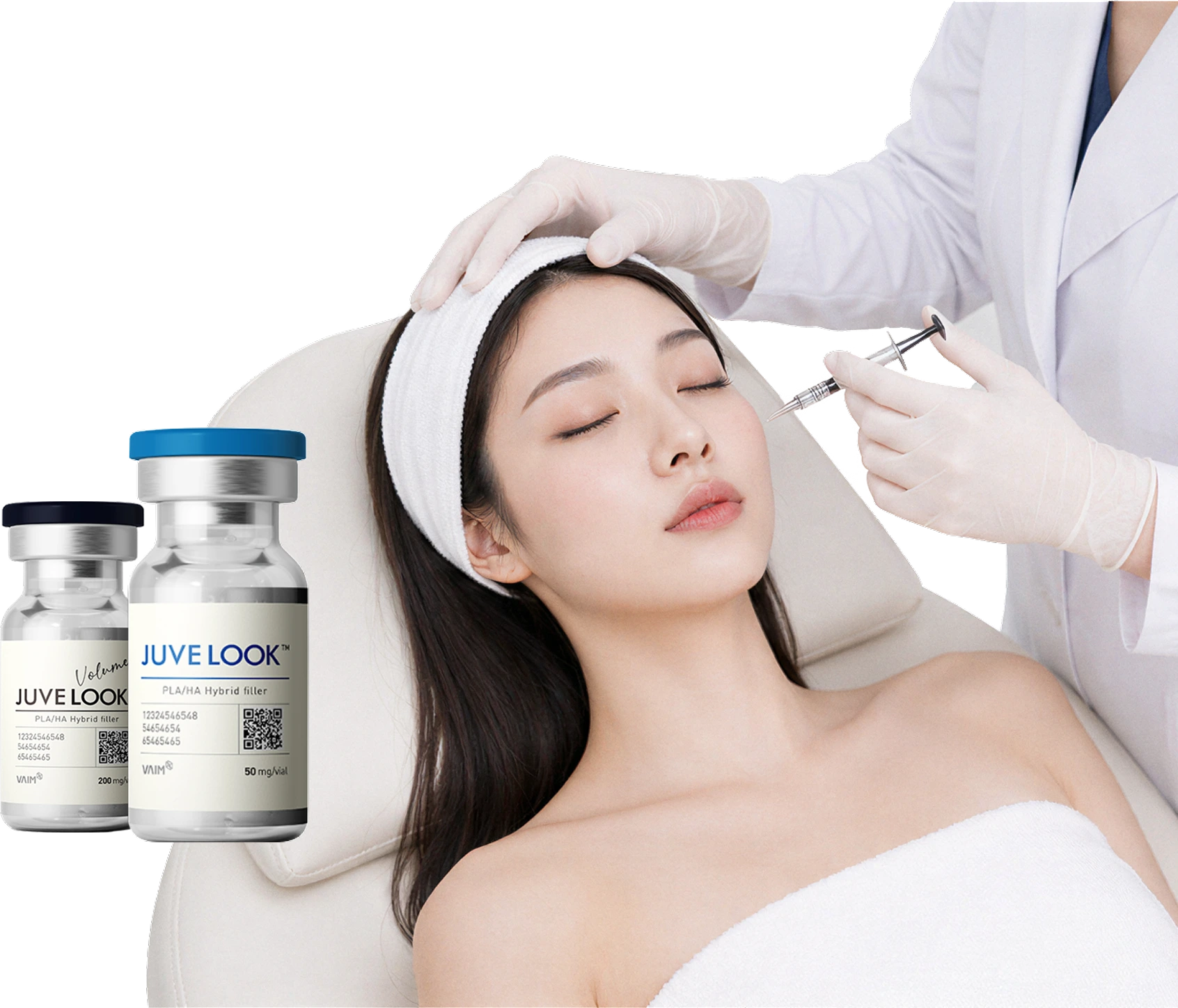
PDLLA Collagen Booster, Not a Filler
Board-Certified Dermatologist
Dr. SangYoul Yun
AAD International Fellow
IFAAD
- Duration
- 20-30 min (per area, full face); cannula technique for periorbital adds ~10 min
- Sessions
- 3 induction (~1 month / 4 wk apart); maintenance not yet standardized (>12 mo data not published)
- Downtime
- ~1 week swelling resolution


JUVELOOK Treatment in Seoul
JUVELOOK PDLLA + hyaluronic-acid hybrid skin booster at Delight Dermatology in Seoul: same-day softening with collagen stimulation over 6–12 weeks.
- Duration
- 20–30 min per area (full face)
- Sessions
- 3 induction (3–6 wk); maintenance not yet standardized
- Downtime
- ~1 week swelling resolution
- Peak Result
- Week 6–12 post-induction
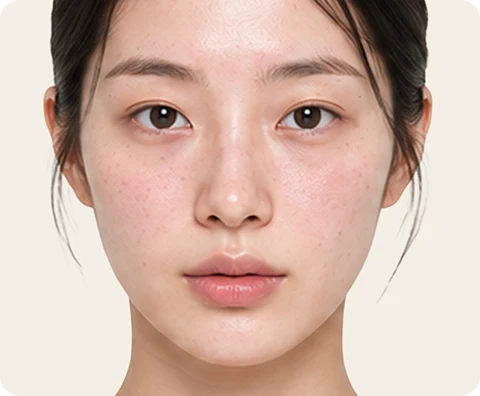
Results Over Time
JUVELOOK is a hybrid skin booster combining poly-D,L-lactic acid (PDLLA) microspheres with a hyaluronic acid (HA) carrier, made by Korea's VAIM Co., Ltd.
 01
01Day 0
Same-day softening from the HA carrier. Mild swelling normal.
 02
02Day 1–7
Swelling (~30–40%) and possible bruising resolve.
 03
03Week 2–4
HA settles. Collagen response begins.
 04
04Week 6–12
Visible texture and structure improvement after sessions 2–3.
 05
05Month 6–12
Sustained effect. Maintenance is case-by-case.
Images are AI-generated for illustrative purposes only.
JUVELOOK Skin Booster
JUVELOOK (VAIM Co.) is a PDLLA + HA hybrid skin booster, an MFDS-approved medical device in Korea. The HA component softens same-day; PDLLA stimulates collagen over 6–12 weeks.
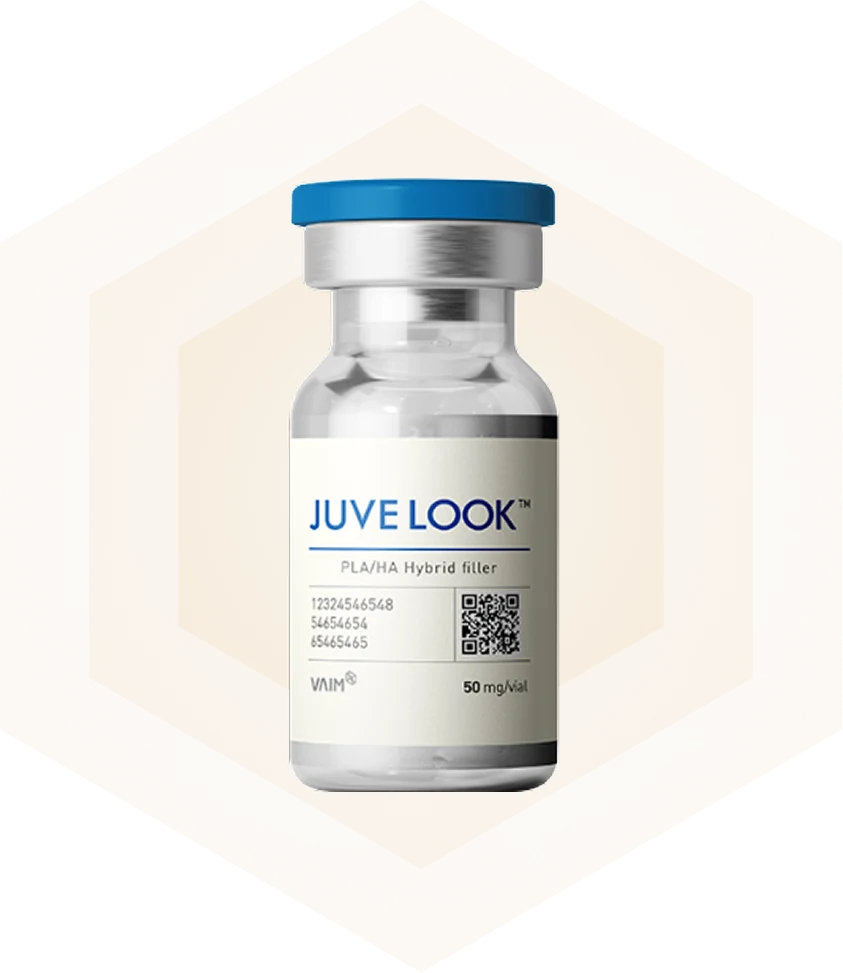
PDLLA + HA Hybrid
HA gives same-day softening; poly-D,L-lactic acid microspheres stimulate collagen over 6–12 weeks.
Small, Spherical Particles
Small biodegradable microspheres minimize nodule risk and leave almost no residual substance.
Base vs Volume
Base JUVELOOK for superficial/mid-dermal boosting; JUVELOOK Volume (LENISNA) with ~4× PDLLA for deeper volumization.
Treatment Process
 01
01Clinical Assessment
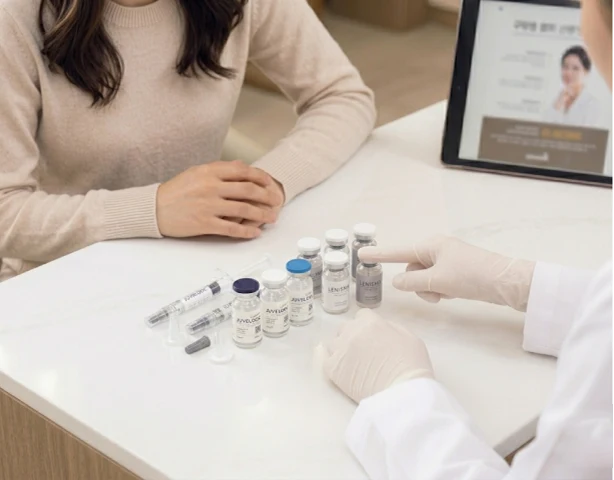
The dermatologist assesses skin concerns, goals, and history: checking lidocaine sensitivity, retinoid use, and nearby infection or dental work.
 02
02Product Selection
Base JUVELOOK (superficial/mid-dermis) vs JUVELOOK Volume / LENISNA (deeper volumization, ~4× higher PDLLA dose).
 03
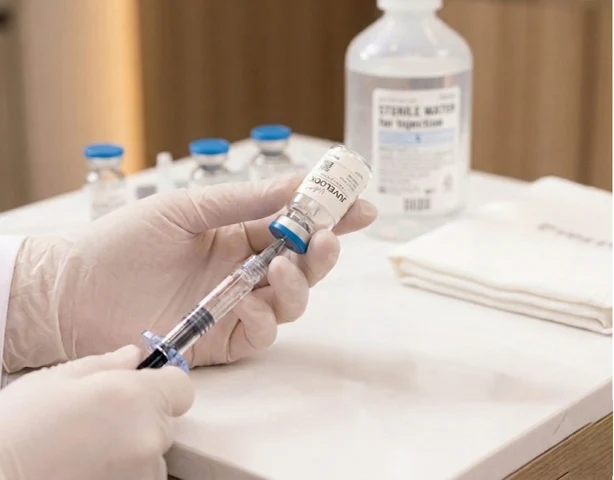
03Reconstitution
Same-day reconstitution is permitted by manufacturer protocol, shorter than Sculptra historically required.
 04
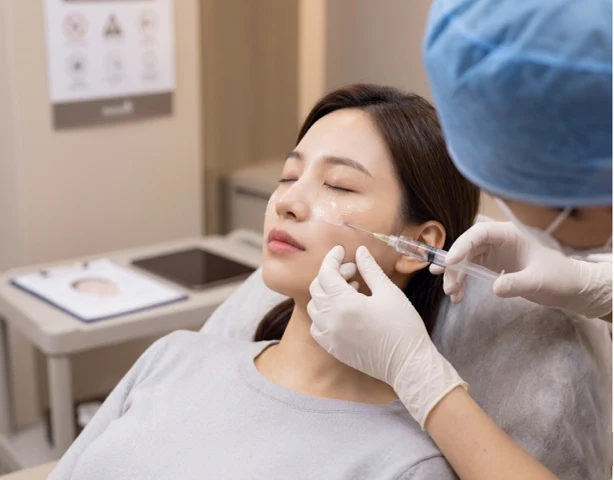
04Procedural Safety
Topical anesthesia applied; cannula strongly preferred for the tear trough and high-vascular-risk areas.
Recovery & Care
First 24–48h
Avoid heat, exercise, and facial massage. Call the clinic for severe pain, vision change, or color change.
Day 3–7
Resume normal skincare. Avoid retinoids until skin settles. SPF 50+.
Week 2–4
Schedule the next session per the induction protocol. Strict sun protection.
Long-term
Daily SPF 50+. Report any persistent nodule promptly.
Frequently Asked Questions
Q.Is JUVELOOK FDA-approved?
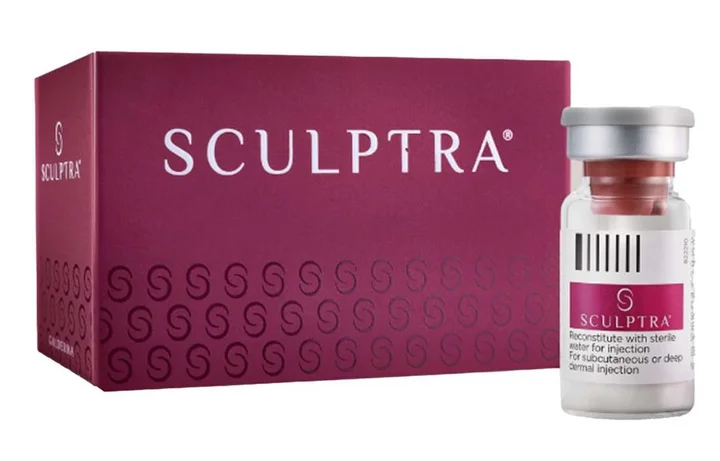
No. JUVELOOK is NOT cleared by the US FDA as an injectable. It is MFDS-approved as a medical device in Korea (since approximately 2021) and CE-marked in the EU. Several Gangnam clinic marketing pages incorrectly claim FDA approval, likely confusion with Sculptra (PLLA, manufactured by Galderma), which is FDA-approved and is a different molecule (L-isomer only, not the D,L racemic mixture in JUVELOOK). Honest regulatory framing is part of board-certified Anti-Aging specialist standards.
Q.What is the difference between JUVELOOK and JUVELOOK Volume?
Same active ingredients (PDLLA + HA) but different formulations. Base JUVELOOK uses smaller particles for superficial-to-mid-dermal skin boosting (texture, fine lines, periorbital). JUVELOOK Volume (sold internationally as LENISNA) has approximately 4× higher PDLLA dose (~170 mg vs ~42.5 mg) and a thicker HA carrier for deep-dermal or subcutaneous volumization (mid-face, deep tear trough, jawline). Variant clarity matters: JUVELOOK Volume and LENISNA on different clinic menus are the same product.
Q.How many sessions and how soon will I see results?
Delight's induction protocol is 3 sessions at about 1-month (4-week) intervals, within the 3-6-week range reported in published JUVELOOK papers (tear trough: PMID 42098500; lower eyelid: PMID 40017393; pore reduction: PMID 40469551). The HA carrier provides subtle same-day softening; collagen-driven change becomes visible at 6-12 weeks and continues developing for several months. There is currently no published JUVELOOK study extending past 12 months. Durability beyond that is not yet established by peer-reviewed data.
Q.What are the most serious risks?
Rare but serious: vascular occlusion, including blindness, from inadvertent intravascular injection, particularly in glabellar, periorbital, and forehead zones. The Lau 2025 expert consensus on PDLLA-HA200-induced visual impairment (PMID 41359890) is the authoritative safety document; clinic protocol should reflect its key safe-injection messages (cannula for high-risk zones, hyaluronidase emergency kit, anatomy-based depth control). Common transient risks include swelling, bruising, and mild erythema (~7-43% across published series); rare late-onset nodules have been documented. One published JUVELOOK tear-trough nodule case fully resolved with monopolar RF (Seo 2024, PMID 39283001).
References6
The clinical claims on this page (device specs, efficacy timelines, safety profile) are supported by the primary sources below. Each citation links to the original paper or regulatory record.
- [1]Hybrid PDLLA-HA for Tear Trough Rejuvenation. Aesthetic Plast Surg (Young & Lau): prospective study N=15 (2026).
- [2]Safe Injection Technique for PDLLA-HA200 (Visual Impairment Consensus). J Craniofac Surg (Lau et al.): authoritative safety consensus (2025).
- [3]PDLLA for Lower Eyelid Rejuvenation: Efficacy and Safety. J Cosmet Dermatol (Wan et al.): tear-trough series, 6-month follow-up (2025).
- [4]Microneedling + Topical PDLLA for Pore + Texture Improvement. Plast Reconstr Surg Glob Open (Wan et al.): N=15, 22-week follow-up (2025).
- [5]PLLA vs PDLLA Fillers: Comparative Mouse Study. In Vivo (Jang et al.): independent SNU/Sookmyung comparator (2026).
- [6]Energy-Based Management of PDLLA Tear-Trough Nodule. J Cosmet Dermatol (Seo et al.): RF rescue case report (2024).
Notice
- Pregnancy or breastfeeding
- Active skin infection or HSV at injection site
- Known hypersensitivity to lidocaine or product components
- Active autoimmune flare or history of granuloma with biostimulators: needs clearance
- Recent permanent filler or oral retinoid in the same zone: timing reviewed at consultation
- Anticoagulant medication: physician clearance and bruising risk discussed
Session summary & comparison
| Item | Details |
|---|---|
| Treatment time | About 20-30 minutes per area; the cannula technique for the tear trough and periorbital zone adds roughly 10 minutes |
| What it is | A PDLLA and hyaluronic-acid hybrid skin booster: the HA gives a little same-day softening, and the PDLLA stimulates your own collagen. It is not a volume filler |
| Course & onset | Three sessions about four weeks apart; collagen-driven change usually becomes visible around 6-12 weeks and keeps developing for months. Individual results vary |
| Downtime | Around a week of mild swelling, with possible bruising; heat and exercise are best avoided for 24-48 hours |
| Regulatory status | juvelook: Regulatory status must be verified for the exact model and jurisdiction against an authoritative primary record. |
| Category | JUVELOOK | Rejuran | Sculptra | HA skin booster |
|---|---|---|---|---|
| Main material | PDLLA microspheres with hyaluronic acid | Polynucleotide (PDRN) from salmon DNA | Poly-L-lactic acid (PLLA) | Hyaluronic acid |
| What it does | Stimulates your own collagen, with same-day softening from the HA | Supports the skin's own repair and barrier quality | Long-acting collagen biostimulation for facial structure | Hydrates and improves skin quality |
| Onset of results | Subtle softening the same day; collagen change over 6-12 weeks | Builds gradually over weeks | Develops over 3-6 months | Immediate hydration; does not build collagen |
| Sessions | 3, about 4 weeks apart | 3-4, at 2-4 week intervals | 2-3, over 4-6 weeks | A course, repeated as maintenance |
| Regulatory status | juvelook: Regulatory status must be verified for the exact model and jurisdiction against an authoritative primary record. | MFDS Class IV, CE-marked; not FDA-approved as an injectable | juvelook: Regulatory status must be verified for the exact model and jurisdiction against an authoritative primary record. | Varies by product |
Related procedures
Evidence & comparison guides
Need another answer before deciding?
You do not need to read every guide. Open the question that still matters to your decision.
Optional decision guides
- Interactive routeFit a dermatologist visit into your itineraryCompare a day trip, overnight visit, or longer stay by travel buffer and typical visible recovery.Open the trip planner →
- Comparison guideSculptra vs Skin Boosters Seoul | Evidence-Based GuideCompare Sculptra with Rejuran PN, Skinvive and Profhilo by treatment goal, published evidence, U.S. FDA status and practical questions to ask in Seoul.
Clinic articles
- Clinic articleIs Rejuran PN or PDRN? Evidence, FDA Status & Seoul GuideIs Rejuran FDA approved? Our 2026 search found no U.S. FDA authorization. What PN vs PDRN means, the published evidence, risks, and what to ask in Seoul.
- Clinic articleBuilding Collagen: Procedures vs Homecare: What Actually WorksA board-certified Seoul dermatologist separates evidence from marketing: which procedures and which skincare ingredients genuinely stimulate collagen, graded by clinical evidence.
Notice: Individual results may vary depending on skin condition, treatment history, and recovery factors. All treatment plans are determined through individual consultation with a board-certified dermatologist. The information on this page is for reference only and does not constitute medical advice or guarantee specific outcomes.
Next Step