
1064nm & 532nm Nanosecond Nd:YAG Laser
Hollywood Spectra
A Personalized Approach to Pigmentation & Skin Tone

Board-Certified Dermatologist
Dr. SangYoul Yun
AAD International Fellow
IFAAD
- Duration
- Carbon Peel 20-30 min · Toning 15-30 min · 532 nm lentigines 5-15 min
- Sessions
- Carbon Peel 1 (event) or 4-6 (acne) · Toning 5-10 weekly · Hori's 4-8 · Ota's 5-10 · Lentigines 1-2
- Downtime
- Carbon Peel and toning same-day return · Lentigines micro-crust 3-7 days

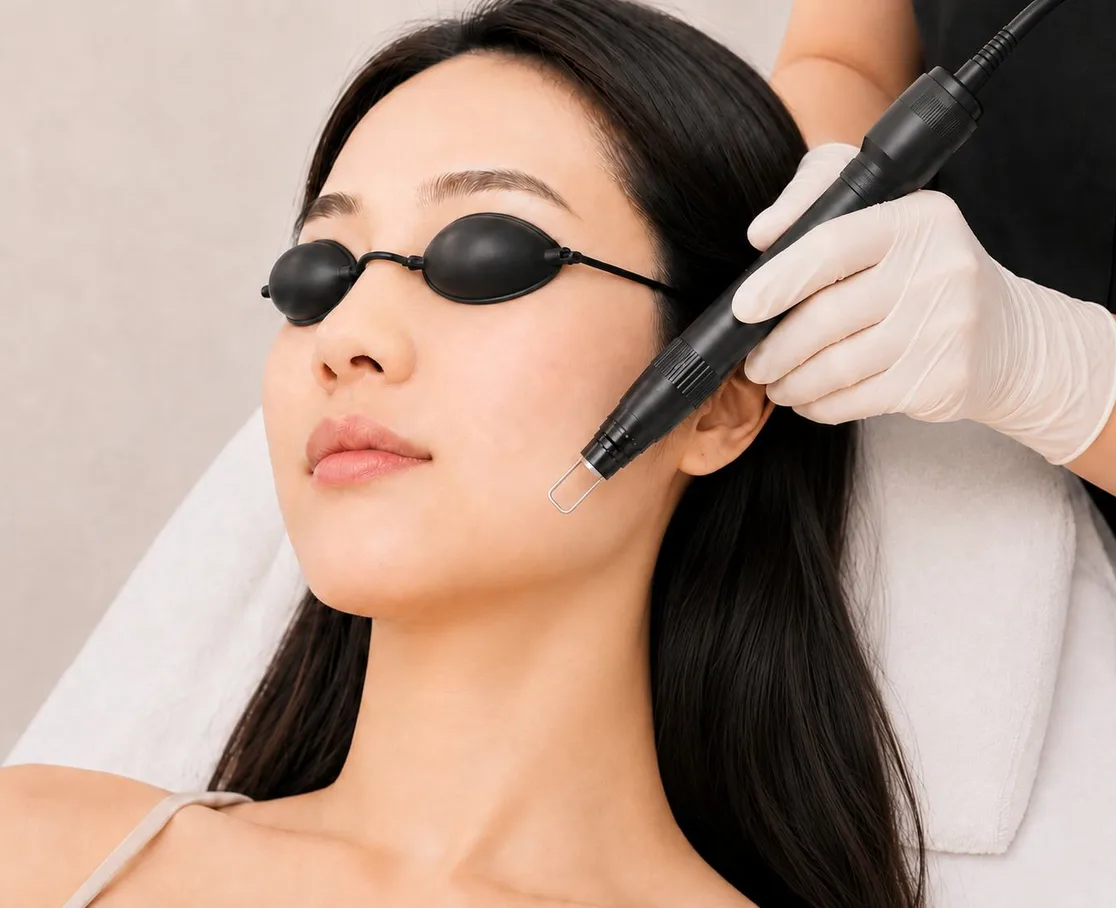
Hollywood Spectra Treatment in Seoul
Hollywood Spectra is a nanosecond 1064nm and 532nm Nd:YAG laser platform used to target unwanted pigmentation and improve uneven skin tone and texture. Settings are chosen for each patient's skin type and concern. For Fitzpatrick III-V skin the default here is ultra-low fluence. Melasma in particular is managed rather than cured, and current evidence favors combining laser with oral tranexamic acid and topical therapy over laser alone.
- Duration
- Carbon Peel 20–30 min / toning 15–30 min / 532 nm 5–15 min
- Sessions
- Carbon Peel 1 (event) or 4–6 / toning 5–10 weekly / lentigines 1–2
- Downtime
- Carbon Peel and toning same-day / lentigines micro-crust 3–7 days
- Peak Result
- Carbon Peel 1–2 weeks / toning at course end, then maintenance
Results Over Time
Hollywood Spectra is a nanosecond Nd:YAG laser treatment used to support gradual improvement in pigmentation, uneven skin tone, dullness, and overall skin clarity.
 01
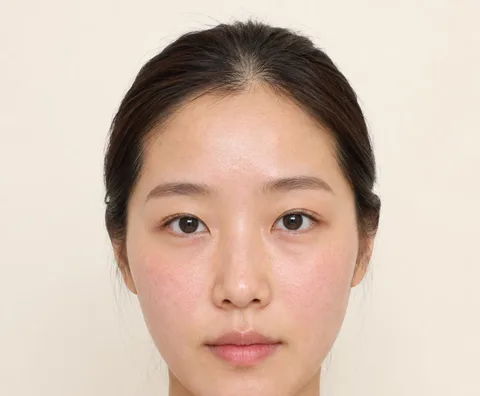
01Same day
Mild redness, warmth, dryness, or stinging may occur. Most patients return to daily activities, but strong sun exposure, heat, and irritating skincare should be avoided.
 02
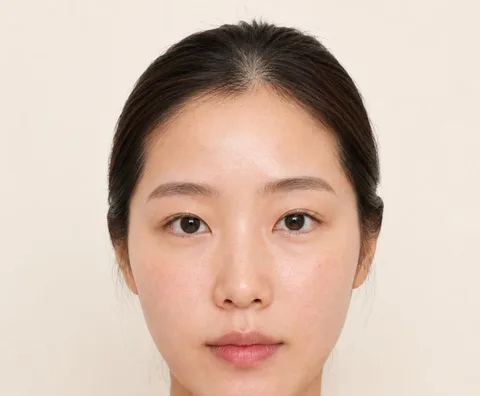
021 Week
Temporary redness or dryness usually improves. Where discrete pigment spots were treated more directly, the area may temporarily look darker or develop mild flaking.
 03
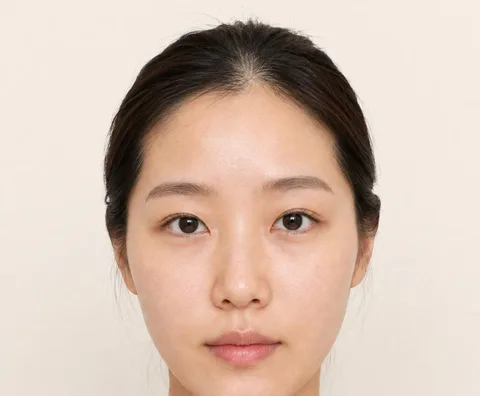
032–4 Weeks
Skin tone may begin to look more even. Pigmentation change is gradual, and more so for melasma or post-inflammatory hyperpigmentation.
 04
042–3 Months
A more appropriate point to evaluate pigmentation, tone and texture after repeated sessions. The plan may be adjusted (including pausing the course) depending on response and sensitivity.
 05
05Maintenance phase
Pigmentation can recur or worsen with sun exposure, hormonal change, heat, or skin irritation. Ongoing sunscreen, barrier care, and periodic maintenance are discussed after evaluation.
Images are AI-generated for illustrative purposes only.
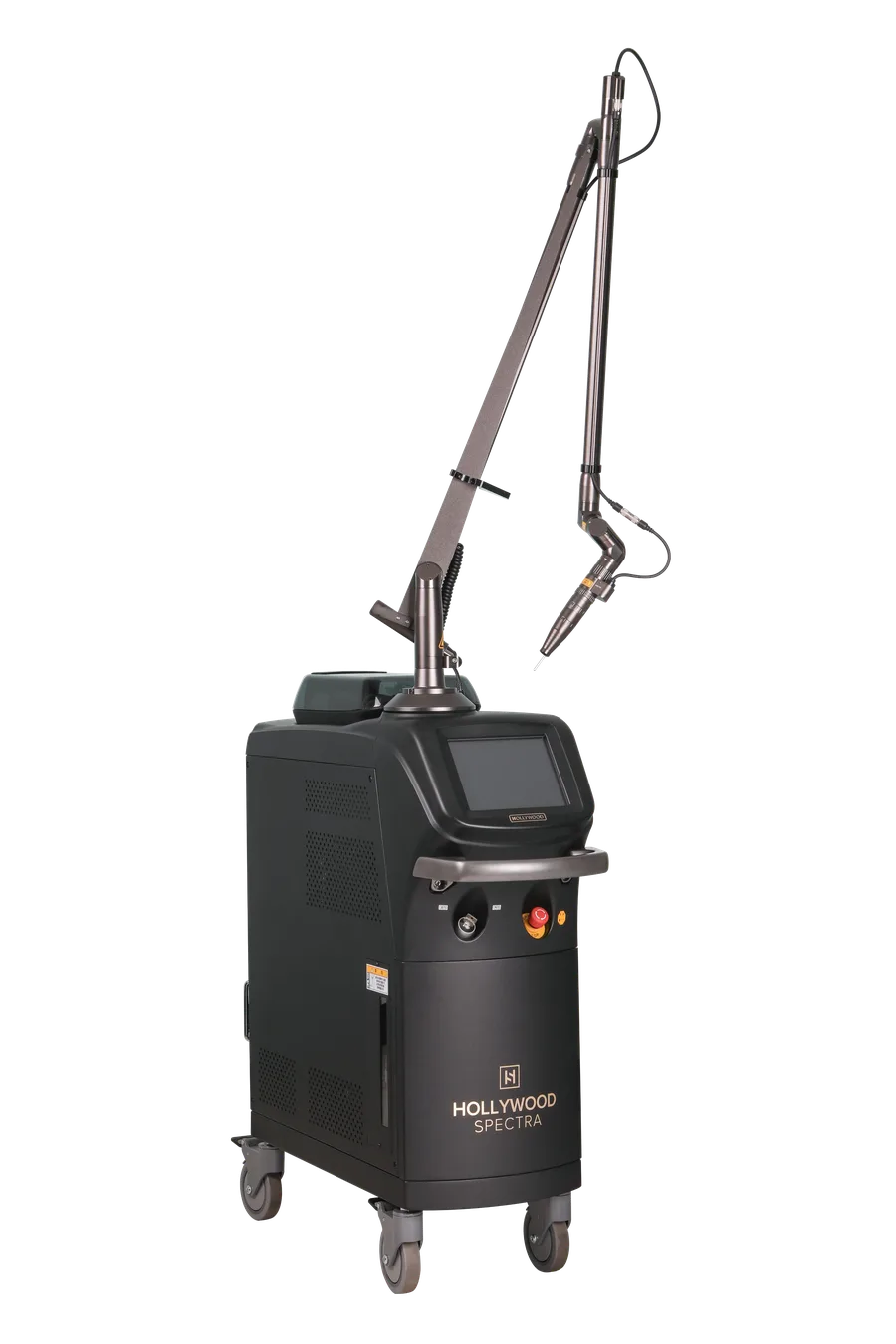
Hollywood Spectra
A nanosecond Nd:YAG laser system combining dual wavelengths with flexible energy delivery.
1064nm: Deeper Pigment Targeting
Reaches deeper into the skin to target pigment concerns beneath the surface. It is the safest Q-switched wavelength for Fitzpatrick III-V skin, which is why it carries the toning protocol here.
532nm: Surface Pigment Targeting
Targets visible pigmentation near the skin's surface, including freckles and sun spots. In Asian skin this wavelength carries a meaningful risk of post-inflammatory hyperpigmentation, so it is used on discrete lesions rather than broadly.
Dual Focused Dots & Sequence Modes
Fractional microbeams at selectable depths, and pulse patterns that let the setting be matched to the skin condition. For Fitzpatrick III-V the default is ultra-low fluence: toning at 1.0-1.4 J/cm², Carbon Peel from 1.6 J/cm², 532 nm lentigines at 0.6-0.8 J/cm².
Cumulative Dose Ledger
Every session's dose is logged across the course. Mottled hypopigmentation from cumulative over-treatment is frequently persistent and often permanent, and the discipline that prevents it is low fluence, a written ledger, and a willingness to pause the course rather than chase an endpoint.
Mandatory Intraocular Eye Protection
External goggles cannot be worn during a periorbital pass, so Cox II or David-Baker intraocular shields are used for any treatment near the eye. Foveal and macular injury from cosmetic laser exposure is documented in the ophthalmology literature; these shields are standard of care here, not an option.
Regulatory Status
FDA 510(k) cleared: K213569 (4 February 2022), 21 CFR 878.4810, product code GEX, granted to Lutronic Corporation for the Hollywood Spectra Laser System. The cleared Indications for Use include treatment of melasma, Nevus of Ota and common nevi at 1064 nm nanosecond, and epidermal pigmented lesions, lentigines, post-inflammatory hyperpigmentation, freckles and minor vascular lesions at 532 nm. A 510(k) is a finding of substantial equivalence to a predicate device: it is not approval, not a determination of safety or efficacy, and not a guarantee of an individual result. Carbon Peel and the named toning protocols are off-label refinements using those cleared wavelengths, and your dermatologist decides whether your concern is appropriate for them.
Tailored Pulse Delivery
The same wavelength can be delivered as a single pulse or split into a sequence, spreading the energy over time so that less heat reaches the epidermis with each pass. That control is what makes an ultra-low-fluence protocol possible in darker skin types, where a single high-energy pulse is the pattern most likely to provoke pigment rebound.
Treatment Process
 01
01Consultation
A dermatologist evaluates pigmentation, skin condition, sensitivity, treatment history, and goals, with a Wood's lamp and dermoscopy baseline to separate melasma from post-inflammatory pigmentation and lentigines. Bring prior clinic records if you have them. Recurrent perioral cold sores are screened for, since active HSV requires deferring a full-face Carbon Peel.
 02
02Personalized Laser Design
Wavelength, mode, fluence and interval are set to your skin type and sensitivity (for Fitzpatrick III-V, at the bottom of the published ranges). For melasma, an oral tranexamic acid and topical baseline is generally established for 6-8 weeks before toning begins, because laser monotherapy is no longer first-line.
 03
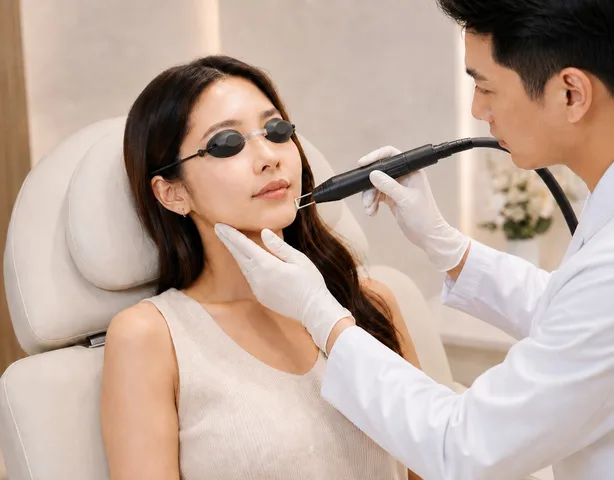
03Treatment
Eye protection is fitted first: external goggles, plus intraocular shields for any periorbital pass. The selected settings are then delivered with attention to skin response and comfort, and the session's cumulative dose is recorded.
 04
04Aftercare and Follow-Up
Aftercare, sunscreen and skincare guidance, and a follow-up plan are provided based on your skin response, including whether the course should continue, pause, or shift toward maintenance.
Recovery & Care
First 24 hours
Avoid strong sun, heat, sauna, intense exercise, alcohol, and rubbing. Temporary redness, warmth, stinging, or dryness may occur. After Carbon Peel, makeup is generally fine the same evening; after 532 nm, do not pick the crust.
Days 1–3
Use a gentle cleanser, moisturizer, and sunscreen, and apply a bland emollient two to three times daily. Avoid scrubs, retinoids, peeling products, and strong active ingredients.
Days 3–7
532 nm crusts shed on their own. Do not exfoliate them. Continue any prescribed topical and oral tranexamic acid, and keep sun protection thorough. Avoid aggressive exfoliation and heat-based procedures.
Ongoing care
Consistent sunscreen and irritation control are the treatment. Melasma is chronic, so maintenance toning every four to eight weeks alongside topicals is usual. Report new pale spots, a darker rebound patch, or any new lump.
Frequently Asked Questions
Q.What is realistic in 3 days?
One Carbon Peel session (30 min, photo-ready by Day 3) and 1-2 532 nm sessions for isolated sun spots. Melasma toning, Hori's nevus, and melasma clearance are NOT 3-day programs.
Q.Can I complete melasma toning in one Seoul trip?
No. A meaningful course is 5-10 weekly sessions over 3-6 months. Realistic options: one session with written protocol for home continuity, multiple Seoul trips, or skip laser and focus on oral TXA + topicals + UV protection.
Q.I had rebound from prior toning elsewhere. Why would this be different?
Rebound usually means too-high fluence, too-frequent sessions, or laser monotherapy without topical/oral baseline. We address all three: ultra-low fluence (1.0-1.4 J/cm² for Fitzpatrick III-V), cumulative dose ledger, and 6-8 week oral TXA + topical baseline before toning starts.
Q.Fitzpatrick V or VI: what fluences?
Bottom of every published range. Carbon Peel 1.6 J/cm² · Toning 1.0 J/cm² · 532 nm lentigines 0.6 J/cm². Oral TXA + hydroquinone baseline ≥ 6-8 weeks required. We may suggest picosecond 532 nm elsewhere for isolated lentigines (lower PIH rate).
Q.Spectra vs PicoSure / PicoWay?
Spectra is Q-switched nanosecond; PicoSure/PicoWay are picosecond. Melasma evidence is mixed across both. For Asian-skin lentigines, picosecond 532 nm shows lower PIH than nanosecond. Choice depends on indication, skin tone, and history, not marketing.
Q.Will toning cure my melasma?
No. Melasma is chronic relapsing, managed not cured. Even combined therapy has ~25-33% relapse in Korean cohort data. Goal: reduce intensity, hold with maintenance, avoid aggressive laser cycles.
Q.What is mottled hypopigmentation and how do you prevent it?
Small irregular pale spots from cumulative over-treatment, frequently persistent, often permanent. Rescue with excimer 308 nm or narrowband UVB is partial and unpredictable. Prevention: ultra-low fluence, dose ledger, weekly maximum cadence, and willingness to stop the course rather than chase endpoint.
Q.Does Carbon Peel permanently tighten pores?
No. Realistic framing: 1-2 week glow + multi-session inflammatory-acne reduction when paired with standard topical care. Permanent pore reduction or oil control claims are not evidence-based.
Q.Why oral TXA and topical hydroquinone alongside?
Current evidence ranks combined therapy higher than laser alone. Hydroquinone (2-4%) blocks tyrosinase; azelaic acid is an alternative. Oral TXA reduces vascular/inflammatory drivers and is screened for clotting risk before prescribing.
Q.Epidermal vs dermal vs mixed melasma?
Epidermal: upper layer, best laser response. Dermal: deeper, poor response, worsens with aggression. Mixed: most common pattern. Wood's lamp suggests pattern but is moderate-accuracy. We treat based on dominant pattern + skin-type tolerance.
Q.Can you treat Hori's nevus?
Yes: multi-session 1064 nm Q-switched, 4-8 sessions at 8-12 week intervals. Important caveat: 20-30% risk of new-onset or worsening melasma. We screen for melasma history and pre-treat with topical + oral TXA when indicated.
Q.Is one Carbon Peel enough for acne?
No. Sustained improvement requires a 4-6 session course every 2-4 weeks paired with topical retinoid, BPO, and/or oral therapy. A single session is useful only for pre-event glow.
Q.Can I get a written quote before booking a flight?
You can request general planning and current price information before travel without sending photos. If optional photo-based preliminary review is offered, confirm the intended channel and privacy notice first; do not send ID documents or unrelated sensitive information. The final plan and itemized quote are confirmed after in-person assessment.
References23
The clinical claims on this page (device specs, efficacy timelines, safety profile) are supported by the primary sources below. Each citation links to the original paper or regulatory record.
- [1]Selective photothermolysis: selective absorption of pulsed radiation. Science (Anderson) (1983).
- [2]Carbon-assisted Q-switched Nd:YAG for inflammatory acne RCT. J Am Acad Dermatol (Jung) (2011).
- [3]Dual-mode Q-switched Nd:YAG carbon peel case. Ann Dermatol (Chun) (2010).
- [4]Q-switched Nd:YAG with microneedled botulinum facial rejuvenation. J Cosmet Dermatol (Turco) (2024).
- [5]Low-fluence Q-switched Nd:YAG for melasma: prospective Korean. J Cosmet Laser Ther (Choi) (2018).
- [6]Q-switched Nd:YAG laser toning for melasma: meta-analysis. Lasers Med Sci (Chen) (2022).
- [7]Q-switched Nd:YAG for melasma: systematic review. J Cosmet Dermatol (Lee) (2022).
- [8]Low-fluence 1064 nm Q-switched toning: Caucasian melasma. Lasers Med Sci (Micek) (2024).
- [9]Low-fluence Q-switched Nd:YAG plus IPL for melasma split-face. Dermatol Surg (Vachiramon) (2015).
- [10]Nanosecond vs picosecond 532 nm for Asian lentigines. Lasers Surg Med (Vachiramon) (2018).
- [11]Oral tranexamic acid plus low-fluence Q-switched for melasma RCT. Dermatol Ther (Elkamshoushi) (2022).
- [12]Q-switched Nd:YAG for Hori's nevus can induce melasma. Lasers Med Sci (Wang) (2016).
- [13]Low-fluence Q-switched toning: narrative review of complications. J Cosmet Dermatol (Shah) (2019).
- [14]Guttate hypomelanotic macules after low-fluence Q-switched. Australas J Dermatol (Wong) (2015).
- [15]Adverse events of Q-switched Nd:YAG for solar lentigines Korean multicenter. Ann Dermatol (Kang) (2016).
- [16]Four pigment lasers for Asian freckles and lentigines: retrospective analysis. J Cosmet Laser Ther (Ho et al.) (2012).
- [17]Picosecond 532 nm for Asian pigmented lesions: lower PIH. Lasers Surg Med (Negishi) (2018).
- [18]Network meta-analysis ranking treatments for melasma. J Am Acad Dermatol (Ma) (2023).
- [19]Oral tranexamic acid for melasma: large retrospective with relapse. J Am Acad Dermatol (Lee oral TXA) (2016).
- [20]Bilateral foveal damage and macular hole: cosmetic picosecond laser. Am J Ophthalmol Case Rep (Miyake) (2025).
- [21]Bilateral macular hemorrhage from accidental 1064 nm Nd:YAG. Ophthalmic Surg Lasers Imaging (Milani) (2011).
- [22]Aesthetic laser treatments for Asian skin: PIH risk by device. Am J Clin Dermatol (Ho) (2009).
- [23]ASDS isotretinoin consensus: insufficient evidence for a mandatory delay before nonablative lasers. Dermatol Surg (Waldman et al.; ASDS task force) (2017).
Notice
- Pregnancy or breastfeeding
- Active HSV or melanoma history at the treatment site
- Active photosensitive autoimmune disease or current isotretinoin
- Recent tan or sunburn within 4 weeks
- Oral TXA (history of clot, vascular or kidney conditions, or active cancer treatment) needs medical clearance
- Single-trip melasma resolution expectations, deferred or declined
Session summary & comparison
| Item | Details |
|---|---|
| Duration | Carbon Peel 20-30 min · Toning 15-30 min · 532 nm lentigines 5-15 min |
| Sessions | Carbon Peel 1 (event) or 4-6 (acne) · Toning 5-10 weekly · Hori's 4-8 · Ota's 5-10 · Lentigines 1-2 |
| Downtime | Carbon Peel and toning same-day return · Lentigines micro-crust 3-7 days |
| Peak result | Carbon Peel 1-2 weeks · Toning end of initial course · Maintenance ongoing |
Related procedures
Evidence & comparison guides
Need another answer before deciding?
You do not need to read every guide. Open the question that still matters to your decision.
Optional decision guides
- Interactive routeFit a dermatologist visit into your itineraryCompare a day trip, overnight visit, or longer stay by travel buffer and typical visible recovery.Open the trip planner →
- Comparison guideSummer Dermatology in Seoul | Which Lasers Are Safe June–AugustWhich lasers are safe in Seoul June–August: Pico toning, Hollywood Spectra, GentleMax, fractional. PIH risk in FST IV–VI plus a traveler flowchart.
Notice: Individual results may vary depending on skin condition, treatment history, and recovery factors. All treatment plans are determined through individual consultation with a board-certified dermatologist. The information on this page is for reference only and does not constitute medical advice or guarantee specific outcomes.
Next Step