
Mon - Fri 10:00 - 20:00

Pigmentation Care

Pigmentation Treatment Seoul | Pico, Spectra & Genesis-Style Toning

If you are weighing pico, Hollywood Spectra, and Genesis-style toning, the real questions are diagnosis accuracy, settings safety on Asian skin, and how the protocol fits your long-term plan.

Pigmentation Care — Pigmentation Care
Dr. SangYoul Yun
Reviewed by Dr. SangYoul Yun
Board-certified Dermatologist · Chief Director · AAD Member
01

Overview

Pigmentation and melasma treatment in Gangnam by a board-certified dermatologist. Pico, Hollywood Spectra, and Genesis-style toning protocols tuned for Asian skin (Fitzpatrick III–IV).

Best for

  • melasma
  • solar lentigines (검버섯)
  • freckles
  • post-inflammatory hyperpigmentation (PIH)
  • ABNOM (acquired bilateral nevus of Ota-like macules)
  • uneven tone and accumulated sun damage

Suited for

  • patients wanting a non-aggressive, conservative pigmentation plan
  • Asian skin (Fitzpatrick III–IV) where rebound risk is high
  • patients with prior failed laser treatment or PIH history
  • international travellers needing planning around 1-week recovery on CO2-treated lesions
Duration
5–40 min (varies by device)
Sessions
5–10 across 2–4 week intervals (melasma)
Downtime
Minimal for pico/Spectra; ~1 week if CO2 portion used
Peak result
8–12 weeks after course completion
02

Timeline

  1. Immediately post

    Mild erythema; possible faint frosting on treated lentigines that resolves within hours.

  2. Day 1–3

    Lentigines may darken briefly and form a microcrust before flaking off; melasma areas usually show no immediate change.

  3. Week 1–2

    Gradual lightening of treated lentigines; melasma typically requires multiple sessions before visible change.

  4. Month 1

    Tone evens; texture begins to improve via the Genesis-style toning effect.

  5. Month 2–3

    Peak clearance; the maintenance phase begins.

  6. Month 6–12

    Maintenance toning every 4–8 weeks recommended for melasma-prone skin.

03

Devices

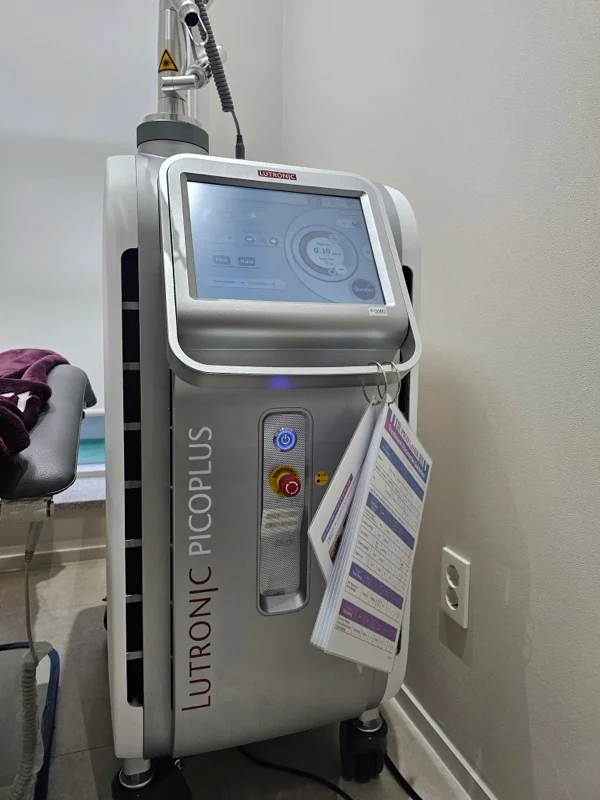
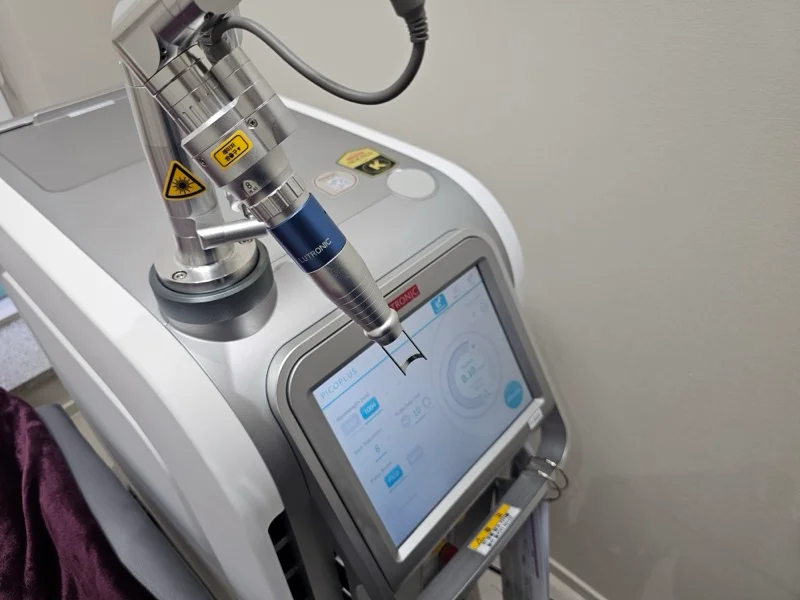
Lutronic PicoPlus picosecond laser system

PicoPlus

LutronicFDA 510(k) cleared picosecond laser; multiple clearances for benign pigmented lesions and tattoo removal

Key specs

Picosecond pulse duration (~450 ps) — shorter than the thermal relaxation time of melanosomes
Energy converts primarily into a photomechanical (photoacoustic) shockwave rather than heat
Shockwave fractures melanin into sub-micron particles cleared by macrophages, with significantly less collateral thermal injury than nanosecond Q-switched lasers
Thermal-sparing profile makes it preferred for darker (Fitzpatrick III–V) skin where PIH risk is elevated
Wavelengths used at Delight
532 nm (superficial pigment — freckles, lentigines), 1064 nm (Asian-skin-safe melasma toning + dermal pigment), 660 nm and 595 nm available for tattoo and ABNOM
Typical session
10–15 min for face spots; 20–30 min for tattoo work
Topical anesthesia not required for spot treatment
Repeat
5–10 sessions for melasma protocols at 2–4 week intervals
Hollywood Spectra (Spectra XT)

LutronicFDA 510(k) cleared Q-switched Nd:YAG laser system

Key specs

Wavelengths
1064 nm and 532 nm Q-switched Nd:YAG, nanosecond pulses (~5–10 ns)
Laser Toning — low-fluence 1064 nm pulses delivered in multiple passes (sub-photothermolysis dose); selectively absorbed by melanosomes, gradually fragments melanin without ablating epidermis. Cornerstone of Asian-skin-safe melasma care.
Carbon Peel ('Hollywood Peel') — thin carbon lotion applied to skin, absorbed into pores; 1064 nm Q-switched pulse selectively absorbed by carbon particles for controlled photoacoustic exfoliation, follicular debris and sebum clearance, immediate brightening. No downtime, immediately social.
Typical session
5–10 minutes for combined toning + carbon peel
No topical anesthesia required
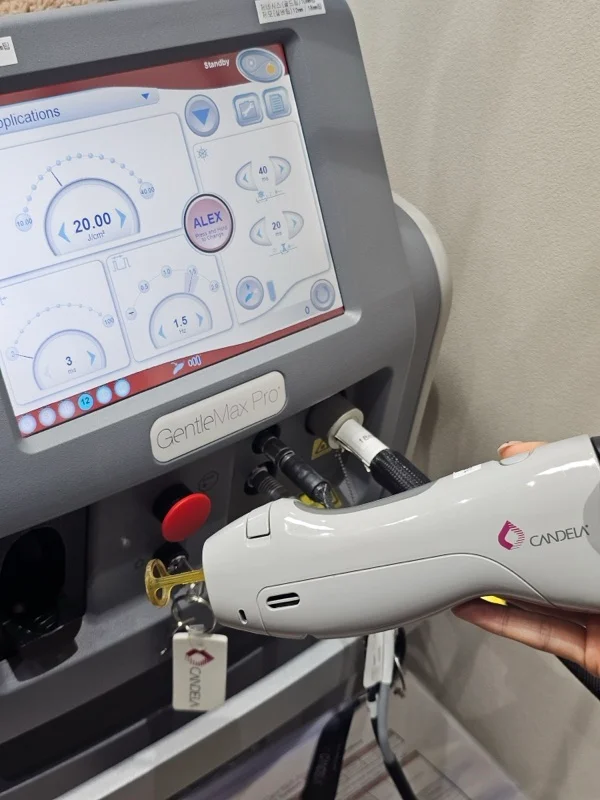
Candela GentleMax Pro dual-wavelength laser system

GentleMax Pro (Genesis-style 1064 nm long-pulsed Nd:YAG mode)

CandelaFDA 510(k) cleared 755 nm Alexandrite + 1064 nm long-pulsed Nd:YAG dual-wavelength platform

Key specs

Toning mode
Genesis-style 1064 nm long-pulsed Nd:YAG, sub-purpuric protocol
Mechanism — non-ablative; gently heats the upper dermis to ~40–45°C in micro-pulses across multiple passes
Controlled mild hyperthermia stimulates fibroblast activity and new collagen synthesis, reduces dilated capillaries and diffuse erythema, and refines pore appearance and tone uniformity
Does not directly fragment melanin; instead conditions the dermal canvas so pigment treatments deliver visibly cleaner results
755 nm Alexandrite mode targets superficial lentigines as a complementary treatment when surface pigment dominates
Typical session
5–10 minutes
No topical anesthesia required
Repeat
1–2 week intervals
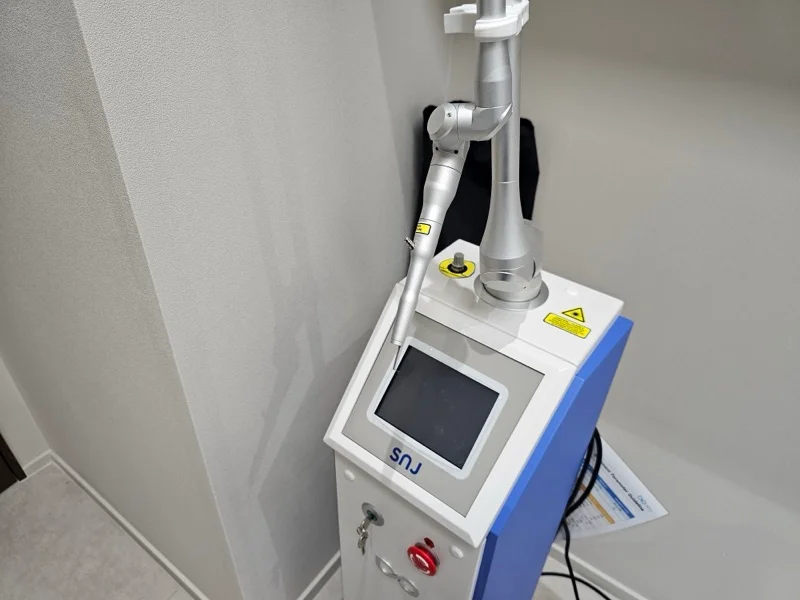
Fractional CO2 laser system

CO2 fractional laser

FDA 510(k) cleared fractional ablative CO2 (10,600 nm)

Key specs

10,600 nm ablative wavelength absorbed by tissue water
Reserved for raised seborrheic keratoses and stubborn lentigines that pico cannot fully clear
Typical session
10–20 minutes
Recovery
~1 week (pinpoint crusting and erythema)
Result effectively permanent for treated lesions, though new lesions can form with future sun exposure
Strict broad-spectrum SPF 50+ post-treatment is non-negotiable
04

Process

  1. 01

    Pigment type, depth, and rebound risk reviewed first — Wood's lamp, dermoscopy, and high-resolution photo analysis classify the pigment before any laser is selected.

  2. 02

    The dermatologist evaluates whether PicoPlus, Spectra, GentleMax Pro 1064-LP, CO2, or a combination fits the diagnosis. Test spots may be performed for ABNOM, dermal melasma, or rebound-history patients.

  3. 03

    Treatment settings (fluence, spot size, passes) and aftercare are explained before the session.

  4. 04

    A long-term maintenance plan is discussed; rebound-prone patients (melasma, ABNOM) receive a written home protocol with sun-protection and topical regimen.

05

Aftercare

  1. 01First 24 hours

    Mild redness possible. No exfoliants, no retinoids, no hot showers. Gentle cleanser only.

  2. 02Week 1

    Avoid AHA/BHA, retinol, and physical scrubs. Strict broad-spectrum SPF 50+ reapplied every 2–3 hours (non-negotiable for melasma patients).

  3. 03Week 2–4

    Resume actives gradually. Pigment-supportive topicals (tranexamic acid, niacinamide, vitamin C) reintroduced under dermatologist guidance.

  4. 04Long-term maintenance

    Toning every 4–8 weeks for melasma-prone skin; oral tranexamic acid or glutathione considered case-by-case under dermatologist supervision.

06

FAQ

Is PicoPlus safe for Asian / Korean skin?

Yes. The picosecond pulse duration is shorter than the thermal relaxation time of melanosomes, so energy converts primarily into a photomechanical shockwave rather than heat. This thermal-sparing profile reduces post-inflammatory hyperpigmentation risk in Fitzpatrick III–V skin compared with older nanosecond Q-switched lasers, and is the reason pico is preferred for darker phototypes.

How is Hollywood Spectra different from a regular toning laser?

Spectra is a Q-switched Nd:YAG platform that supports two distinct treatments — low-fluence 1064 nm laser toning for melasma, and the Hollywood Carbon Peel using carbon-lotion-mediated photoacoustic exfoliation. The combination of these two on the same platform, performed in the same visit, is what produces the brightening Spectra is known for.

Will the GentleMax Pro 1064 long-pulsed mode remove my freckles?

Not directly. Genesis-style 1064 long-pulsed toning improves the dermal canvas and reduces background redness — it does not fragment melanin like pico does. For freckles and lentigines, PicoPlus 532 nm or the GentleMax Pro 755 nm Alexandrite mode is the right tool. The dermatologist combines these based on what your skin actually needs.

How many sessions until I see a difference?

Discrete lentigines often clear after 1–2 PicoPlus sessions. Melasma is a chronic condition requiring 5–10 toning sessions at 2–4 week intervals before peak clearance, with maintenance every 4–8 weeks afterwards. Single-session miracles are not realistic for melasma — that framing leads to over-aggressive treatment and rebound.

Can melasma come back after treatment?

Yes. Melasma is a managed condition, not a cure. Sun exposure, hormones, and inflammation can all trigger return even after good clearance. The standard rebound-prevention plan combines maintenance toning every 4–8 weeks, daily broad-spectrum SPF 50+, and pigment-supportive topicals (tranexamic acid, niacinamide, vitamin C) under dermatologist supervision.

Can I do PicoPlus and Spectra toning during one visit?

Yes — this is a common combination at Delight. PicoPlus addresses discrete pigmented lesions while Spectra handles diffuse melasma with low-fluence toning, and Carbon Peel can be added before a same-day flight or social event. The dermatologist plans the order and energy levels so the two treatments do not compound irritation.

Notice

Tell the dermatologist at consultation if any of the following apply.

  • Active skin infection or open wound in the target area
  • Use of isotretinoin within the last 6 months
  • Use of photosensitizing medications (some antibiotics, retinoids, St. John's Wort)
  • Pregnancy or breastfeeding (laser pigment treatment not studied — avoid as precaution)
  • History of post-inflammatory hyperpigmentation or keloid
  • Recent sun exposure or active tan within 4 weeks

For your visit

  • Pico-only sessions (PicoPlus + Spectra) leave minimal visible recovery — most patients socialise the same evening.
  • If CO2 is part of the plan for raised lesions, plan 1 week before any major event or flight home.
  • Carbon Peel can be added the same day before a flight without restriction.
  • Melasma protocols require a 2–3 month commitment; not suited to short-stay-only patients.
07

References

The clinical claims on this page — device specs, efficacy timelines, safety profile — are supported by the primary sources below. Each citation links to the original paper or regulatory record.

  1. [1]A Systematic Review of Picosecond Laser in Dermatology: Evidence and Recommendations. Lasers Surg Med (Wu DC et al., PMID 32282094) (2021).
  2. [2]Successful and rapid treatment of blue and green tattoo pigment with a novel picosecond laser. Arch Dermatol (Brauer JA et al., PMID 22801616) (2012).
  3. [3]Melasma treatment in Korean women using a 1064-nm Q-switched Nd:YAG laser with low pulse energy. Clin Exp Dermatol (Cho SB et al., PMID 19817757) (2009).
  4. [4]Low-fluence Q-switched neodymium-doped yttrium aluminum garnet (1,064 nm) laser for the treatment of facial melasma in Asians. Dermatol Surg (Wattanakrai P et al., PMID 20298254) (2010).
  5. [5]Nonablative facial remodeling: erythema reduction and histologic evidence of new collagen formation using a 300-microsecond 1064-nm Nd:YAG laser. Arch Dermatol (Schmults CD, Phelps R, Goldberg DJ, PMID 15545547) (2004).
  6. [6]Oral Tranexamic Acid for the Treatment of Melasma: A Review. Dermatol Surg (Bala HR et al., PMID 29677015) (2018).
Reviewed byDr. SangYoul Yun· Board-Certified Dermatologist · Mayo Clinic Trained · AAD Member· Last reviewed 2026-05-05

Related procedures

Potenza RF Microneedling in Seoul | Scars, Pores & TighteningPotenza RF microneedling in Seoul for acne scars, pores, skin laxity, and fine lines. Four tip modes for customized collagen remodeling. Board-certified dermatologist.Acne Peeling & Laraphy in Seoul | Medical-Grade Acne TreatmentMedical-grade acne peeling and Laraphy (Larapeel) combine chemical exfoliation with targeted acne-fighting agents to unclog pores, reduce active acne, control oil production, and improve post-inflammatory hyperpigmentation. Unlike over-the-counter peels, these are performed by a dermatologist who selects the appropriate acid type, concentration, and layering based on your specific acne type.One Day Spot Clear in Seoul | Laser Pigmentation TreatmentOne Day Spot Clear laser pigmentation treatment in Seoul. Same-day consultation and treatment for sun spots, age spots, and uneven skin tone by a board-certified dermatologist in Gangnam.Acne Treatment in Seoul | Medical-Grade Breakout CareBoard-certified dermatologist-led acne treatment in Seoul targeting active breakouts, post-acne redness, and long-term skin stability in Gangnam.Acne Scar Treatment in Seoul | Texture & Collagen RepairAcne scar treatment in Seoul with a specialist focus on texture, scar type, collagen remodeling, and realistic recovery planning in Gangnam.Melasma Treatment in Korea | Chronic Pigmentation ControlSpecialist-led melasma treatment in Korea for chronic pigmentation therapy, laser options, and recurrence management by a board-certified dermatologist.Pico Laser in Seoul | Pigment Removal & Tone CorrectionPico laser treatment in Seoul for pigmentation removal, tone correction, and textural concerns under board-certified dermatologist supervision in Gangnam.Advanced Scar Treatment in Seoul | Staged Laser & Regenerative CareAdvanced acne scar treatment in Seoul combining staged laser and regenerative options by a board-certified dermatologist in Gangnam.

Latest articles

Notice: Individual results may vary depending on skin condition, treatment history, and recovery factors. All treatment plans are determined through individual consultation with a board-certified dermatologist. The information on this page is for reference only and does not constitute medical advice or guarantee specific outcomes.

Next Step

You can start with a short message before deciding on Pigmentation Care.

Even a short first message can help you check suitability, timing, and what to compare next before you book.

Gangnam, Seoul

Personalized dermatology care in Gangnam for local and overseas patients.

Delight Dermatology Clinic focuses on doctor-led consultation, warm service, and personalized treatment planning.

Walking videos

Nonhyeon · Exit 4
Sinnonhyeon · Exit 2
Clinic

Delight Dermatology Clinic

4th Floor, Building B, 509 Gangnam-daero

Seocho-gu, Seoul, South Korea

Parking is available in the building.

02-517-9991

Mon - Fri: 10:00 - 20:00

Lunch break: 13:00 - 14:00

Saturday: 10:00 - 17:00

Sunday and public holidays: Closed

Location

Gangnam · Seocho-gu, Seoul

Find directions

Clinic Name: 딜라이트피부과의원Representative: 윤상열Tel. 02-517-9991Business Registration No.: 357-15-02460Privacy PolicyTerms of Use
Registered Foreign Patient Medical Institution
Officially registered by the Ministry of Health and Welfare of the Republic of Korea (Reg. No. M-2024-01-08-8248) · 외국인환자 유치의료기관

Medical information on this site is for reference only and does not constitute medical advice. Individual results may vary. Consult a board-certified dermatologist for diagnosis and treatment planning.