Collagen-Stimulating Injectable
Sculptra in Seoul
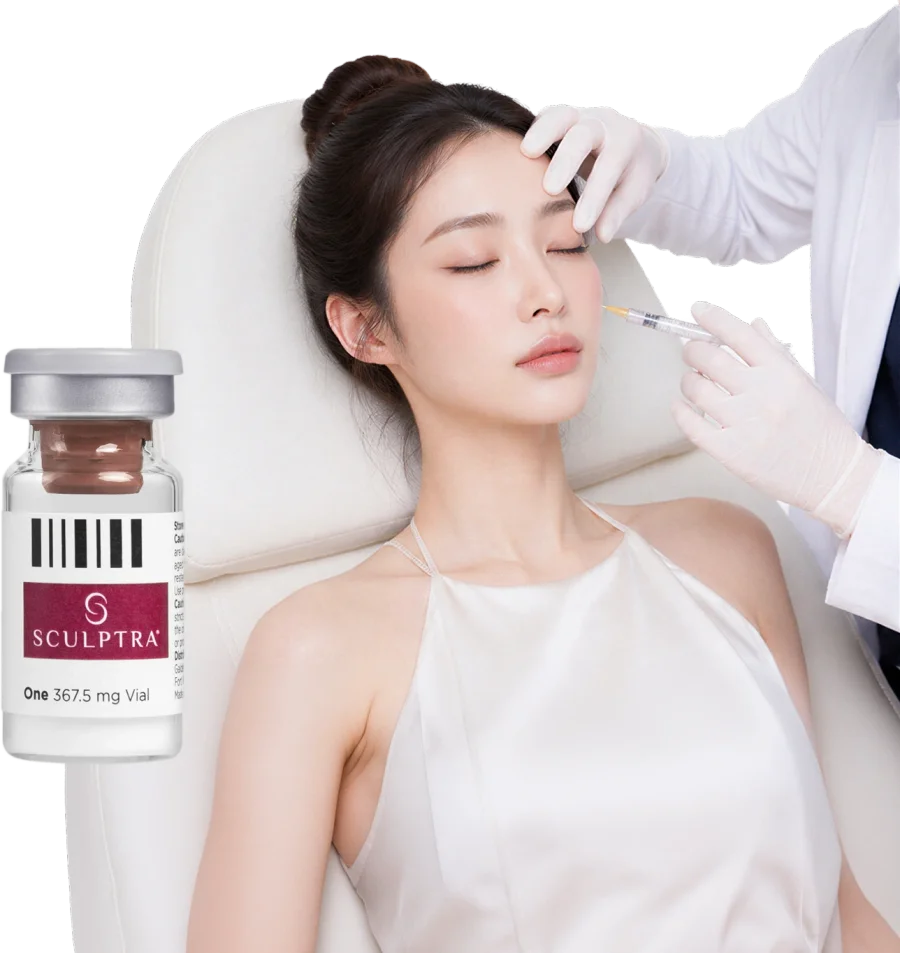
Sculptra in Seoul for gradual volume restoration, facial contouring, and skin firmness. Dermatologist-led consultation for international patients in Gangnam.
Injectable Comparison
Sculptra vs Rejuran, SkinVive, Profhilo — what each does, clinical evidence, and a per-product comparison from a Seoul dermatologist.
Your Journey
Sculptra vs Rejuran, SkinVive, Profhilo — what each does, clinical evidence, and a per-product comparison from a Seoul dermatologist.

Patients researching rejuvenation in Seoul often encounter both Sculptra and skin boosters in the same conversation. But comparing them directly is like comparing a foundation repair to a fresh coat of paint — they address fundamentally different problems.
Sculptra (poly-L-lactic acid) is a collagen stimulator. It rebuilds structural volume that has been lost with age — hollow temples, flat cheeks, a less defined jawline. It works deep, gradually, and lasts years.
Skin boosters (Rejuran, SkinVive, Profhilo) improve skin quality — hydration, texture, elasticity, and radiance. They work superficially, show results faster, and require regular maintenance.
Understanding this distinction is the single most important thing in this guide. Everything else follows from it.
The Seoul context matters. South Korea ranks in the global top 5 for non-surgical aesthetic procedures per capita (ISAPS Global Survey). Korea's concept of 물광주사 ("water-glow injection") — micro-injections for translucent, hydrated skin — has no direct Western equivalent. It reflects a cultural emphasis on skin quality over coverage or volume, and it's the reason skin boosters are far more mainstream here than in North America or Europe. According to KHIDI (Korea Health Industry Development Institute), dermatology and aesthetics account for approximately 35–40% of the 600,000+ foreign patients who visit Korea annually for medical treatment. When international patients arrive in Seoul, they enter a market where these products are used at a volume and sophistication that few other countries match.
Sculptra was FDA-approved in 2004 for HIV-associated lipoatrophy and received expanded FDA clearance in 2009 for cosmetic use (nasolabial fold correction). The active ingredient is poly-L-lactic acid (PLLA), a biocompatible polymer that triggers collagen neogenesis.
How it works:
The pivotal RCT: Narins et al. (2010, J Am Acad Dermatol, N=233, PMID: 20159311) compared PLLA to human collagen in a 2:1 randomized study. Sculptra showed superior durability through 25 months with continued improvement after collagen had faded. The FDA labeling claim of "up to 2 years" is based on this trial.
Safety and durability data:
Protocol: Typically 3 sessions, 4–6 weeks apart. Results become visible at 4–6 weeks and can last 2–3 years. The "5-5-5 rule" (massage 5 minutes, 5 times daily, for 5 days) is standard aftercare and directly addresses nodule prevention.
Limitations: Not suitable for lips or periorbital area. Results are gradual — patients wanting immediate change will be disappointed. Overcorrection at injection time is expected (PLLA reconstitution fluid absorbs within 48–72 hours), and this temporal disconnect between treatment and visible result requires patient education.
Skin boosters are a category of superficial injectables designed to improve skin quality rather than restore volume. The major products available in Seoul, with an honest assessment of each product's evidence base:
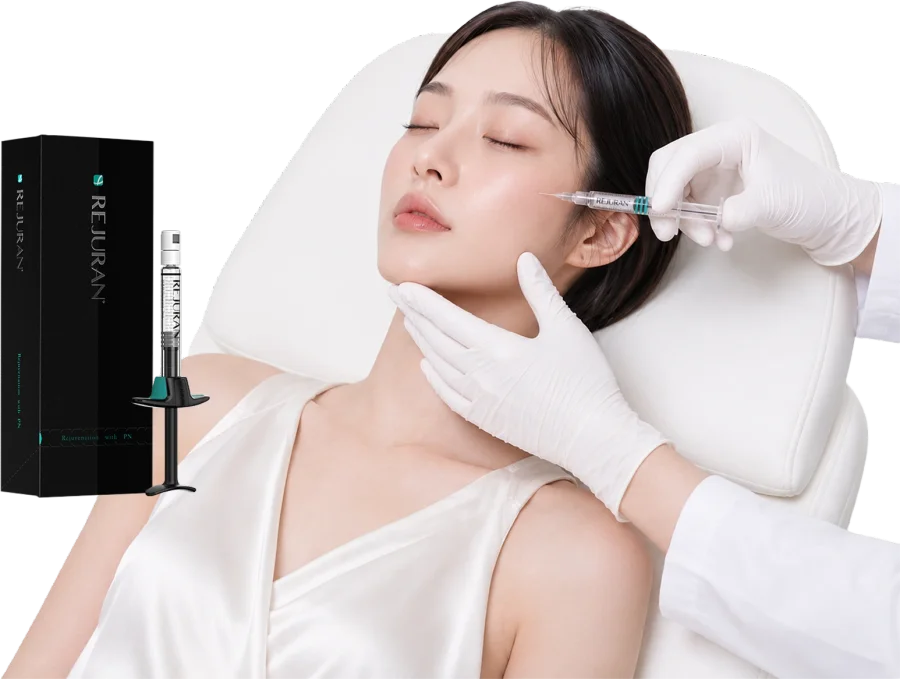
Rejuran (polynucleotide/PDRN) — developed in South Korea, derived from salmon DNA. Stimulates fibroblast activity and collagen production via adenosine A2A receptor activation. The PDRN pharmacology was systematically reviewed by Squadrito et al. (2017, Curr Pharm Des, PMID: 29028075), establishing the mechanism: PDRN activates A2A receptors, stimulates VEGF production, and promotes tissue regeneration — though most of this evidence comes from wound healing, not aesthetic applications. Jeong et al. (2020, J Cosmet Dermatol, PMID: 31680395) conducted a patient/evaluator-blinded split-face RCT (N=30) comparing polynucleotide filler to a polycaprolactone filler for crow's feet, reporting comparable clinical improvement at 12 weeks (polynucleotide 41.4%, polycaprolactone 48.3%). Honest assessment: The Rejuran evidence base is growing but thin — mostly small Korean studies (N<50), open-label designs without blinding or placebo controls. Clinical experience in Seoul is extensive, but the published literature does not yet match the product's popularity. Protocol: 3–4 sessions, 2–4 weeks apart.
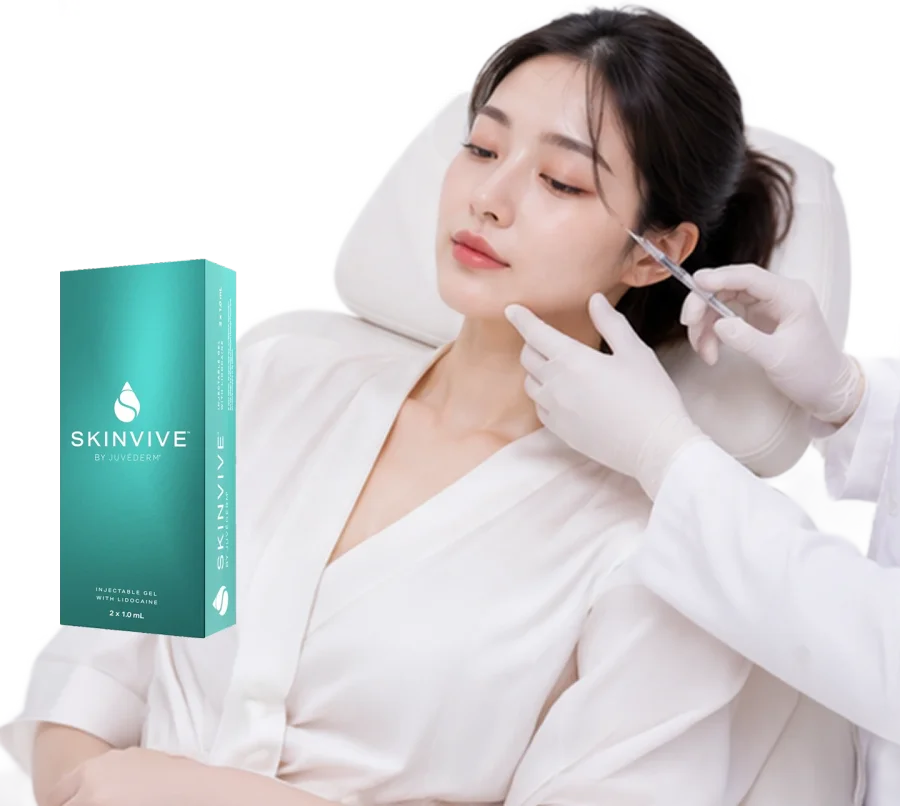
SkinVive (Juvéderm Volite) — FDA-approved June 2023, the first HA-based product specifically cleared as a skin quality treatment (not a filler). The pivotal trial (N=330, 2:1 randomized vs. no treatment) demonstrated statistically significant improvement on the Clinician Global Assessment of cheek smoothness (p<0.001), maintained at 6 months. This is the strongest regulatory evidence of any skin booster. Niforos et al. (2019, Clin Cosmet Investig Dermatol, N=131, PMID: 31749628) demonstrated improved cheek skin smoothness up to 6 months and hydration improvements lasting 9 months in a prospective study. Single session, lasts 6–9 months.
Profhilo — a stabilized HA using NAHYCO technology (no chemical cross-linkers). Only 5 injection points per side (BAP technique). Sparavigna & Tenconi (2016, Clin Cosmet Investig Dermatol, PMID: 27713647) evaluated the Profhilo HCC hyaluronan in a 16-week monocentric open-label study, showing statistically significant improvements in skin plasto-elasticity (torsiometry) and global skin quality indices at week 16. Protocol: 2 sessions, 4 weeks apart. Not FDA-approved in the US; widely used in Asia and Europe. CE-marked with a reasonable (though not large) body of published data.
Exosomes (ASCE+ and similar): An emerging category that deserves a frank note. Exosome-based skin boosters are marketed aggressively in Seoul, but the evidence base is mostly preclinical (cell culture and animal studies). There are no FDA-approved exosome products for aesthetic use. The FDA has issued public warnings about unapproved exosome products. Early clinical reports are promising but insufficient to draw conclusions about efficacy or long-term safety. Patients should approach exosome treatments with informed caution.
What skin boosters do NOT do: They do not replace fillers for volume loss, do not significantly lift sagging skin, and do not provide dramatic transformation. Marketing that promises "glass skin" from a single session overpromises — the improvements are real but incremental.
Rather than lumping all skin boosters into one category, here is a per-product comparison that includes something most clinic websites omit — an honest assessment of evidence quality:
| Sculptra | Rejuran | SkinVive | Profhilo | |
|---|---|---|---|---|
| Primary goal | Volume restoration, structural support | Skin regeneration, texture improvement | Skin hydration, smoothness | Skin laxity, bio-remodeling |
| Mechanism | PLLA collagen stimulation (deep) | PDRN / A2A receptor activation | Micro-droplet HA hydration | NAHYCO HA bio-remodeling |
| Regulatory status | FDA-approved (2004/2009) | MFDS-approved (Korea) | FDA-approved (June 2023) | CE-marked (EU), MFDS (Korea) |
| Onset | Gradual (4–6 weeks) | 2–4 weeks | 1–2 weeks | 2–4 weeks |
| Duration | 2–3 years | 6–12 months | 6–9 months | 6–9 months |
| Sessions needed | 3 (4–6 weeks apart) | 3–4 (2–4 weeks apart) | 1 | 2 (4 weeks apart) |
| Evidence quality | Strong (RCT N=233, multiple large cohorts, 20+ years of data) | Weak-moderate (small open-label studies, N<50, no large RCTs) | Strong (pivotal RCT N=330, FDA-reviewed) | Moderate (torsiometry studies, small open-label cohorts, growing literature) |
| Best for | Hollow temples, flat cheeks, volume loss | Skin texture, acne scars, overall quality | Cheek hydration, skin smoothness | Mild laxity, overall skin quality |
| Not for | Lips, under-eyes, surface texture | Significant volume loss | Structural lifting, deep volume | Deep volume loss, significant laxity |
What marketing overclaims — and what the data actually supports:
Many patients benefit from combining approaches — Sculptra for deep structural rebuilding, skin boosters for surface optimization. A layered approach is common in Seoul clinics: Sculptra series first for foundation, then skin boosters for finish.
At Gangnam Delight Dermatology, we assess which layer needs attention first and build a treatment plan around your specific anatomy and timeline — rather than defaulting to one product for everyone.
FAQ
They address different aspects of aging. Sculptra rebuilds lost volume — the pivotal RCT demonstrated structural improvement lasting through 25 months. Skin boosters improve skin quality at the surface. Most patients over 40 benefit from addressing both: Sculptra for the foundation (deep collagen restoration), skin boosters for the finish (hydration and texture). A dermatologist can assess which layer is more pressing for your specific face.
Yes, but typically not in the same session. A common Seoul protocol: complete the Sculptra series first (3 sessions over 3 months) for structural restoration, then add Rejuran or other skin boosters for surface quality. Some clinics alternate — Sculptra one visit, skin booster the next. The rationale is practical: Sculptra's post-treatment massage protocol (5-5-5 rule) can displace superficially injected skin boosters if done concurrently.
Based on published data: Rejuran shows 6–12 months with a proper initial series (3–4 sessions), though the comparative clinical data is modest (Jeong et al. 2020, N=30 split-face). SkinVive's pivotal trial (N=131, Niforos 2019) demonstrated maintained improvement at 6 months for smoothness and 9 months for hydration. Profhilo's evidence (Sparavigna & Tenconi 2016, 16-week open-label) shows 4–6 months of improvement from 2 sessions. All require maintenance treatments — this is ongoing skincare, not a one-time fix.
Rejuran was developed in South Korea and aligns with the Korean 'mul-gwang ju-sa' (water-glow) culture — an emphasis on skin quality and translucent hydration that has no direct Western equivalent. Clinical experience in Korean dermatology is extensive, and the PDRN mechanism has pharmacological support. It's also relatively affordable in Seoul's competitive market. However, patients should be aware that the published clinical evidence remains modest (small studies, open-label designs). Popularity and evidence are not the same thing.
Related Procedures
If you need more detail about treatment approach, recovery, or suitability, continue into these procedure pages.

Collagen-Stimulating Injectable
Sculptra in Seoul for gradual volume restoration, facial contouring, and skin firmness. Dermatologist-led consultation for international patients in Gangnam.

Skin Quality & Hydration · Category Hub
Skin booster selection in Gangnam by a board-certified dermatologist. Compare Rejuran (salmon-DNA repair injection), JUVELOOK (collagen-stimulating hybrid), and Sculptra (long-acting collagen builder) — class-by-class decision-aid.

Skin regeneration booster · Rejuran
Rejuran polynucleotide skin booster in Gangnam Seoul — sessions, downtime, and pricing for the salmon-DNA skin-repair injectable, dermatologist-led.

ECM Booster · hADM
Elravie Re2O in Seoul — an ECM skin booster using human-derived dermal matrix (hADM) from Humedix Korea for structural skin support.

Allergan Aesthetics · FDA-Approved 2023
SKINVIVE by JUVÉDERM in Seoul — manufactured by Allergan Aesthetics (AbbVie). FDA-approved in May 2023 as the first HA microdroplet injectable indicated for cheek smoothness improvement.

Regenerative
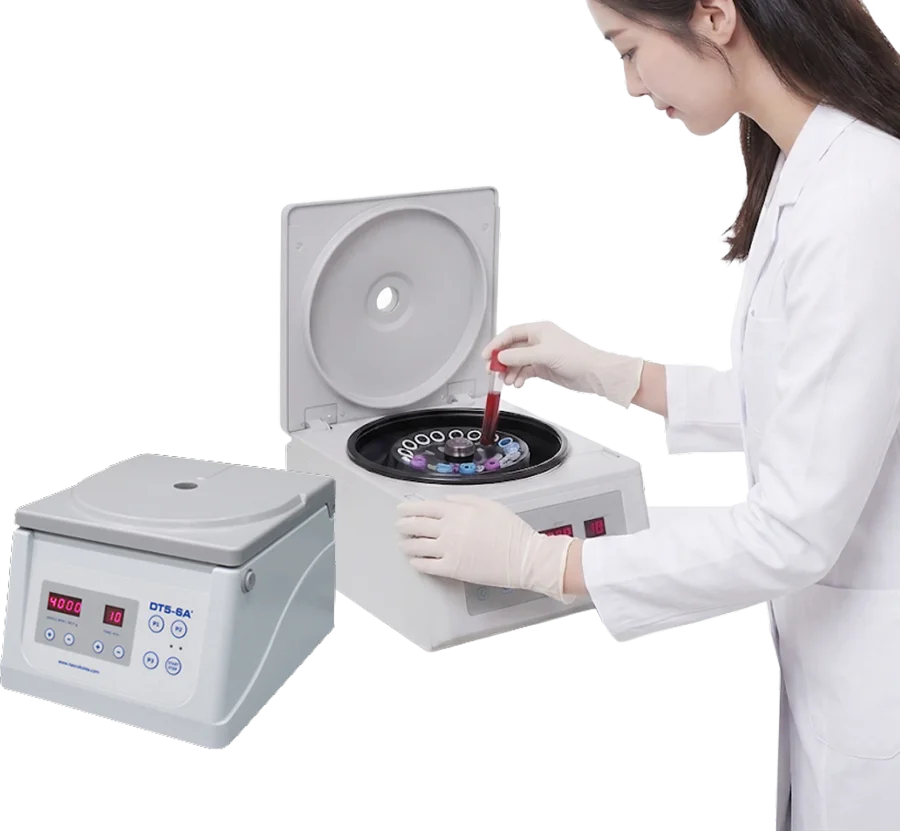
PRP therapy in Seoul uses growth factors concentrated from your own blood — strongest evidence for hair density in pattern hair loss, a more modest option for facial skin.

Hybrid Skin Booster · PDLLA + HA
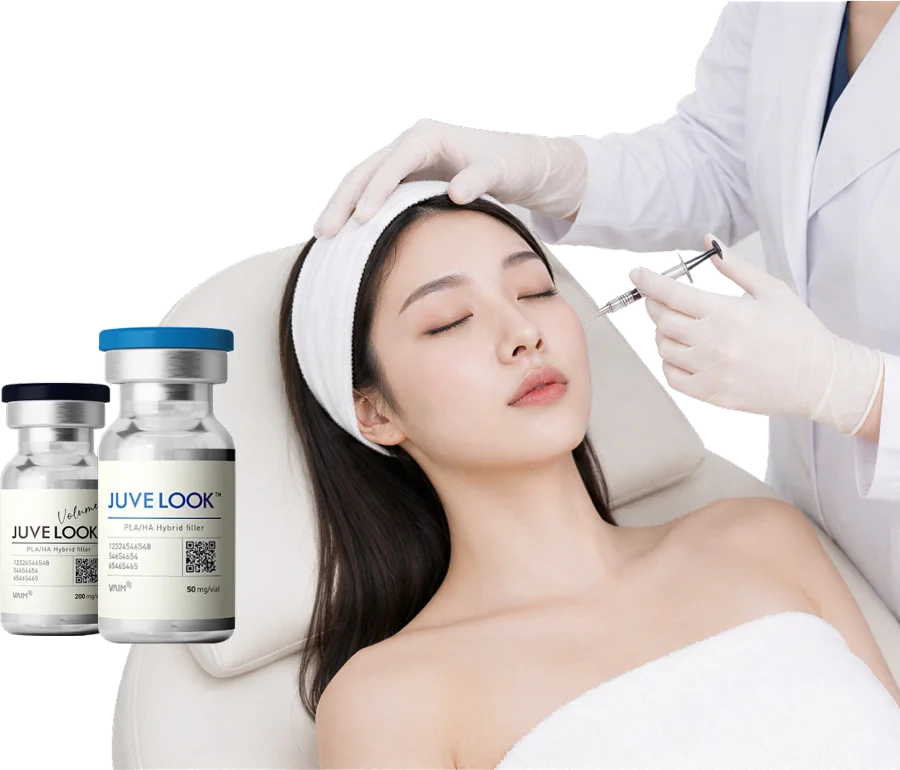
JUVELOOK PDLLA + hyaluronic-acid hybrid skin booster at Delight Dermatology in Gangnam Seoul — same-day softening with collagen stimulation over 6-12 weeks. Board-certified dermatologist consultation.