Non-surgical Lifting
Ultherapy Prime
Ultherapy Prime in Gangnam by a board-certified dermatologist. FDA-cleared non-surgical lifting for jawline, neck, and brow — same-day treatment available.
Evidence Review
HIFU, Thermage, thread lifts, injectable lifting — what clinical evidence supports and what it doesn't. Combination approach guide for Seoul patients.
Your Journey
HIFU, Thermage, thread lifts, injectable lifting — what clinical evidence supports and what it doesn't. Combination approach guide for Seoul patients.

Non-surgical face lifting has become one of the fastest-growing segments of aesthetic medicine, driven by patients seeking visible improvement without the downtime, risk, and cost of surgery. But "non-surgical lifting" is a broad term — and the technologies marketed under it work through fundamentally different mechanisms at different tissue depths.
The four main categories:
Each works through a different mechanism at a different tissue depth, and each has its own published evidence base — some mature, some thin. A treatment that is excellent for one concern may be inappropriate for another. This guide reviews the peer-reviewed evidence for each category, names the caveats honestly, and shows where the data genuinely support a claim versus where marketing has outrun the science.
One framing note up front. Non-surgical lifting is not a facelift substitute for patients with severe laxity. The published literature describes moderate improvement across every category. Patients whose main complaint is jowls hanging below the jawline or deep platysmal bands should be counselled that a surgical lift may be the only intervention that delivers what they are imagining.
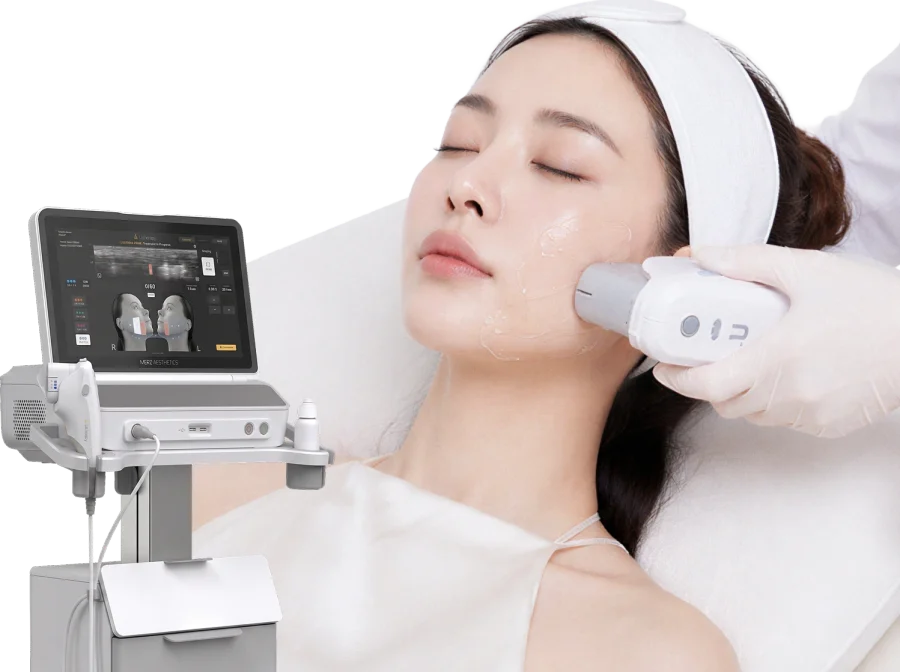
Focused ultrasound is the only non-surgical technology that can reach the SMAS (superficial musculoaponeurotic system) — the fibromuscular layer that plastic surgeons address during a facelift. This is why MFU-V and HIFU are positioned as "lifting" rather than "tightening." The energy creates discrete thermal coagulation points (TCPs) at 1.5 mm (superficial dermis), 3.0 mm (deep dermis), and 4.5 mm (SMAS), each heated briefly to 60–70 °C with untreated tissue in between. This pattern appears to drive a different wound-healing response than bulk heating.
Evidence — structural lift:
The anonymous-survey caveat — read this before booking:
Chang et al. (2019, Lasers Surg Med, PMID: 30664263) surveyed 459 Ultherapy patients anonymously and found overall satisfaction was 53.1% — meaningfully lower than the 80–95% satisfaction reported in most non-anonymous industry-sponsored trials. The authors attributed the gap to gratitude bias in open-label studies conducted in treating offices. This does not mean Ultherapy does not work — the objective rater-blinded imaging data (Alam 2010) is real. It does mean patients deserve honest pre-treatment counselling about realistic outcomes rather than marketing expectations.
Best suited for: Mild to moderate laxity, jowl descent, jawline definition, neck tightening, brow heaviness. Not suited for: severe laxity, pure volume loss, thin crepey skin without structural descent (Thermage is a better fit there). For a fuller Ultherapy vs Korean HIFU device comparison, see our HIFU vs Ultherapy evidence guide.
Radiofrequency works through a completely different physical mechanism than ultrasound. An electrical current flows between a treatment tip and a return pad on the patient's back; the resistance of the dermis to this current generates bulk heat (~65–75 °C) in the mid-dermis and subdermis. Cryogen spray protects the epidermis. The result is immediate collagen contraction plus delayed neocollagenesis over 2–6 months. Crucially, RF energy does not reach the SMAS — its effect is confined to the skin envelope (roughly 2–3 mm depth). It tightens rather than structurally lifts.
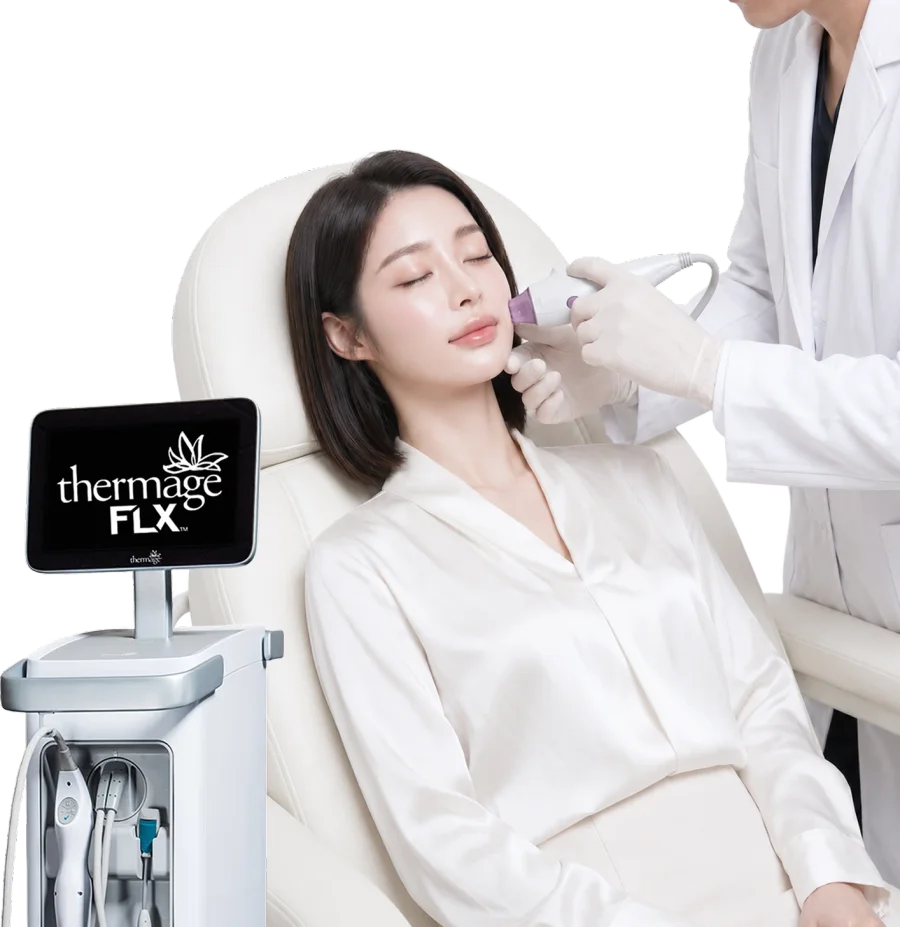
Thermage FLX (monopolar RF): The longest-running energy-based aesthetic device, FDA-cleared since 2002 for non-invasive skin tightening. The current 4th-generation device — Thermage FLX — was cleared under FDA 510(k) K170758 in 2017. FLX added AccuREP auto-calibration per pulse (measures tissue impedance in real time), 4× the vibration of prior CPT generation for pain modulation, and a larger 4.0 cm² tip that cuts full-face treatment to 45–60 minutes.
Honest caveat on Thermage: Thermage is a moderate-improvement treatment in the published literature — not a facelift substitute. Results are gradual, highly technique-dependent (tip placement, pulse count, energy level all matter), and patients expecting dramatic next-day change will be disappointed. Rare but documented complications include subcutaneous fat atrophy with incorrect settings, transient neuropathic pain, and surface burns when the return pad is improperly placed.
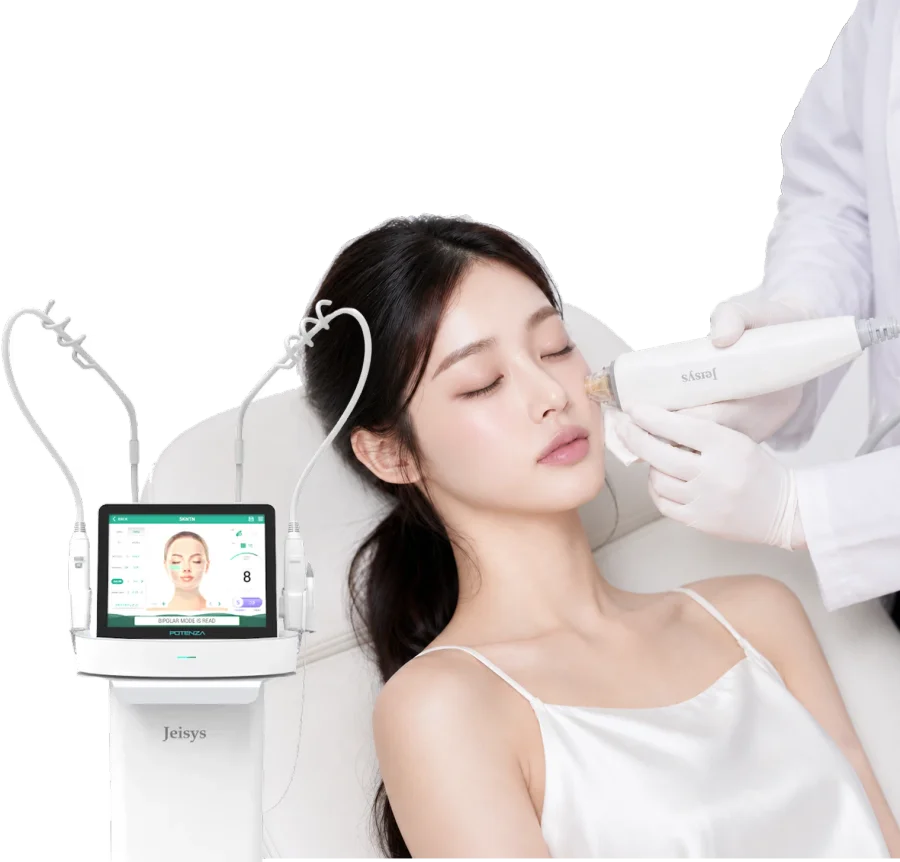
Potenza / fractional RF microneedling: A different RF category. Potenza (Cynosure) and comparable fractional RF microneedling devices combine microneedles with RF energy delivered through the needle tips directly into the dermis. Energy is delivered as discrete coagulation columns — more like the MFU-V pattern than Thermage's bulk heat. This makes fractional RF particularly effective for skin texture, acne scars, and enlarged pores; the lifting effect is secondary. Typical protocol is 3–4 sessions spaced 4–6 weeks apart. Published work on fractional RF (e.g. Cho 2012, Hruza 2009) supports moderate improvement in atrophic acne scars with favorable safety in Asian skin, though head-to-head trials against other scar modalities remain limited.
RF vs ultrasound — different tools for different problems:
They are complementary, not competing. Many Seoul practitioners combine ultrasound (deep) with RF (surface) in a staged plan.
Thread lifts use absorbable sutures inserted under the skin with a blunt cannula or sharp needle to physically reposition sagging tissue. Barbed cogs along the thread catch subcutaneous tissue and hold it in an elevated position. The threads also stimulate collagen production as they dissolve over 6–24 months depending on material.
Three main materials are used in Korean practice:
Evidence — what the literature actually shows:
Critical honest caveat — the thread-lift evidence base is weaker than HIFU or RF. Most published studies are single-arm, short follow-up (3–12 months), single-operator, and conducted by the surgeons who developed the specific technique being tested. There are no randomized head-to-head trials comparing thread-lifting against energy-based devices. Technique standardization remains a challenge — thread count, insertion vector, depth, and cog orientation all affect outcome, and operator skill dominates the result in ways that are difficult to capture in trial protocols.
Common published complications to ask about directly: asymmetry (when threads are tensioned unevenly), skin dimpling (typically resolves in 1–2 weeks but can persist), thread migration or extrusion, transient paresthesia near sensory nerve distributions, and infection at insertion points. Rarely, granuloma formation or chronic dimpling requires thread removal.
Practical takeaway: Thread lifts are reasonable for patients who want immediate visible repositioning and accept a 6–12 month durability window, where the operator is highly experienced, and where the anatomical goal is specific (e.g. jowl vector, mid-face cheek repositioning). They are not a first-line alternative to HIFU or Thermage for diffuse envelope laxity — the evidence base does not support that framing.
Injectables produce a "lift" through volume restoration, collagen stimulation, or muscle relaxation rather than by tightening skin. The distinction matters clinically. A face that has lost midface volume often looks saggy because underlying support has disappeared — not because the skin envelope itself is lax. Treating that with HIFU will disappoint; treating it with a correctly placed filler or collagen stimulator will not.
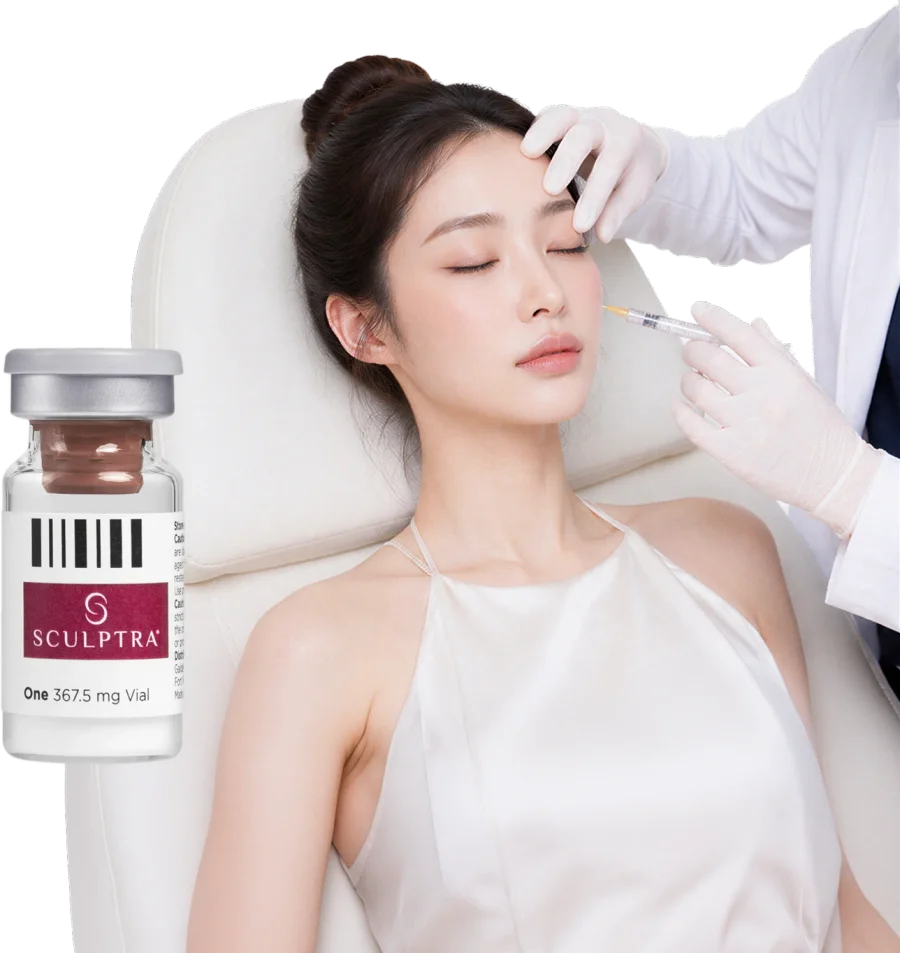
Sculptra — poly-L-lactic acid (PLLA): A biostimulator rather than a traditional filler. PLLA microparticles trigger a gradual fibroblast response; clinically useful collagen deposition appears over 2–3 months and multiple sessions (typically 2–3, spaced 4–6 weeks apart) are standard.
Hyaluronic acid (HA) fillers for lifting effect: HA fillers provide immediate volume. Strategic placement at the zygomatic arch, deep malar cheek, lateral mandible, and chin can produce a visible lifting effect by restoring bony-plane support that gravity and resorption have taken away.
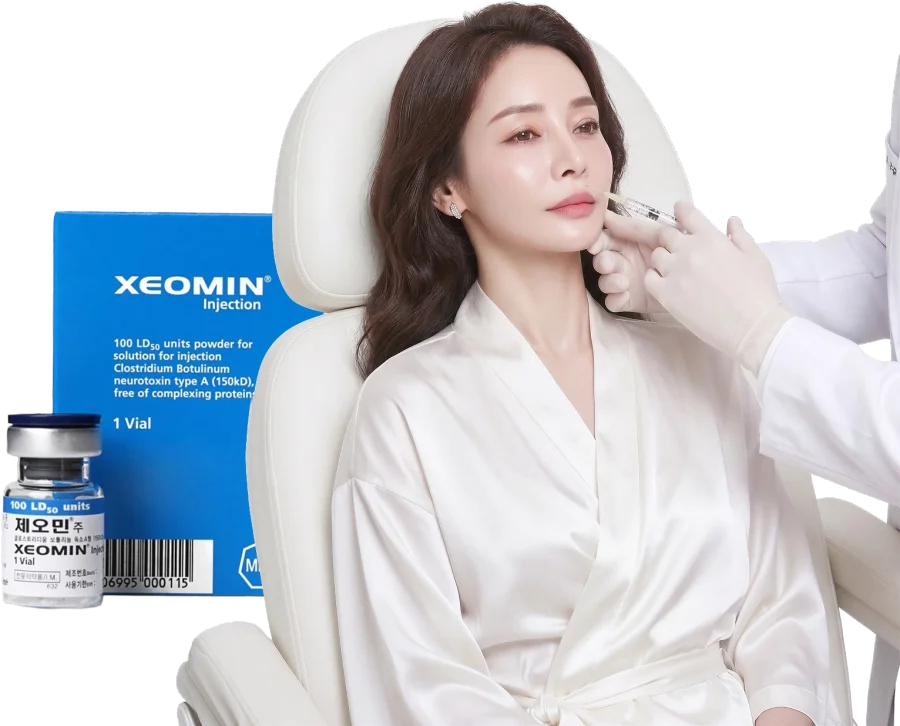
Skin Botox (micro-botulinum toxin): Intradermal or very superficial injection of diluted botulinum toxin targeting fine lines, skin quality, and — in the lower face — subtle lifting by relaxing the platysma and depressor muscles that pull the jawline down. Published evidence for a frank "lifting" effect is smaller than for HIFU or fillers; most data show improvement in skin smoothness and pore appearance rather than structural elevation. Reasonable as an adjunct, not as a primary lifting treatment.
Honest caveat on injectables: Fillers correct volume loss; they do not tighten loose skin. A patient with true skin envelope laxity will not be well served by filler alone — over-filling creates the heavy, "pillow-face" appearance that has damaged filler's reputation in the last decade. The right answer in those cases is energy-based treatment first for skin retraction, then a conservative amount of filler for volume if genuinely needed. Any clinic that recommends filler for every complaint is not reading the face.
On "skin boosters": Products like Rejuran, SkinVive, Profhilo, and polynucleotide-based boosters improve skin hydration, quality, and fine texture. They do not provide meaningful lift. Marketing that positions them as lifting treatments should be viewed skeptically.
An important caveat before the table. There are no published randomized head-to-head trials comparing ultrasound, RF, thread lifts, and injectables against each other. Every comparison is synthesized from separate single-arm or non-comparative studies with different populations, protocols, and outcome measures. This table summarizes what the best-available evidence supports for each category — not a scientific ranking.
| Modality | Mechanism | Depth | Evidence base | Durability | Typical protocol |
|---|---|---|---|---|---|
| HIFU / MFU-V (Ultherapy, Shurink, Doublo) | Discrete ultrasound TCPs at 60–70 °C | 1.5 / 3.0 / 4.5 mm (dermis + SMAS) | Strongest: 50+ trials, meta-analysis of 42 studies (Amiri 2025), 45-trial review (Haykal 2025), rater-blinded cohort (Alam 2010) | 1–2 years | 1 session, repeat every 1–2 years |
| Monopolar RF (Thermage FLX) | Bulk dermal heating ~65–75 °C with cryogen surface cooling | ~2–3 mm (dermis / subdermis) | 20+ years; pivotal trial Fitzpatrick 2003 (86 subjects), FDA K170758 (2017), Fabi 2015 review | 1–2 years | 1 session, repeat every 1–2 years |
| Fractional RF microneedling (Potenza) | RF energy delivered through microneedle tips as discrete columns | Variable (0.5–3.5 mm via needle depth) | Moderate: multiple cohort studies, stronger for scars than for lifting | 6–12 months (requires maintenance) | 3–4 sessions, 4–6 weeks apart |
| Thread lifts (PDO / PCL / PLLA) | Physical repositioning with barbed absorbable sutures + collagen stimulation | Subcutaneous plane | Weaker: mostly single-arm studies; Niu 2021 complication meta-analysis (26 studies); Ali 2018 2-year PDO | 6–18 months (lift); collagen persists longer | 1 session; can be repeated |
| Sculptra (poly-L-lactic acid) | Biostimulation — gradual fibroblast-driven collagen deposition | Deep dermis / subdermis | Strong: Narins 2010 multicenter RCT (PLLA vs collagen, 25-month benefit) | 2+ years | 2–3 sessions, 4–6 weeks apart |
| HA fillers (jawline / cheek / chin) | Immediate volume on bony plane, restores structural support | Supraperiosteal / deep subcutaneous | Moderate-strong: Burgess 2024 VYC-25L RCT for jawline (12-month follow-up) | 9–18 months | 1 session; top-up at 9–12 months |
Reading the table: HIFU and monopolar RF have the deepest published evidence and the widest cohort data. Thread lifts and fractional RF have smaller, more operator-dependent evidence bases. Injectables have strong RCT evidence for their own endpoints (volume correction) but are not directly comparable to energy devices on a "lifting" outcome because they address a different problem.
PMIDs referenced in the table: Alam 2010 (20115948), Werschler 2016 (PMC4771387), Chang 2019 (30664263), Amiri 2025 (39540440), Haykal 2025 (40184185), Fabi 2015 (25709486), Fitzpatrick 2003 (14571447), FDA K170758, Niu 2021 (33821308), Ali 2018 (28863268), Narins 2010 (20159311), Burgess 2024 (39141784).
In clinical practice, the most effective non-surgical lifting plans combine modalities — each addressing a different layer or mechanism. A representative evidence-informed protocol looks like:
These layers are typically not all done on the same day. A staged approach over 2–6 weeks allows each treatment to take effect, reduces cumulative inflammation, and makes it possible to identify which modality produced which result if something needs to be adjusted.
The honest evidence gap — this is the most important paragraph in the guide. Most combination-superiority claims in aesthetic medicine rest on clinical experience and physiological reasoning (different depths, different mechanisms) rather than on head-to-head randomized trials comparing combination against single-modality treatment. A few small comparative studies exist, but the literature is dominated by single-arm case series and investigator experience. Anyone who tells you "combination X is proven better than single treatment Y" on the basis of published evidence is overstating what the data support.
This does not mean combination plans are wrong. It means the rationale is physiological rather than RCT-proven, and patients should be informed of that. A good consultation explains the layering logic, names the individual evidence for each component, and is honest about what would happen if you did only one modality.
A practical Seoul sequencing pattern for patients in their late 40s and 50s:
What to be skeptical about: Clinics that recommend every available treatment for every patient. A good treatment plan starts with identifying your specific concerns — not applying a standard package. Some patients need only HIFU. Some need only volume. Some benefit from a full multi-layer sequence. The plan should follow the assessment, not the other way around.
At Gangnam Delight Dermatology we carry all major non-surgical lifting modalities — Ultherapy Prime, Thermage FLX, Potenza RF, Shurink, thread lifts, Sculptra, HA fillers, Skin Botox — and treatment plans are individualized after consultation. The device we recommend first is the one the assessment calls for, not the one the clinic needs to amortize.
FAQ
Micro-focused ultrasound with visualization (Ultherapy / MFU-V) has the deepest peer-reviewed evidence base — more than 50 published trials, a 42-study meta-analysis (Amiri 2025), a 45-trial systematic review (Haykal 2025), and the original rater-blinded cohort showing 86% clinically significant brow lift at 90 days (Alam 2010). Monopolar RF (Thermage) is second, with more than 20 years of cohort data starting from the Fitzpatrick 2003 pivotal trial. Thread lifts, fractional RF, and skin boosters have substantially smaller evidence bases dominated by single-arm studies. "Strongest evidence" does not automatically mean "best fit for your face," but it is the right question to ask when choosing a first treatment.
Not on current evidence. Short-term lift can look similar at 1–3 months, but the published durability of the thread-lifting effect is 6–18 months — shorter than HIFU's typical 1–2 years — and satisfaction falls from 98% immediately post-procedure to 88% at six months in the largest complication meta-analysis (Niu 2021). Thread lifts also carry a higher complication profile — swelling 35%, dimpling 10%, paresthesia 6%, thread visibility 4%, infection 2%, extrusion 2% — compared with the favorable safety data published for HIFU. Thread lifts are a reasonable option for patients who specifically want immediate physical repositioning, but the evidence does not support positioning them as interchangeable with energy-based lifting.
The safer and more evidence-informed approach is sequenced, not simultaneous. A typical Seoul plan for patients in their late 40s runs Ultherapy or HIFU in week 0, Thermage 2–4 weeks later, then injectables (Sculptra, HA filler, Skin Botox) as an adjunct a few weeks after that. Staging allows each modality to take effect, reduces cumulative inflammation, and makes it possible to attribute results or side effects to a specific treatment if adjustment is needed. Evidence for simultaneous multi-modality treatment on the same day is limited; most combination-superiority claims in aesthetic medicine rest on clinical experience rather than head-to-head RCTs, which is a reason to stage rather than stack.
A surgical facelift may be the appropriate intervention. Non-surgical lifting — HIFU, RF, threads, injectables — is consistently described in the published literature as producing moderate improvement, not dramatic structural change. A ceiling exists. Patients with severe structural descent who try to avoid surgery through progressively more aggressive non-surgical treatment often end up spending the equivalent of a facelift on stacked treatments that do not deliver what they are imagining. An honest consultation in those cases names surgery as an option alongside non-surgical maintenance, rather than pretending a device can substitute for a deep-plane lift. That honesty is itself a quality signal when you compare clinics.
Seoul prices are typically 30–50% of US prices across HIFU, RF, threads, and injectables. A full-face Ultherapy session that runs US$3,000–5,000 in a major US city is commonly 1.0–2.0 M KRW (roughly US$700–1,400) in Gangnam. Thermage FLX is similarly discounted. The lower price reflects volume and competition in the Korean market, not lower quality — many Seoul clinics are directly certified by device manufacturers (Thermage TTT Master, Ultherapy Gold Standard) and their dermatologists have often done more sessions per year than their US counterparts. That said, quality varies widely within Seoul. Device certification, physician-only administration (required by Korean law), transducer or tip count (ask about pulse count on Thermage and transducer reuse on HIFU), and honest candidacy assessment matter more than price. Unusually cheap sessions are usually cheap because something has been cut — most often transducer count, operator training, or time spent on the treatment.
Related Procedures
If you need more detail about treatment approach, recovery, or suitability, continue into these procedure pages.

Non-surgical Lifting
Ultherapy Prime in Gangnam by a board-certified dermatologist. FDA-cleared non-surgical lifting for jawline, neck, and brow — same-day treatment available.

Solta Medical · AccuREP Technology
Thermage FLX in Gangnam, Seoul. AccuREP real-time feedback, Comfort Pulse, board-certified dermatologist. Over two decades of clinical evidence.

Periorbital Tightening
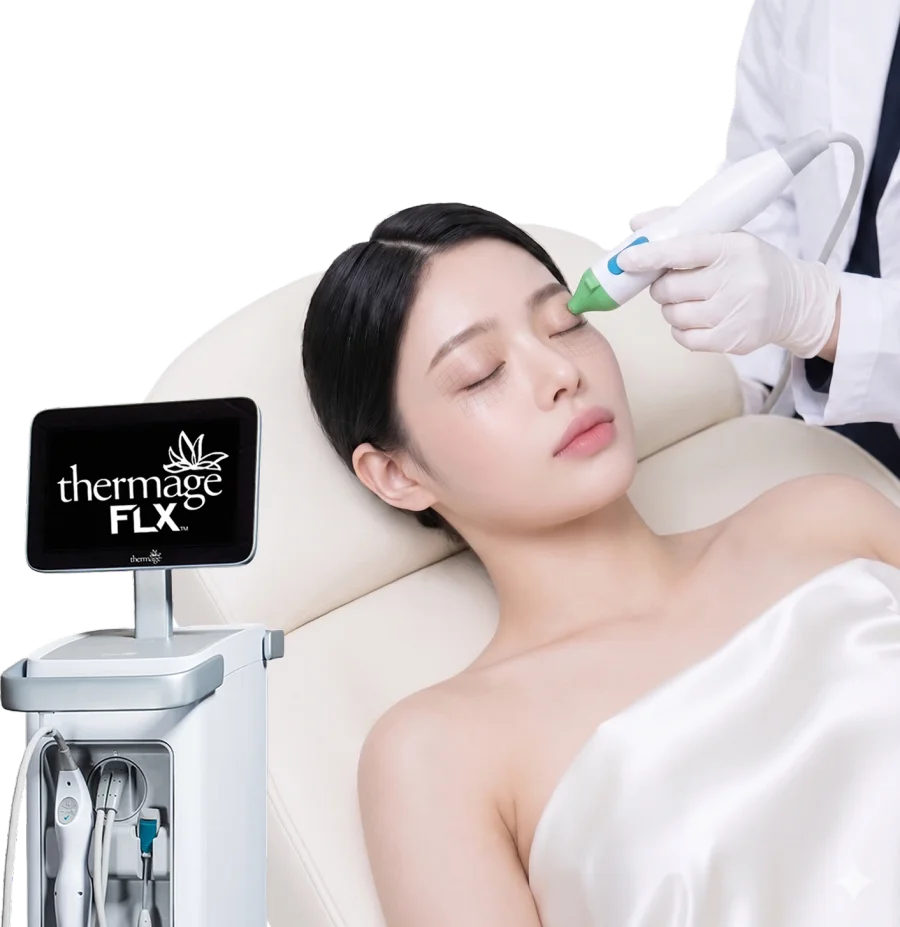
Eye Thermage treatment in Seoul for under-eye laxity, crow's feet, and eyelid support with doctor-led treatment planning in Gangnam.

Anti-Aging Package
Neck tightening package in Seoul — Botox for platysmal bands plus filler for neck creases. Board-certified dermatologist in Gangnam.

Injectable Dermatology
Botox in Seoul by a board-certified dermatologist focused on anatomy, proportion, natural movement, and preventative anti-aging in Gangnam.

Collagen-Stimulating Injectable
Sculptra in Seoul for gradual volume restoration, facial contouring, and skin firmness. Dermatologist-led consultation for international patients in Gangnam.

RF Microneedling · Cynosure (Lutronic)
Potenza RF microneedling in Seoul by a board-certified dermatologist. Developed by Cynosure (Lutronic) — primarily for acne scars, enlarged pores, and skin texture; mild skin firming is a secondary effect.