Mon - Fri 10:00 - 20:00

Decision Guide

Summer Dermatology in Seoul | Which Lasers Are Safe June–August

Which lasers are safe in Seoul June–August — Vbeam, Pico toning, Hollywood Spectra, GentleMax, fractional. PIH risk in FST IV–VI plus a traveler flowchart.

Your Journey

Follow each step to prepare for your visit.

Which lasers are safe in Seoul June–August — Vbeam, Pico toning, Hollywood Spectra, GentleMax, fractional. PIH risk in FST IV–VI plus a traveler flowchart.

Summer Dermatology in Seoul | Which Lasers Are Safe June–August
Why summer laser timing actually matters
Laser-by-laser summer safety verdict
FST IV–VI safety hierarchy and why it matters
Post-laser sun protection protocol — what actually works
What to do if you must come to Seoul in July or August
Sources
Decision flowchart — by skin type, travel date, and goal
1
Step 1 / 7

Why summer laser timing actually matters

If you are planning a dermatology visit to Seoul in June, July, or August, the single most important clinical question is not which laser — it is whether any energy-based skin treatment makes sense for your skin during high-UV months at all. Most reputable Korean dermatology clinics quietly steer summer patients away from ablative resurfacing and aggressive pigment-targeted lasers for one reason: post-inflammatory hyperpigmentation (PIH), and the way ultraviolet exposure in the weeks after a laser turns a controllable inflammatory event into months of visible discoloration.

PIH is the most common complication of laser and light-based procedures, especially in darker skin types. Silpa-Archa et al. (2017, J Am Acad Dermatol, PMID: 28917451) describe it as a reactive hypermelanosis triggered by any disruption that activates labile melanocytes — laser energy that damages the epidermis or upper dermis is one of the most reliable triggers. The severity is driven by inherent skin color, depth of inflammation, dermoepidermal junction disruption, and continued melanocyte stimulation in the healing window. That last factor is where UV exposure becomes the difference between a treatment that fades quietly and one that leaves a brown shadow you are still chasing six months later.

The relevant biology is straightforward. Laser energy creates a controlled wound. Healing keratinocytes signal melanocytes. UV-B and UV-A radiation are the strongest melanogenic stimulus we know — they activate melanocyte tyrosinase and accelerate melanin transfer to keratinocytes. Stack a UV stimulus on top of a freshly traumatized epidermis and you are training the skin to deposit pigment exactly where you do not want it. Visible light matters too — Castanedo-Cazares et al. (2014, Photodermatol Photoimmunol Photomed, PMID: 24313385) showed in a double-blind RCT of melasma patients that adding visible-light protection (iron oxide pigment) to a UV-only SPF 50 sunscreen produced 15–28% greater improvement in pigmentation scores over eight weeks. The implication for post-laser care is that broad-spectrum UV is the floor, not the ceiling, of what summer-treated skin actually needs.

Seoul-specific climate makes the timing worse than a temperate-zone patient may expect. Seoul UV Index commonly hits 9–10 (Very High to Extreme) on clear June–August afternoons; even ambient diffuse light through cloud cover is significant. Sea-level ozone is also lower in mid-summer, allowing more short-wavelength UV to reach the skin. The honest framing is that an aesthetic plan written for an October patient — when UV Index sits around 4–5 — does not transfer cleanly to a July patient with the same skin type and the same diagnosis.

Who this guide is for: international patients (especially Fitzpatrick skin types IV–VI — most South Asian, Middle Eastern, Southeast Asian, East Asian summer-tanned, and African skin) planning a Seoul visit during June, July, or August who want to know which laser and energy treatments are clinically defensible during high-UV months — and which are best deferred to October–March.

FAQ

Frequently Asked Questions

Can I tan or sunbathe before my Seoul laser session?

No — avoid intentional UV exposure for at least 4 weeks before any pigment-targeting laser (Spectra, pico, IPL, Alexandrite). A tan effectively raises your functional Fitzpatrick type by one level, putting more melanin chromophore in the epidermis where the laser is trying to bypass it. Treating freshly tanned skin substantially increases PIH risk and is the reason most reputable Seoul clinics will ask you to delay or modify the protocol if you arrive with a fresh tan. Vbeam sub-purpuric (vascular) and HIFU/Thermage (no melanin target) are less affected, but for any pigment-related work, 4 weeks of conservative sun protection before treatment is the right preparation.

I got laser in Seoul last week and I'm flying to Bali in 3 weeks. What do I do?

Tell your Seoul dermatologist about the Bali trip during consultation — ideally before scheduling, not after. For sub-purpuric Vbeam, Spectra toning at low fluence, or Genesis 1064 nm, three weeks is usually enough recovery for normal beach activity provided you commit to (a) iron-oxide tinted mineral SPF 50+ reapplied every 2 hours, (b) wide-brim hat and UPF 50+ rash guard during peak sun, (c) shade-leaning hours (avoid 10 AM–3 PM direct sun for the first week in Bali), and (d) continued topical depigmenting agents if prescribed. For Pico Fraxel, fractional CO2, or aggressive pigment-clearance protocols, three weeks is not enough — either defer the laser to a later trip, or defer Bali. PIH from a high-UV beach stack onto a fresh fractional treatment can take 4–8 months to fade and is fully preventable with timing alone.

Why does my home market dermatologist say 'no laser in summer' but Seoul clinics will treat me in July?

Two reasons. First, Korean and broader East/Southeast Asian dermatology has 20+ years of published low-fluence Q-switched 1064 nm protocol experience in melasma and pigmentation-active populations — Polnikorn 2008 (PMID 18788035) and Kim YJ 2020 (PMID 32300974) are part of that literature. The toning protocol is genuinely seasonally neutral when done at sub-melanin-selective fluences with disciplined sun protection. Second, US and European dermatology defaults are often calibrated to a Fitzpatrick I–III patient base and to treatments (fractional resurfacing, IPL) that are summer-risky in any skin type. When you compare like-for-like — Spectra toning at low fluence in FST IV with strict tinted SPF — the published evidence supports year-round delivery. Neither tradition is wrong; they are calibrated to different patient populations and different treatment protocols.

Is winter the only safe season for laser in Korea?

No. Vbeam (sub-purpuric for vascular work), Genesis 1064 nm, low-fluence Spectra toning, HIFU/Ultherapy, Thermage, RF microneedling at quality settings (not deep scar settings), Botox, fillers, and skin boosters are all reasonable year-round. What does shift to October–March is the aggressive end of the laser spectrum — fractional CO2 and other ablative resurfacing, pigment-clearance protocols on tanned skin, Pico Fraxel for FST IV–VI, deep chemical peels. Those treatments combine poorly with high ambient UV regardless of how disciplined your sun protection is. The Korean dermatology consensus is closer to 'choose the right laser for the season' than 'no laser in summer' — and for most patient goals, there is a season-appropriate option year-round.

What about Korean K-beauty 'summer glass skin' — is that laser-based?

Generally not. The Korean summer glass-skin routine is built around (a) injectable skin boosters — Rejuran, SkinVive, Profhilo, polynucleotide products — which deliver hydration and dermal quality without epidermal disruption or PIH risk, (b) low-mechanical-friction LED and LDM (low-frequency ultrasound) sessions, (c) daily disciplined skincare with antioxidant serums (L-ascorbic acid, niacinamide), tinted mineral SPF 50+, and barrier-supportive moisturizers, and (d) occasional sub-purpuric Vbeam or low-fluence Spectra toning for redness or pigmentation maintenance. The bright, dewy summer skin look you see in Korean media is mostly a function of consistent hydration, sun protection, and barrier care — not aggressive lasers. For a July visit, building your Seoul plan around skin boosters plus seasonally neutral toning is much closer to authentic Korean summer dermatology practice than scheduling fractional resurfacing.

Related Procedures

Related procedure pages to review next.

If you need more detail about treatment approach, recovery, or suitability, continue into these procedure pages.

Vbeam Perfecta in Seoul | 595nm Pulsed-Dye Laser for Rosacea & Redness

Vascular Laser · 595nm Pulsed Dye

Vbeam

Candela Vbeam Perfecta 595nm pulsed-dye laser in Gangnam — for rosacea, facial redness, post-acne pink marks, and telangiectasia. Tuned for Asian skin.

Persistent facial redness or flushing — alone or as adjunct to topical metronidazole / oral doxycyclineRosacea with visible facial vessels and warmth-triggered flushing (the type called erythematotelangiectatic / ETR)Post-acne pink-red marks (PIE — post-inflammatory erythema) — flat pink/red marks remaining after acne resolves, distinct from brown PIH (post-inflammatory hyperpigmentation)
Open procedure page
Pico Laser Seoul — Melasma, Freckles & Tattoo Pigment Removal

Laser Dermatology

Pico Laser

Picosecond laser in Seoul by a board-certified dermatologist for melasma, freckles, sun spots, post-acne pigmentation, and tattoo removal.

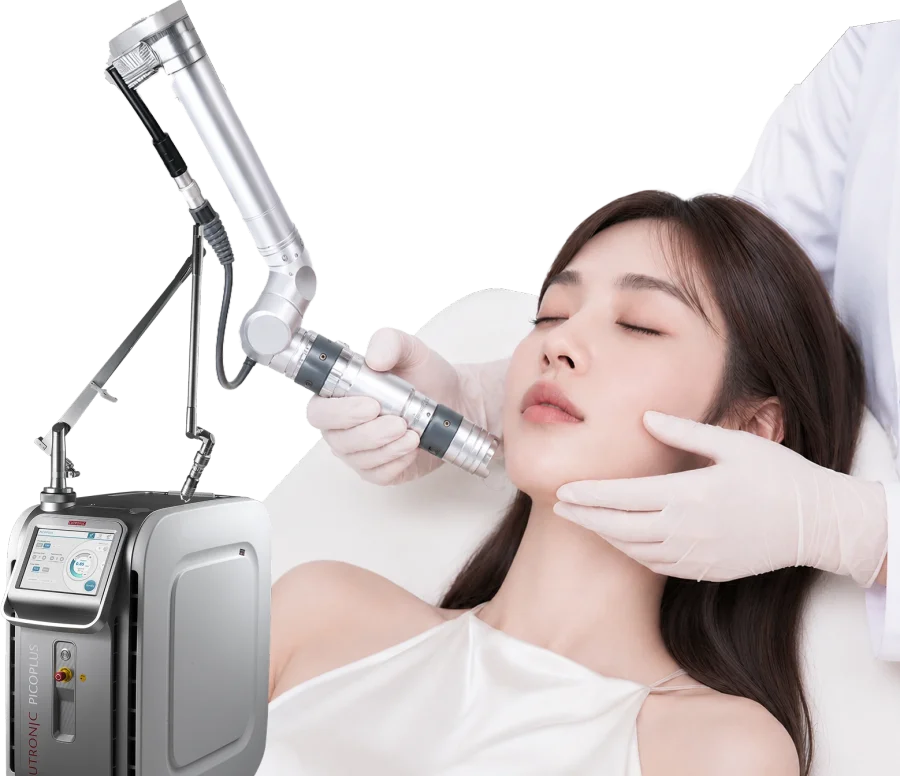
melasma and dermal pigmentation (requires conservative settings)freckles, lentigines, and sun spotspost-inflammatory hyperpigmentation (PIH) after acne
Open procedure page
Hollywood Spectra in Seoul | Carbon Peel + Laser Toning

Q-switched Nd:YAG · Carbon Peel · Spectra Toning

Hollywood Spectra

Hollywood Carbon Peel and laser toning in Gangnam — Lutronic SPECTRA XT (Q-switched Nd:YAG 1064/532 nm). Ultra-low-fluence protocol for Fitzpatrick III-V skin.

Dull complexion, visible pore congestion, and oily T-zone — Hollywood Carbon Peel for 1-2 week glow before an eventInflammatory acne with sebum overproduction — adjunct to topical retinoid plus benzoyl peroxide, not a replacementMelasma — managed (not cured) across 5-10 sessions of laser toning combined with oral tranexamic acid and topical hydroquinone or azelaic acid
Open procedure page
Genesis Toning in Seoul | Long-Pulse Nd:YAG + Alexandrite

Long-pulse 1064nm Nd:YAG + 755nm Alexandrite — Candela GentleMax Pro Plus

Genesis Toning

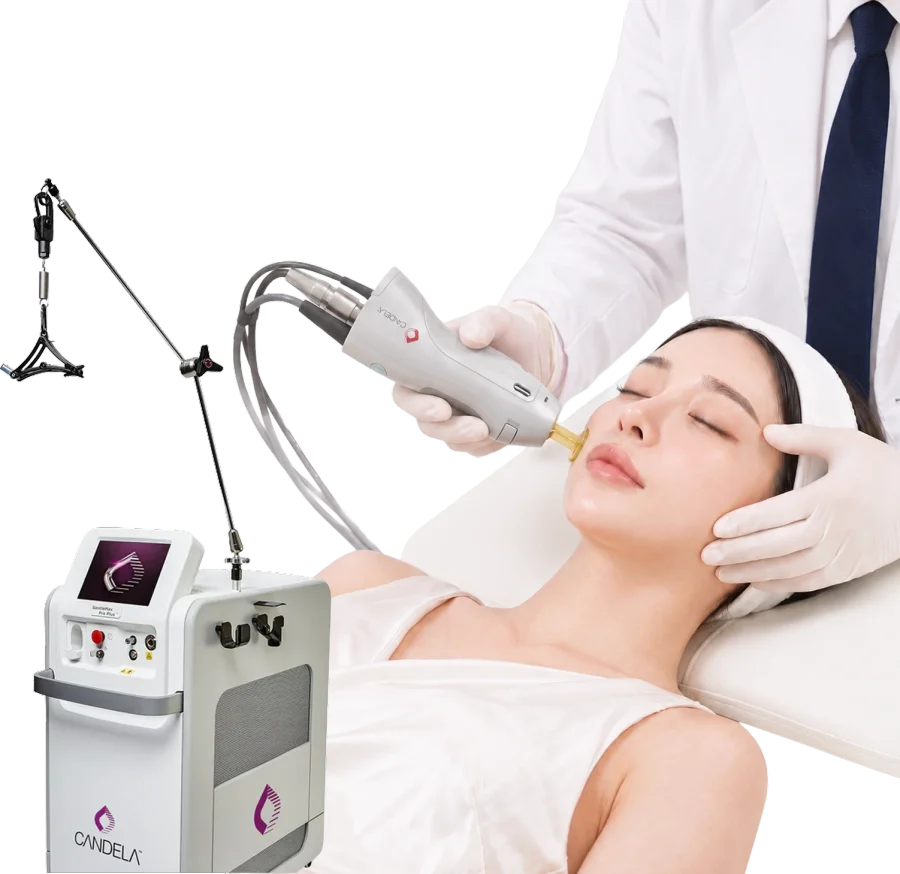
Genesis Toning in Gangnam — multi-pass low-fluence long-pulse 1064nm Nd:YAG (Candela GentleMax Pro Plus) for rosacea redness, photoaging, and pore refinement.

Rosacea diffuse facial redness — Erythematotelangiectatic Rosacea (ETR) subtype with background flushPersistent flushing episodes triggered by heat, alcohol, spicy food, or emotional stimulusFine telangiectasias (visible vessels) on cheeks, nose, and chin that resist topical therapy
Open procedure page
Melasma Treatment in Korea | Chronic Pigmentation Control

Pigmentation Care

Melasma Treatment

Specialist-led melasma treatment in Korea for chronic pigmentation therapy, laser options, and recurrence management by a board-certified dermatologist.

melasma and diffuse facial pigmentationsun-reactive discolorationpatients who were previously irritated by strong laser settings
Open procedure page
Gangnam, Seoul

Personalized dermatology care in Gangnam for local and overseas patients.

Delight Dermatology Clinic focuses on doctor-led consultation, warm service, and personalized treatment planning.

Walking videos

Nonhyeon · Exit 4
Sinnonhyeon · Exit 2
Clinic

Delight Dermatology Clinic

4th Floor, Building B, 509 Gangnam-daero

Seocho-gu, Seoul, South Korea

Parking is available in the building.

02-517-9991

Mon - Fri: 10:00 - 20:00

Lunch break: 13:00 - 14:00

Saturday: 10:00 - 16:00

Sunday and public holidays: Closed

Location

Gangnam · Seocho-gu, Seoul

Find directions

Clinic Name: 딜라이트피부과의원Representative: 윤상열Tel. 02-517-9991Business Registration No.: 357-15-02460Privacy PolicyTerms of Use
Registered Foreign Patient Medical Institution
Officially registered by the Ministry of Health and Welfare of the Republic of Korea (Reg. No. M-2024-01-08-8248) · 외국인환자 유치의료기관

Medical information on this site is for reference only and does not constitute medical advice. Individual results may vary. Consult a board-certified dermatologist for diagnosis and treatment planning.