Device Guide

Korean HIFU Devices | Shurink, Ultraformer & Doublo Guide

Shurink, Ultraformer MPT, Doublo Gold — how Korean HIFU devices compare to Ultherapy. Technical specs, clinical data, and which device fits your goals.

Your Journey

Follow each step to prepare for your visit.

Shurink, Ultraformer MPT, Doublo Gold — how Korean HIFU devices compare to Ultherapy. Technical specs, clinical data, and which device fits your goals.

Korean HIFU Devices | Shurink, Ultraformer & Doublo Guide
Why Korea has its own HIFU ecosystem
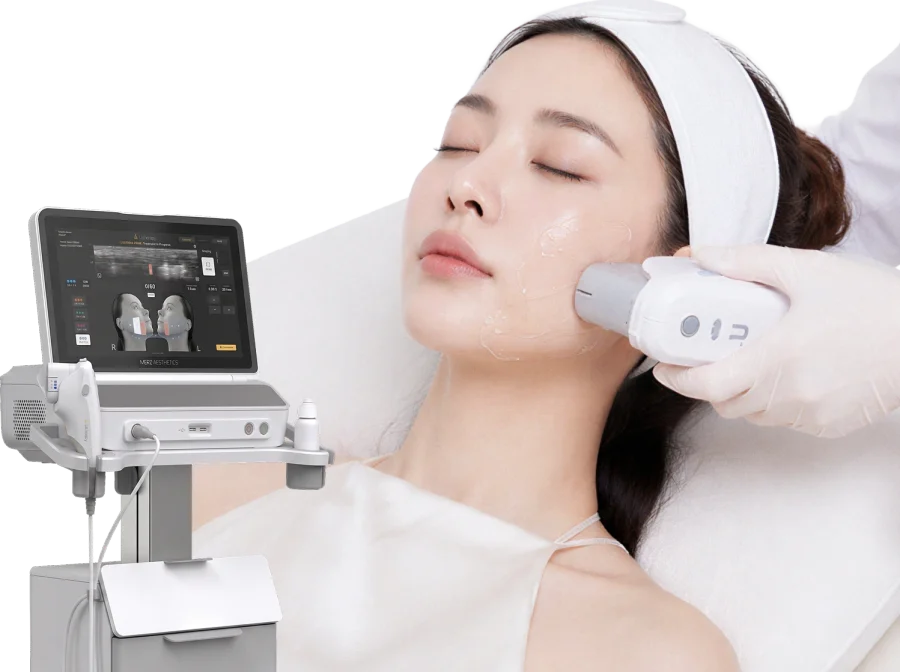
Shurink Universe (Ultraformer MPT) — what the device actually does
Doublo Gold, ULTRAcel Q+, and the Chinese HIFU warning
Head-to-head — Ultherapy, Ultraformer MPT, Doublo Gold, Ultraformer III
Korean HIFU vs Ultherapy — an honest head-to-head
Sources
What international patients should know
1
Step 1 / 7

Why Korea has its own HIFU ecosystem

South Korea's aesthetic dermatology market is one of the largest in the world, and domestic HIFU device manufacturers have built a parallel ecosystem to the US-dominated Ultherapy market.

Classys, the maker of Ultraformer (branded as Shurink in Korea), reported 2024 revenue of approximately KRW 242.9 billion (~USD 170 million), a 34% year-over-year increase, with over 2,000 Ultraformer MPT units cumulatively installed across Korean clinics. Hironic, maker of Doublo, has logged over 1 million clinical cases since 2011.

The Korean approach to HIFU differs from Western practice in important ways. Korean patients typically receive treatments every 3–6 months as maintenance, compared to the Western approach of a single annual session. This high-frequency model drives device design toward faster treatment, lower pain, and lower cost per session.

For international patients visiting Seoul, this means access to devices and treatment protocols that simply aren't available in most other countries — but it also means navigating a market with less published English-language clinical literature.

FAQ

Frequently Asked Questions

Is Korean HIFU as safe as Ultherapy?

The short answer is that both have favorable documented safety profiles — but no published head-to-head trial lets anyone make a categorical ranking. Park et al. (2015, Ann Dermatol) specifically evaluated HIFU in 20 Korean patients across seven facial areas and found only mild, transient effects (erythema, tenderness) resolving within days — no persistent adverse events. The Hwang 2026 eyelid-sagging study (34 Korean women on Ultraformer MPT) reported similarly mild side effects clearing in 3–4 days. Ultherapy's larger evidence base (Amiri 2025 meta-analysis, 42 studies) also reports a favorable safety profile. The meaningful differentiator in practice is operator skill and real-time imaging access — not device nationality. DeepSEE visualization gives Ultherapy a genuine safety advantage near the mandibular nerve and major facial vessels; a skilled Korean HIFU operator mitigates this by anatomical knowledge but cannot see through tissue.

Why is Korean HIFU cheaper than Ultherapy?

Three structural reasons, none of which are about quality. First, regulatory pathway cost: maintaining FDA 510(k) clearance across multiple indications (brow, neck, décolletage, arms, abdomen) is expensive, and Merz has invested in that pathway for 15+ years. Korean manufacturers have prioritized MFDS and CE approval, which have their own rigorous requirements but lower US-market-access costs. Second, imaging hardware: Ultherapy's DeepSEE real-time ultrasound imaging module is a significant device-cost line item that no Korean HIFU device replicates. Third, the published-evidence investment: Merz has funded 50+ peer-reviewed studies, and that evidence base is bundled into device pricing. None of these cost inputs make Ultherapy automatically better for a given patient — they make it more expensive. The Korean HIFU price advantage is real and is not hiding a quality shortfall, but it also reflects narrower regulatory depth and a smaller peer-reviewed evidence base.

Which Korean HIFU device has the most published evidence?

Classys's Ultraformer MPT (branded Shurink Universe in Korea) has the most peer-reviewed indexed literature of any Korean HIFU platform as of 2026. The strongest single paper is Kim JS (2024, Plast Reconstr Surg Glob Open), which used 3D scanner analysis to quantify lifting across seven facial aesthetic units in 50 patients: forehead 1.24 mm, crow's feet 2.25 mm, malar 2.46 mm, posterior cheek 3.40 mm, jowl 2.90 mm, mandible 3.09 mm, neck 3.53 mm — all statistically significant (P < 0.05). Hwang 2026 (JPRAS Open) adds a 34-patient eyelid-specific Ultraformer MPT series; Lio 2022 (Clin Cosmet Investig Dermatol) evaluated the earlier Ultraformer III across Fitzpatrick III–V skin. Doublo Gold's published evidence is thinner — most Doublo outcome data are manufacturer series and conference posters rather than indexed journal articles.

Do I need multiple sessions with Korean HIFU?

Korean clinical practice typically recommends 2–3 initial sessions spaced 3–6 months apart, then maintenance every 6–12 months — a meaningfully different rhythm from Ultherapy's typical single annual session. The difference is partly mechanical (Korean HIFU devices generally deliver less cumulative energy per session than a full Ultherapy protocol), partly economic (shorter, cheaper sessions naturally cluster), and partly cultural (Korean patients favor incremental, frequent maintenance over annual events). The Kim 2024 study measured outcomes after a single Ultraformer MPT session — meaningful improvement is achievable without stacking — but most Seoul dermatologists plan a follow-up at 3–6 months to top up. For a single-visit medical tourist, a well-executed single session is a defensible choice; for a patient with ongoing access, the multi-session model tends to produce more uniform outcomes than one aggressive event.

Is Chinese-manufactured HIFU safe?

The concern is regulatory pathway and published evidence, not national origin. Korean HIFU devices are themselves made in Korea under MFDS oversight — the same regulatory rigor that, for instance, Japanese medical devices receive under PMDA. The specific concern with the low-cost Chinese HIFU devices that have spread through budget Asian aesthetic markets in the past five years is (1) many are not NMPA-registered for cosmetic indications (sold for "research" or "beauty salon" use instead), (2) peer-reviewed clinical trials on the specific device names are minimal to absent on PubMed, and (3) reports in Asian aesthetic forums document a pattern of lower acoustic output than spec — which clinics compensate for by doubling shot counts, worsening both outcomes and safety. The established HIFU literature (Ayatollahi 2020 meta-analysis of 17 trials / 477 patients; Haykal 2025 review of 45 trials) overwhelmingly evaluates Korean, Japanese, European, and North American platforms. When a Seoul clinic offers HIFU meaningfully below the market range for Ultraformer MPT or Doublo Gold, asking for the manufacturer name and MFDS registration number is a reasonable due-diligence step.

Related Procedures

Related procedure pages to review next.

If you need more detail about treatment approach, recovery, or suitability, continue into these procedure pages.

Gangnam, Seoul

Personalized dermatology care in Gangnam for local and overseas patients.

Delight Dermatology Clinic focuses on doctor-led consultation, warm service, and personalized treatment planning.

Walking videos

Nonhyeon · Exit 4
Sinnonhyeon · Exit 2
Clinic

Delight Dermatology Clinic

4th Floor, Building B, 509 Gangnam-daero

Seocho-gu, Seoul, South Korea

Parking is available in the building.

02-517-9991

Mon - Fri: 10:00 - 20:00

Lunch break: 13:00 - 14:00

Saturday: 10:00 - 16:00

Sunday and public holidays: Closed

Location

Gangnam · Seocho-gu, Seoul

Find directions

Clinic Name: 딜라이트피부과의원Representative: 윤상열Tel. 02-517-9991Business Registration No.: 357-15-02460Privacy PolicyTerms of Use
Registered Foreign Patient Medical Institution
Officially registered by the Ministry of Health and Welfare of the Republic of Korea (Reg. No. M-2024-01-08-8248) · 외국인환자 유치의료기관

Medical information on this site is for reference only and does not constitute medical advice. Individual results may vary. Consult a board-certified dermatologist for diagnosis and treatment planning.