Lifting Comparison

HIFU vs Ultherapy vs Thermage Seoul | Three-Way Decision Guide

HIFU, Ultherapy Prime, and Thermage FLX — three non-surgical lifting options compared. Mechanism, depth, evidence from a Seoul dermatologist.

Your Journey

Follow each step to prepare for your visit.

HIFU, Ultherapy Prime, and Thermage FLX — three non-surgical lifting options compared. Mechanism, depth, evidence from a Seoul dermatologist.

HIFU vs Ultherapy vs Thermage Seoul | Three-Way Decision Guide
Why all three show up in the same consultation
How each technology works and where it reaches
Head-to-head — the three-way comparison
Decision framework — which technology fits which face
Sources
1
Bước 1 / 5

Why all three show up in the same consultation

In Seoul, patients researching non-surgical lifting almost always encounter the same three names: HIFU (usually referring to Korean-manufactured devices like Shurink, Ultraformer, or Doublo), Ultherapy (Merz Aesthetics' MFU-V platform), and Thermage (Solta Medical's monopolar RF). Marketing positions them as competing solutions — but they are actually different tools for different problems.

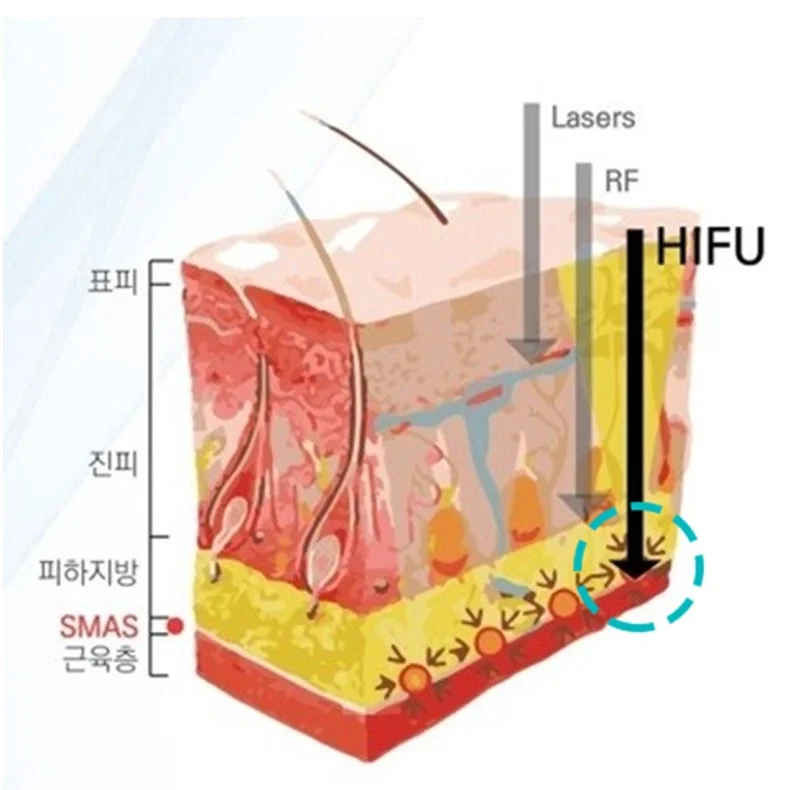
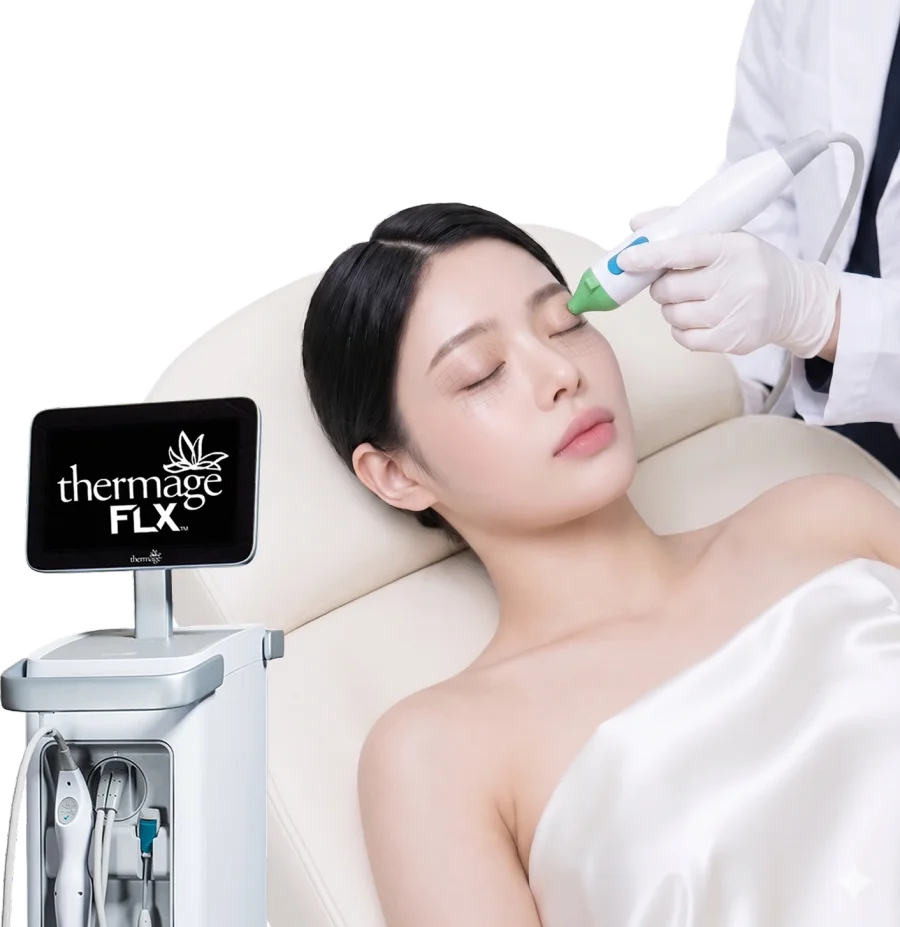
HIFU, RF, and laser lifting technology comparison overview
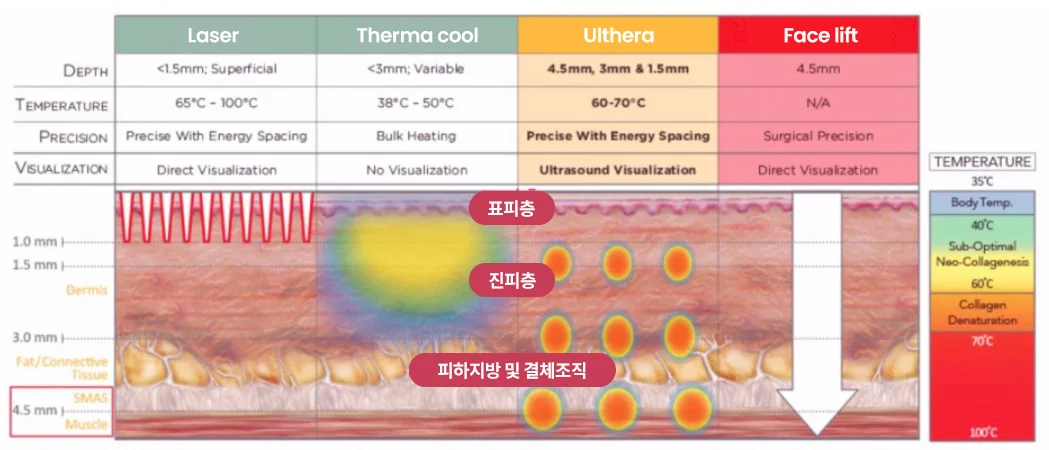
Three non-surgical lifting categories — focused ultrasound (HIFU/Ultherapy), monopolar radiofrequency (Thermage), and laser-based alternatives. Each targets different tissue layers with different energy types.

One important clarification up front: "HIFU" is an umbrella term that includes both Ultherapy and the Korean domestic devices. Ultherapy is an FDA-cleared form of HIFU called MFU-V (micro-focused ultrasound with visualization). Korean devices like Shurink Universe (Ultraformer MPT) and Doublo Gold are also HIFU, approved by MFDS (Korea) and CE-marked (EU), but not FDA-cleared. When a Seoul clinic says "HIFU," they usually mean a Korean device — not Ultherapy. Patients frequently miss this distinction.

The short version:

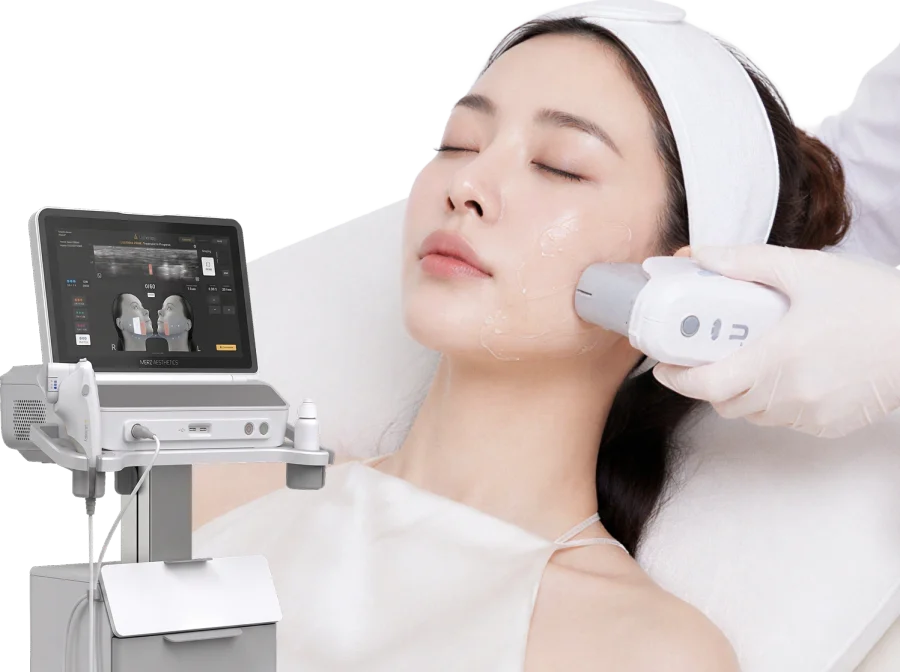
  • Ultherapy Prime — focused ultrasound, reaches the SMAS (4.5 mm), real-time imaging, 50+ peer-reviewed studies
  • Korean HIFU — focused ultrasound, also reaches SMAS, no imaging, faster sessions, lower cost, smaller evidence base
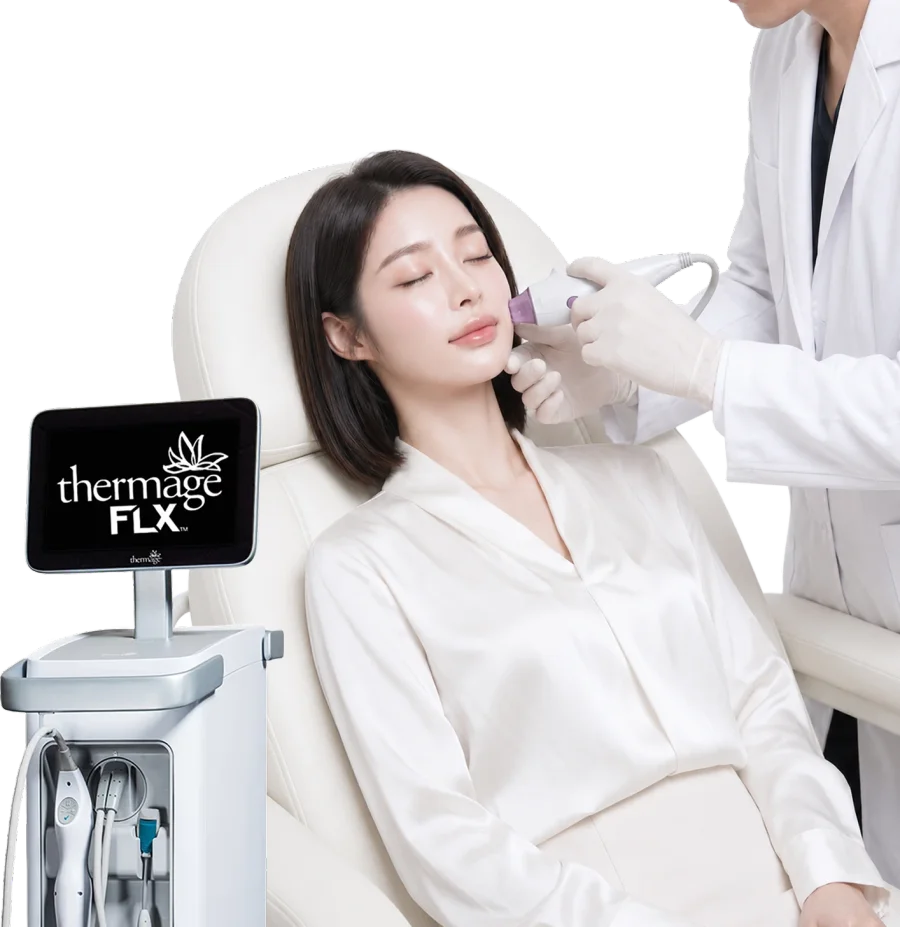
  • Thermage FLX — monopolar radiofrequency, heats dermis and subdermis in bulk (~2–3 mm), does not reach SMAS, 20+ years of data

This guide is the decision-stage overview. For deeper dives on any single category, see our HIFU vs Ultherapy evidence comparison, Thermage vs Ultherapy evidence comparison, or Korean HIFU devices technical guide.

FAQ

Frequently Asked Questions

If I can only pick one of the three, which should it be?

It depends entirely on what is actually changing in your face. If your main concern is thin, crepey skin without visible structural descent — pick Thermage FLX. If your main concern is jowl descent, brow heaviness, or jawline loss — pick Ultherapy Prime if you value regulatory depth, real-time imaging, and the largest published evidence base, or a Korean HIFU device (Shurink, Ultraformer, Doublo) if cost is a factor and you prefer faster sessions. "Which is best" is not answerable in the abstract — only in the context of your specific concern.

Can I combine all three in a single treatment plan?

Combining ultrasound (Ultherapy or Korean HIFU) with Thermage is common and medically rational — they target different tissue layers with different mechanisms, so they reinforce each other. Combining Ultherapy AND a Korean HIFU device is not recommended — you would be treating the same tissue depth twice with the same mechanism, which increases cost and risk without meaningful additional benefit. Pick one HIFU category for the SMAS work, then layer Thermage on top if dermal tightening is also needed.

Which is the most cost-effective for ongoing maintenance?

For patients who want frequent maintenance (every 6–12 months), Korean HIFU devices are typically the most cost-effective in Seoul — sessions are shorter (20–40 min vs 60–90 min), less painful with newer micropulsed technology, and 30–50% less expensive than comparable Ultherapy sessions. The tradeoff is a smaller published evidence base and no real-time imaging. For annual-or-longer maintenance, the Ultherapy cost-per-year may actually be comparable because protocols often specify one session every 1–2 years rather than every 6 months.

Is Korean HIFU less safe because it is not FDA-cleared?

The absence of FDA clearance reflects a business decision about regulatory pathway, not a rejection based on safety or efficacy concerns. Classys (Ultraformer) and Hironic (Doublo) have pursued MFDS (Korean) and CE (EU) regulatory approval, which have their own substantive safety requirements. Korean HIFU devices are widely used across Asia and Europe with favorable documented safety profiles — Park et al. (2015) specifically studied HIFU in Korean patients and found only mild, transient side effects. The meaningful difference is the depth of published peer-reviewed evidence, not a safety gap.

What if a clinic recommends I do all three in one day?

Be skeptical. Layering multiple energy-based treatments in a single session increases inflammatory load, makes adverse events harder to attribute to a specific cause, and rarely delivers better outcomes than a staged approach. The standard Seoul protocol for patients who want both lift and dermal tightening is ultrasound (Ultherapy or Korean HIFU) first, Thermage 2–4 weeks later. A clinic pushing same-day combination of all three is usually selling packages, not making a clinical decision based on your anatomy.

Related Procedures

Related procedure pages to review next.

If you need more detail about treatment approach, recovery, or suitability, continue into these procedure pages.

Ultherapy Prime tại Seoul

Nâng cơ không phẫu thuật

Ultherapy Prime

Khi cân nhắc nâng cơ không phẫu thuật, điều quan trọng hơn tên thiết bị chính là đánh giá mức độ chùng da hiện tại, sự thay đổi đường hàm, độ dày của da và thứ tự ưu tiên trong toàn bộ kế hoạch điều trị.

Đường hàm mờ đi, phần dưới khuôn mặt trông chùng hơn trướcMuốn kiểm tra hướng nâng cơ tự nhiên trước mà không cần phẫu thuậtChưa biết nên so sánh Ultherapy, HIFU và Thermage theo tiêu chí nào
Xem trang liệu trình
Thermage FLX tại Seoul

Đàn hồi và siết chặt

Thermage FLX

Thay vì chọn Thermage chỉ vì nổi tiếng, điều quan trọng hơn nhiều là xác định rõ vấn đề chính của Quý khách là độ đàn hồi, kết cấu da hay mất thể tích.

Da toàn bộ mất đàn hồi, trông lỏng lẻo hơnƯu tiên siết chặt nhẹ nhàng thay vì thay đổi quá lớnPhân vân thứ tự nên xem Thermage, Ultherapy hay Skin Booster trước
Xem trang liệu trình
Eye Thermage tại Seoul

Siết chặt vùng mắt

Eye Thermage

Lão hóa vùng mắt thường ảnh hưởng đến ấn tượng tổng thể khuôn mặt. Eye Thermage sử dụng đầu tip nhỏ hơn và chính xác hơn so với Thermage thông thường, phù hợp với da mỏng quanh mắt.

Chân chim và nếp nhăn nhỏ quanh mắtMí mắt chùng hoặc trông nặngNếp nhăn dưới mắt và kết cấu da nhăn nheo
Xem trang liệu trình
Gói siết chặt da cổ tại Seoul

Gói chống lão hóa

Siết chặt da cổ

Khuôn mặt được chăm sóc nhưng cổ lại lộ tuổi — đây là tình trạng phổ biến. Bác sĩ da liễu chuyên khoa trực tiếp chẩn đoán và phối hợp Botox với filler cho chương trình siết chặt cổ tùy chỉnh.

Nếp nhăn ngang và rãnh trên cổDải cổ dọc (cơ bám da cổ)Chênh lệch lão hóa giữa khuôn mặt được chăm sóc và vùng cổ
Xem trang liệu trình
Gangnam, Seoul

Dịch vụ da liễu cá nhân hóa tại Gangnam cho bệnh nhân trong nước và quốc tế.

Phòng khám Delight Dermatology chú trọng tư vấn do bác sĩ dẫn dắt, dịch vụ tận tâm và kế hoạch điều trị cá nhân hóa.

Thông tin phòng khám

딜라이트피부과의원

Tầng 4, Tòa B, 509 Gangnam-daero, Seocho-gu, Seoul

Có bãi đỗ xe trong tòa nhà.

02-517-9991

Thứ 2 - Thứ 6: 10:00 - 20:00

Nghỉ trưa: 13:00 - 14:00

Thứ 7: 10:00 - 16:00

Chủ nhật và ngày lễ: Nghỉ

Tên phòng khám: 딜라이트피부과의원Đại diện: 윤상열ĐT. 02-517-9991Mã số kinh doanh: 357-15-02460Chính sách bảo mậtĐiều khoản sử dụng
Cơ sở y tế đăng ký tiếp nhận bệnh nhân quốc tế
Đăng ký chính thức tại Bộ Y tế và Phúc lợi Hàn Quốc (Số đăng ký M-2024-01-08-8248)

Thông tin y tế trên trang web này chỉ mang tính tham khảo, không thay thế tư vấn y tế. Kết quả có thể khác nhau tùy cá nhân. Vui lòng tham khảo bác sĩ da liễu chuyên khoa để chẩn đoán và lập kế hoạch điều trị.