
非手術リフティング
Ultherapy / ウルセラ
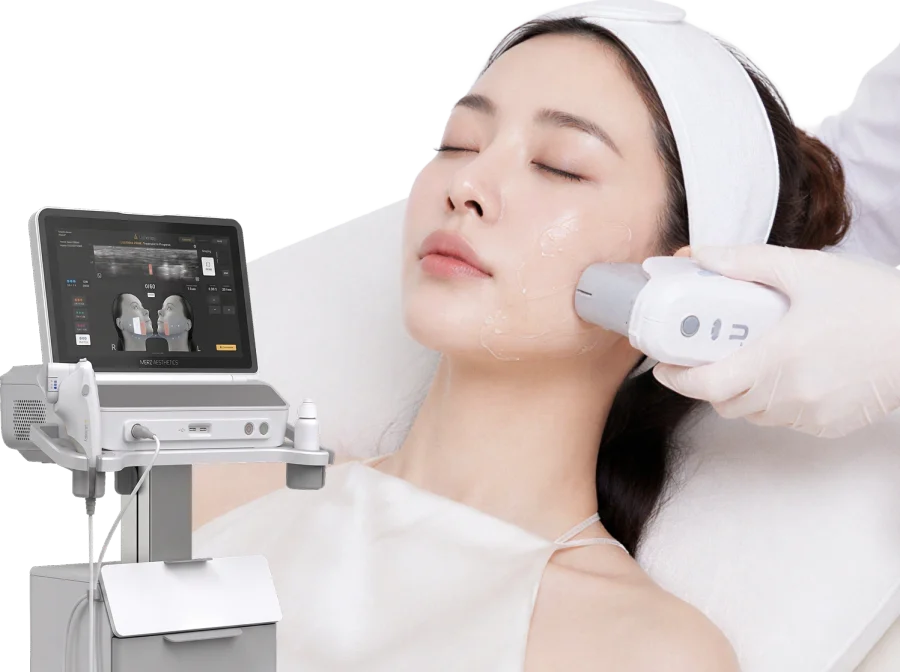
Ultherapyは画像確認機能を備えたブランドのMFU-V機器です。公表研究で報告された変化には個人差があり、解剖、部位、トランスデューサー、設定、リスク、回復、期待値は個別評価が必要です。リフト効果を保証するものでも、手術の代わりでもありません。
フェイスラインのぼやけ非手術・自然な仕上がりUltherapy・HIFU・Thermageの違い
施術ページを見る
ガイドの内容
Ultherapyと韓国製HIFUは焦点状の超音波を、Thermageはびまん性のモノポーラRFを用います。組織への作用、機器の特徴、回復、ソウルでの見積もりに関わる要素を比較します。
セクション 1 / 6
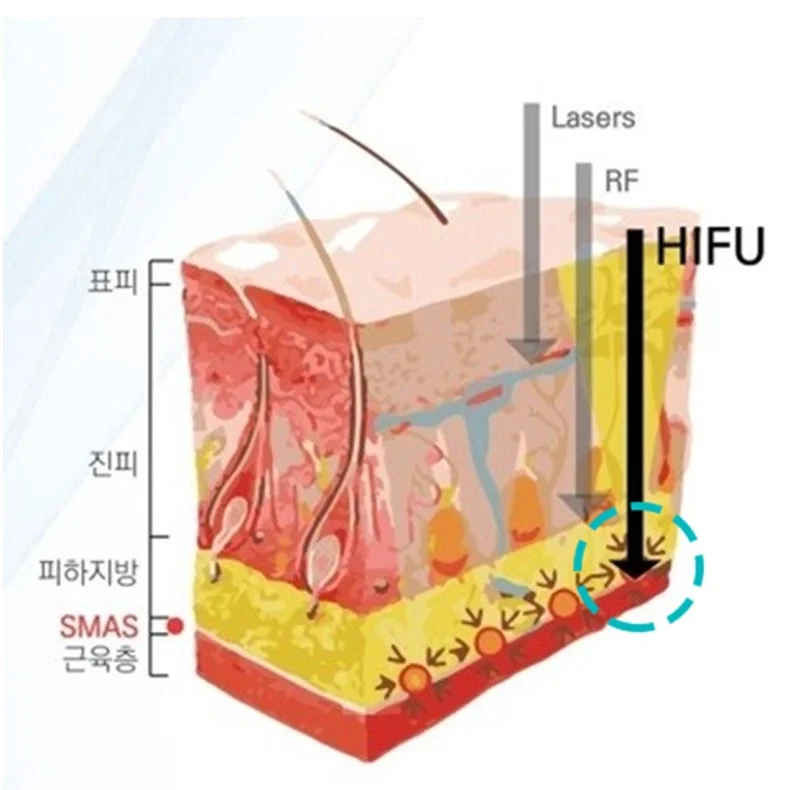
最もよく耳にするブランド名ではなく、組織のお悩みに合わせて選びましょう。Ultherapy Primeと韓国製HIFUは、選択した深さに焦点状の超音波治療点をつくります。Thermage FLXはモノポーラ高周波を、真皮から皮下の組織へより広くびまん性に届けます。これらを、同じ治療の価格帯違いであるかのように順位づけすべきではありません。
この3つのうちどれがすべての顔に最適かを証明した、公表済みのランダム化直接比較試験はありません。有用なカウンセリングでは、実際のお悩み、解剖学的特徴、治療部位、機器の機種、設定、エビデンス、耐えやすさ、ダウンタイム、書面の料金を比較します。
多くの誤った比較を防ぐ用語の整理:「HIFU」は総称的なカテゴリーです。Ultherapyは、DeepSEE画像化機能を統合したFDAクリアランス取得済みのMFU-Vプラットフォームです。ソウルでは、クリニックが「HIFU」と言う場合、Shurink Universe(Ultraformer MPT)やDoublo Goldといった韓国製プラットフォームを指すことがよくあります。正確な機種をご確認ください。韓国製プラットフォームがすべて同じ特徴、規制上の位置づけ、プロトコル、エビデンスを持つわけではありません。
裏付けとなる研究や機器レベルの詳細については、このガイドを読み進めるか、より焦点を絞ったHIFU対Ultherapyのエビデンス比較と韓国製HIFU機器ガイドをご覧ください。
セクション 2 / 6
意味のある違いは、エネルギー源、加熱が焦点状かびまん性か、機器の画像化機能、そして個々の解剖学的特徴に合わせて選ばれる治療プランです。
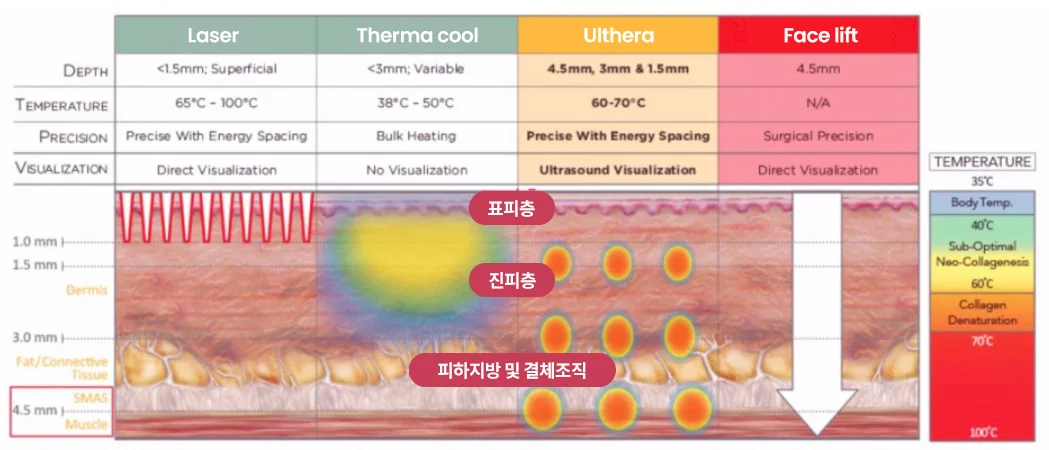
Ultherapy Prime(MFU-V):そのトランスデューサーは、公称1.5、3.0、4.5mmの深さに、点状の熱凝固点をつくります。統合されたDeepSEEシステムは組織を8mmまで画像化し、照射前に計画された治療ラインを表示します。Ultherapyには適応別のFDA 510(k)クリアランスがありますが、クリアランスは結果の保証と同じではありません。
韓国製HIFUプラットフォーム:Ultraformer MPT、Doublo Gold、その他のシステムも集束超音波を用いますが、そのカートリッジ、パルスのパターン、画像化機能、規制上の承認、臨床エビデンスは互いに置き換えられるものではありません。Ultraformer MPTはノーマルモードとマイクロパルスモードを用い、Doublo Goldは双方向の照射を特徴としています。「韓国製HIFU」を一つの標準化されたプロトコルとして扱うのではなく、正確な機器と機種をご確認ください。
Thermage FLX(モノポーラRF):高周波電流が治療用チップとリターンパッドの間を流れ、その間、表面冷却が表皮を保護します。上記の点状の超音波治療点とは異なり、モノポーラRFは真皮から皮下の組織へより広く、びまん性に加熱します。ヒトの組織計測による比較では、HIFUは深部の網状真皮で最も強いリモデリングを生じ、モノポーラRFは複数の真皮層にわたってコラーゲンの変化を生じたと報告されています(Suh et al., 2015)。したがって、Thermageを正確に2〜3mmの深さに単純化したり、RFが浅い組織にしか作用しないと述べたりするのは誤解を招きます。Thermage FLXはK170758でFDAのクリアランスを取得しています。
妥当な比較は、選択した深さでの焦点状の超音波と、びまん性のモノポーラRF加熱との比較です。どちらの作用機序も、それ単独でどの選択肢が適切か、あるいは個々の患者さんにどれだけの目に見える変化が現れるかを決めるものではありません。
セクション 3 / 6
表の前に必要な注意点:名前を挙げたこれら3つの選択肢を、同じプロトコルと評価指標のもとで直接比較した公表済みのランダム化試験はありません。この表は、機器の資料と別々の研究から組み立てた方向づけのためのツールであり、順位表ではありません。
| Ultherapy Prime | 韓国製HIFU (機種別) | Thermage FLX | |
|---|---|---|---|
| エネルギー | MFU-V超音波 | 集束超音波 | モノポーラRF |
| 熱分布のパターン | 選択したカートリッジの深さでの点状の治療点 | 機種とモードにより、点状またはマイクロパルスの治療点 | 真皮から皮下へのびまん性の加熱 |
| 公称の治療深度 | 1.5 / 3.0 / 4.5 mm | 一般的に1.5 / 3.0 / 4.5 mm。カートリッジと機種をご確認ください | 単一の決まった深さはなく、組織・チップ・インピーダンス・設定により分布が変わります |
| 画像化 | 8mmまで統合されたDeepSEE画像化 | プラットフォームにより異なり、UltherapyのDeepSEEシステムと同等ではありません | 超音波画像化はなく、システムは接触とインピーダンスをモニターします |
| 米国の規制上の位置づけ | 適応別のFDA 510(k)クリアランス | 機種名により異なります。HIFUというカテゴリーからFDAクリアランスを推測しないでください | FDA 510(k) K170758 |
| エビデンス | これらの超音波の選択肢の中で最大の、公表済みMFU-Vエビデンス | 増えつつありますが、機種別で規模は小さめです | 長年にわたるモノポーラRFの文献。プロトコルや機器は多様です |
| 施術回数とメンテナンス | カテゴリーだけで決まるものではありません。部位、ライン数またはREPの計画、設定、反応、医師の評価によって、施術の長さや再評価が決まります。 | ||
| ソウルでの価格比較 | 正確な機器、部位、ライン数またはREP、施術する医師、含まれるもの、税、経過フォローが一致する場合にのみ、書面の見積もりを比較してください。 | ||
この表の読み方:超音波プラットフォームは選択した深さに焦点状の治療点を置き、Thermageは高周波をより広くびまん性に届けます。異なる組織への作用を通じて重なり合うお悩みに対応できますが、エビデンスは、すべての患者さんに当てはまる万能の勝者や標準的な組み合わせを支持するものではありません。
価格は作用機序や品質の代わりにはなりません。ブランド、消耗品、治療範囲、機器の機能、クリニックの条件、市場での位置づけは、いずれも見積もりに影響し得ます。Delightの公表している価格帯については最新のクリニックの料金ページをご覧いただき、評価の後に項目別のプランをご請求ください。
セクション 4 / 6
これらの治療は、正式な社会的ダウンタイムなしで計画されることが一般的ですが、それは施術後に何も感じない、何も見えないという意味ではありません。
回復には個人差があります。書面のアフターケアを受け取り、痛み、脱力、水疱、著しい腫れ、感覚の変化が強い場合や続く場合は、クリニックにご連絡ください。
費用については、ブランド名ではなく治療プランを比較してください。見積もりには、機器と機種、治療部位、超音波のライン数またはThermageのREP、施術する医師、税、含まれるケア、経過フォローが明示されているべきです。Delightの現在の価格帯は料金ページで管理しているため、このガイドはキャンペーン価格が変更された後にそれを固定してしまうことがありません。
セクション 5 / 6
有用なカウンセリングは、お悩みと診察から始め、その上で機器と治療プランを具体的に挙げるものです。以下の分類は、その話し合いのきっかけであり、遠隔での診断ではありません。
主なお悩みが肌のキメや広い範囲のたるみの場合:
主なお悩みが眉、下顔面、首の限局したリフティングの場合:
複数のお悩みがある場合:
主なお悩みが別のものである場合:
役に立つクリニックへの質問:「私にはどの選択肢を勧めないか、そしてどのような所見がそれを除外するのですか?」妥当な答えは、勧める理由を、解剖学的特徴、期待される効果、限界、リスク、代替手段、そして正確な機器と結びつけるものであり、パッケージ割引と結びつけるものではありません。
セクション 6 / 6
よくある質問
エビデンスに基づく既定の勝者はありません。Ultherapy Primeと韓国製HIFUは焦点状の超音波治療点をつくり、Thermage FLXはモノポーラRFをより広くびまん性に届けます。選択は、お悩みと治療部位の診察を踏まえたうえで、正確な機器、画像化機能、計画された設定、エビデンス、リスク、ダウンタイム、書面の料金を比較して行うべきです。
お悩みや治療部位が異なる場合、医師が複数の手法を検討することはありますが、3機器を用いる万能のプロトコルを確立したランダム化試験はありません。それぞれの機器がなぜ必要か、治療する範囲が重なっていないか、累積するエネルギーとタイミングをどのように管理するのか、そして1つの手法単独と比べてどのような上乗せの効果が期待されるのかをお尋ねください。Ultherapyともう1つのHIFUプラットフォームを併用することは、単にブランドが異なるというだけで効果が上乗せされると考えるべきではありません。
費用対効果を機器のカテゴリーだけから推測することはできません。正確な機種、治療部位、ライン数またはREP、施術する医師、含まれるケア、想定される再評価の間隔、そして次の施術が実際に適応となるかどうかを比較してください。1回あたりの見積もりが安い韓国製HIFUでも、UltherapyやThermageの見積もりとは異なる範囲を示している場合があります。目立つ価格や想定された年間スケジュールではなく、項目別のプランを比較してください。
FDAのクリアランス、韓国MFDSの承認、その他の国・地域の適合手続きは、それぞれ異なる規制上の事実であり、どれか一つだけで、あらゆるプロトコルが等しく安全あるいは有効であると証明するものではありません。「韓国製HIFU」という言葉から一般化するのではなく、正確な機器と承認をご確認ください。公表された韓国のコホート研究では、多くが一過性の有害事象を報告していますが、そのエビデンスは機種別で、UltherapyのMFU-Vの文献より規模が小さく、また集束超音波治療全般でまれな合併症が報告されています。
同意する前に、機器ごとの根拠をお尋ねください。クリニックは、治療部位、計画されたエネルギーまたはライン数、重なり、順序、期待される上乗せの効果、重要なリスク、そして段階的なプランよりも同日治療のほうが望ましい理由を記録すべきです。3つすべてを同日に用いることを標準的なプロトコルとして確立した、万能のランダム化エビデンスはありません。したがって、パッケージという名目だけでは臨床的な正当化として十分ではありません。
関連する施術
施術の方向性や適性、回復の考え方をもう少し見たい場合は、下の施術ページへ進んでください。
非手術リフティング
Ultherapyは画像確認機能を備えたブランドのMFU-V機器です。公表研究で報告された変化には個人差があり、解剖、部位、トランスデューサー、設定、リスク、回復、期待値は個別評価が必要です。リフト効果を保証するものでも、手術の代わりでもありません。
引き締めとハリ
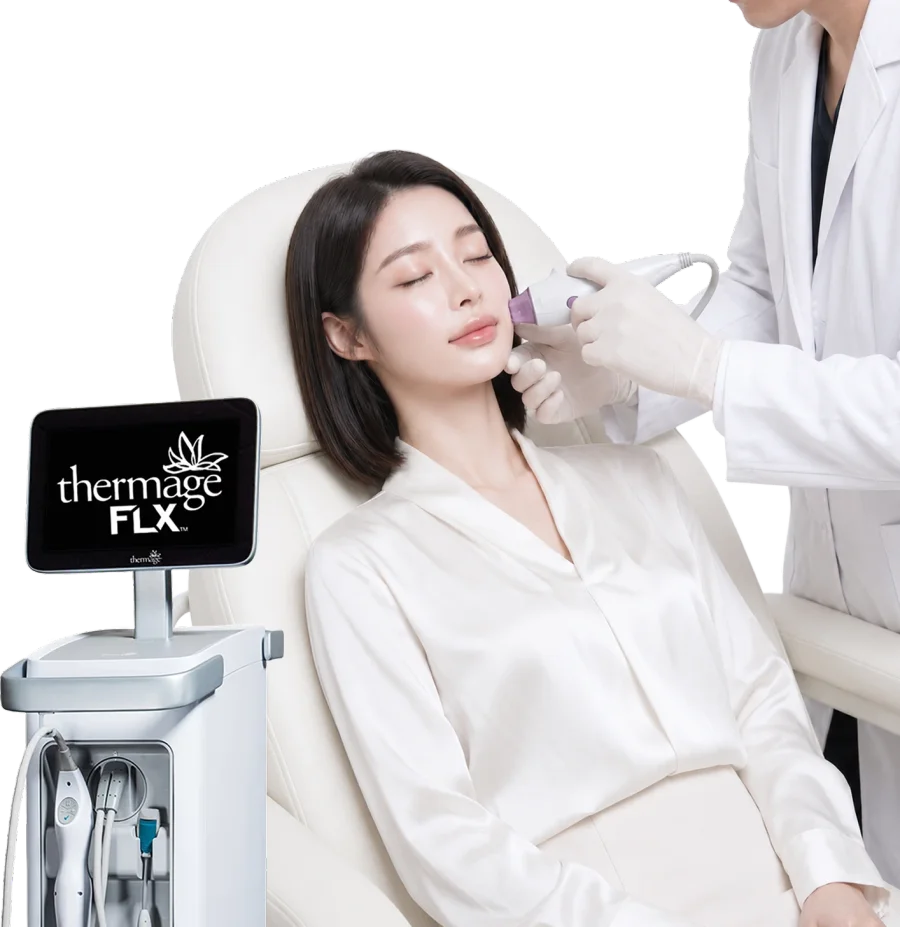
Thermage FLXはモノポーラ高周波機器です。公表研究での引き締め変化は個人差があり、概して穏やかです。チップ、部位、設定、リスク、回復、期待値は個別に評価し、フェイスラインの変化を保証したり、手術やボリューム治療に置き換えたりはできません。
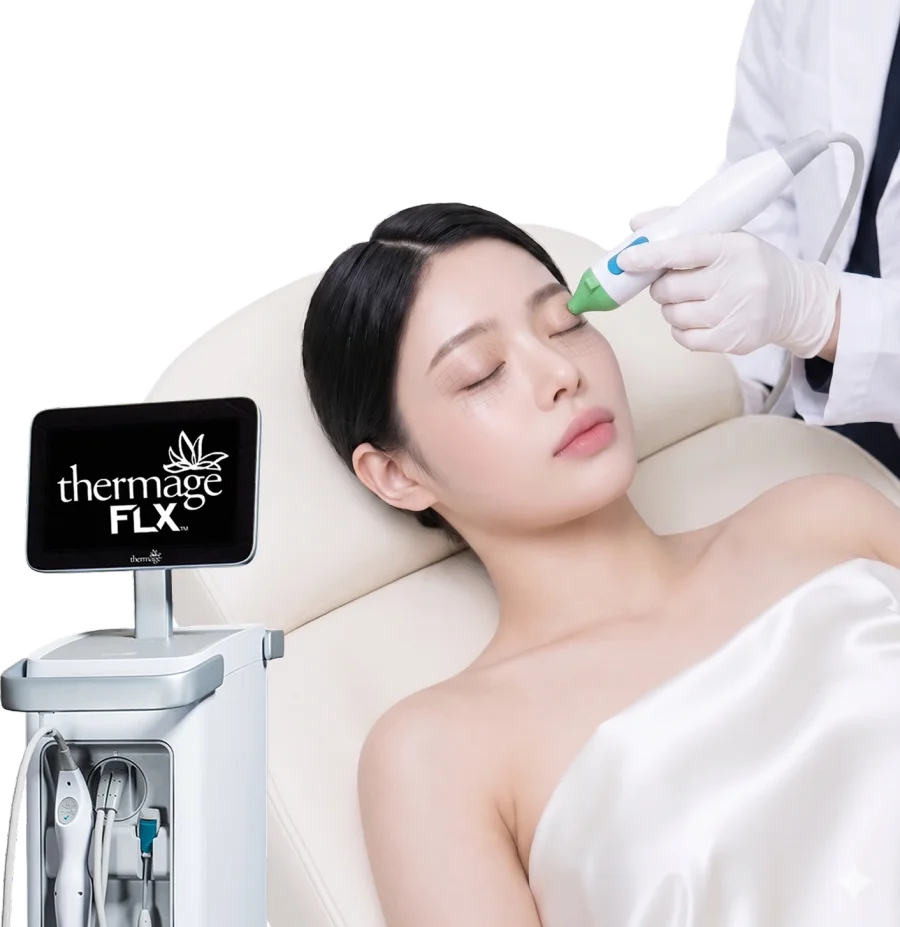
目元タイトニング
目元のエイジングケアでは、機器名だけでなく、たるみの程度、皮膚の厚み、他の施術との組み合わせを総合的に考えることが大切です。
アンチエイジングパッケージ
顔はケアしても首に年齢が現れることが多いです。皮膚科専門医が直接診断し、ボトックスとフィラーを組み合わせたネックタイトニングを行います。