
Threads, Ultherapy or Thermage? A Layer-by-Layer Lifting Comparison
A Seoul dermatologist compares thread lifting, Ultherapy and Thermage by the skin layer each one targets, what the evidence supports, and which combination suits each decade.
This is an English adaptation of a clinical article by Dr. SangYoul Yun: board-certified dermatologist and Medical Director of Delight Dermatology in Gangnam, Seoul, originally published in Korean. Read the Korean original on Naver. Evidence citations were reviewed for this edition.
"I want a lifting treatment, but what is the actual difference between them?" It is one of the most common questions in my consultation room. Threads, Ultherapy and Thermage are all called "lifting," yet they act on different layers, through different physics, with different onsets and different recovery. Choosing by brand name rather than by layer is the most common reason people feel a treatment "did nothing."
Why the layer matters more than the brand
Facial sagging does not happen in one layer. The epidermis, dermis, subcutaneous fat and the SMAS (superficial musculoaponeurotic system) all age at once and descend together. Each treatment reaches a different depth, so the useful question is not "which is strongest" but "which layer is driving my particular sagging?"
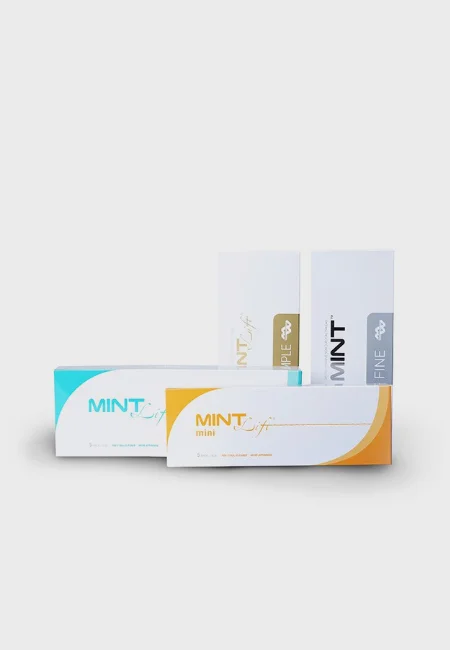
The three approaches at a glance
| Thread lifting | Ultherapy | Thermage | |
|---|---|---|---|
| Target layer | Dermis to subcutaneous fat | SMAS and dermal planes at set transducer depths | Dermis |
| Energy or material | Absorbable PDO, PCL or PLLA sutures | Microfocused ultrasound with visualization (MFU-V) | Monopolar radiofrequency |
| Mechanism | Mechanical suspension plus collagen response around the thread | Focal thermal coagulation points, then collagen remodeling | Volumetric dermal heating, then collagen contraction and remodeling |
| Onset | Immediate repositioning on the day | Gradual; typically most visible around 3 months | Gradual over several months |
| Recovery | Usually a few days of swelling or bruising | Minimal; transient tenderness or numbness possible | Minimal |
| Best suited to | Defined sagging that needs repositioning | Laxity where deeper structural tightening is the goal | Diffuse dermal laxity and overall firmness |
What the published evidence actually shows
Thread lifting reliably produces an immediate change. A 2024 systematic review of 12 studies (818 patients) using mainly polydioxanone and PLLA/PCL threads found improvement on standard aesthetic scales in all included studies with mild complications, but the authors were explicit that long-term efficacy data are lacking and the longest follow-up reached two years (DOI 10.1097/DSS.0000000000004521). Immediate visible lift is the strength; durability is the open question.
Ultherapy uses microfocused ultrasound with real-time visualization. A randomized, investigator-blinded trial in 51 subjects compared a standard treatment-line protocol with a protocol customized to the patient's anatomy; both produced more than a one-point improvement in jawline laxity, with three-dimensional photography confirming lift, and the customized approach helped in anatomically variable faces (DOI 10.36849/JDD.7647). A 2025 global expert consensus underlines why the "with visualization" part matters: real-time imaging is what makes depth targeting and anatomical safety possible (DOI 10.1111/jocd.70449). Ultherapy Prime at our clinic delivers energy at 1.5 mm, 3.0 mm and 4.5 mm depths.
Thermage, a monopolar radiofrequency device, works by heating the dermis volumetrically. A 2025 pilot study of 32 patients with skin types III–V documented improvement in jawline sagging and nasolabial folds, increased elasticity, and (on biopsy) greater collagen and elastic fiber density two months after treatment, with no severe adverse events (DOI 10.1111/jocd.70463). A separate 2025 study in Asian skin found significant clinical improvement at 4, 12 and 24 weeks with only mild adverse events (DOI 10.1007/s10103-025-04475-y).
Safety is part of the comparison
Energy devices are not risk-free simply because they are non-surgical. A 2025 case report describes a 32-year-old woman who developed iridocyclitis and a permanent corneal opacity after microfocused ultrasound was applied to the periocular skin (DOI 10.1111/jocd.70601). The clinical lesson is specific rather than alarming: periorbital energy delivery demands a trained operator, correct intensity thresholds and proper eye protection. Ask who is holding the handpiece and how the eye area is managed.
How I think about it by decade
These are patterns from the clinic, not prescriptions. Chronological age matters far less than the layer that is actually descending, which is why the assessment comes first.
- 20s: prevention rather than correction. Sun protection, barrier care and, where appropriate, expression-line management. Structural lifting is rarely the issue at this stage.
- 30s: early laxity. This is usually where deeper tightening enters the conversation, often alongside dermal-quality treatments.
- 40s: combination thinking. When more than one layer has changed, a single modality tends to underdeliver; pairing a repositioning approach with an energy device is common.
- 50s and beyond: staged planning. Volume loss, dermal thinning and deeper descent usually coexist, so sequencing over months beats trying to do everything in one visit.
None of these devices stops aging. Each buys time on a specific layer, and results vary with baseline laxity, skin thickness, weight change and how the treatment is delivered. Our Thermage versus Ultherapy guide compares the two energy devices in more detail, and the Ultherapy and Thermage procedure pages explain how each session is planned here.
Questions worth asking before you book
- Which layer is driving my sagging, and how was that assessed?
- Why this device rather than the other two for my face?
- What change is realistic for me, and when should I judge the result?
- Who performs the treatment, and what happens if something goes wrong?
Frequently asked questions
Can I combine threads with an energy device? They act on different layers, so combinations are used in practice. Whether it suits you, and in what order, is an individual clinical decision.
Which one lasts longest? Published follow-up periods differ by modality and the evidence base is uneven. For threads specifically, long-term data are limited. Anyone quoting one precise number for everyone is overstating what the literature supports.
Is stronger energy better? No. Settings are matched to tissue and anatomy; excess energy raises risk without guaranteeing more lift.
Does it hurt? Sensation varies by device, area and individual. Comfort options are discussed at consultation.
Reviewed by
Written by Dr. SangYoul Yun, board-certified dermatologist and Medical Director of Delight Dermatology, Gangnam, Seoul. Evidence reviewed 2026-08-04.
Sources
- Riopelle AM et al. Update on Absorbable Facial Thread Lifts. Dermatol Surg. 2024. DOI 10.1097/DSS.0000000000004521
- Wood E et al. Comparing MFU-V standard versus targeted tissue protocol for the lower face and upper neck. J Drugs Dermatol. 2024. DOI 10.36849/JDD.7647
- Lin F et al. MFU-V for body indications: global expert consensus. J Cosmet Dermatol. 2025. DOI 10.1111/jocd.70449
- Suh DH et al. Improvement in skin laxity and oiliness after monopolar radiofrequency. J Cosmet Dermatol. 2025. DOI 10.1111/jocd.70463
- Choi MS et al. Efficacy and safety of a monopolar radiofrequency device in Asian skin. Lasers Med Sci. 2025. DOI 10.1007/s10103-025-04475-y
- Liu J et al. Corneal leukoma with iridocyclitis after periocular micro-focused ultrasound: case report. J Cosmet Dermatol. 2025. DOI 10.1111/jocd.70601
Citations retrieved from PubMed. Medical disclaimer: this article is general education, not a diagnosis or a treatment recommendation. Device selection requires an individual assessment.
Trang thông tin chuyên sâu do Delight Dermatology vận hành: ultherapy-seoul.com · thermage-seoul.com
Lưu ý: Thông tin trong bài chỉ mang tính giáo dục chung, không thay thế tư vấn y khoa. Kế hoạch điều trị cá nhân được xác định qua buổi tư vấn với bác sĩ da liễu chuyên khoa. Kết quả có thể khác nhau.
Liệu trình liên quan