
RF Microneedling + Topical Exosome Products: What the Evidence Shows
RF microneedling followed by a topical exosome product is promising but preliminary. See what human, animal, and ex vivo evidence supports.
本文目录
The short answer first
RF microneedling followed by a topical product marketed as containing exosomes is a plausible but still preliminary combination. RF microneedling itself has evidence for collagen remodeling and selected concerns such as acne scarring and mild skin laxity. What has not been established is that every RF microneedling device reliably drives a topical exosome product into the human dermis, or that adding such a product produces a clinically meaningful benefit over RF microneedling alone. The products and protocols studied are heterogeneous, and individual results vary.
Why the delivery claim needs careful wording
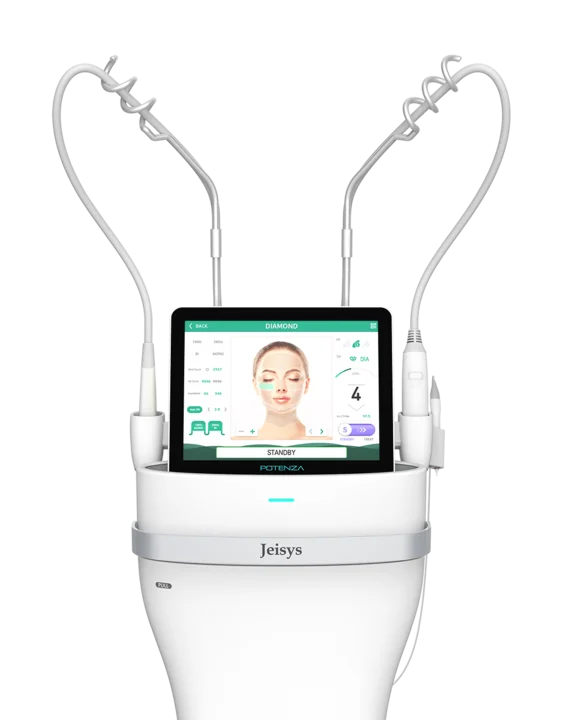
RF microneedling places needles into the skin and delivers radiofrequency energy to create controlled thermal injury. It is reasonable to hypothesize that the needle tracks may also affect topical delivery, but the available studies do not justify a universal claim.
A 2023 prospective randomized study examined microneedle fractional radiofrequency with poly-L-lactic acid (PLLA), not exosomes. Its direct observation that PLLA passed through RF-created channels came from a mouse model. The human split-face portion compared RF microneedling alone with RF microneedling plus PLLA and reported improvements in selected measures. This supports further study of that specific combination, but it does not prove human dermal delivery or clinical efficacy for topical exosomes (Wu et al., 2023, PMID 38051121).
Evidence is also device- and setting-dependent. In an ex-vivo study using six human abdominal skin samples, conventional microneedling and fractional lasers increased delivery of indocyanine green, while the fractional radiofrequency condition did not produce a statistically significant increase versus untreated skin. That experiment used a tracer rather than exosomes and does not settle the clinical question, but it shows why “RF channels always enhance topical delivery” is too broad (Nieboer et al., 2020, PMID 31984457).
What the combined exosome evidence shows
The most directly relevant 2026 systematic review evaluated microneedling used with exosomes across skin aging, pigmentation, scars, enlarged pores, and androgenetic alopecia. After quality appraisal, only eight studies were included, with sample sizes ranging from 3 to 60. The authors described the approach as promising but concluded that larger studies, longer follow-up, and more evidence are required before its efficacy and safety profile can be established (Dhaliwal et al., 2026, PMID 42027180).
Broader reviews of extracellular-vesicle or exosome-based aesthetic treatments report encouraging signals for measures such as wrinkles, elasticity, hydration, and pigmentation. Those reviews combine different sources, formulations, delivery methods, and study designs. Their pooled results therefore should not be presented as the expected result of a particular topical product after a particular RF microneedling session.
Regulation and product quality matter
How we frame a consultation
- The primary indication and expected benefit must be supportable for RF microneedling itself.
- A topical exosome product is optional and should not be described as proven to multiply results, accelerate healing, or penetrate to a particular depth.
- Potential benefit, uncertainty, product details, cost, and alternatives should be discussed before treatment.
- Significant volume loss or excess skin requires a different plan; this combination is not a substitute for filler, biostimulation, or surgery when those are the relevant options.
Safety and aftercare
Expected short-term effects of RF microneedling can include redness, swelling, tenderness, pinpoint crusting, and temporary sensitivity. Infection, pigment change, scarring, and other complications are less common but possible. The safety profile of an adjunct also depends on its formulation, handling, sterility, and the patient's skin. Seek clinical advice for worsening pain, spreading redness, pus, fever, or an unexpected reaction.
Key takeaways
- The combination has a plausible rationale, but enhanced human dermal delivery of topical exosomes is not established across RF devices and products.
- The often-cited PLLA study observed delivery in mice; it did not directly prove exosome delivery in human skin.
- A directly relevant 2026 review included only eight small, heterogeneous studies and called for larger studies with longer follow-up.
- The expected result should be based on the RF microneedling indication; any additional benefit from the adjunct remains uncertain.
FAQ
Is RF microneedling plus exosomes better than RF microneedling alone? Current evidence is not strong or standardized enough to give a general yes. Small studies report promising findings, but product differences, mixed protocols, small samples, and limited follow-up prevent a reliable estimate of added benefit.
Do RF channels guarantee that exosomes reach the dermis? No. A mouse study demonstrated delivery of PLLA, while an ex-vivo human-skin study using a tracer found no significant delivery improvement for its fractional-radiofrequency condition. Neither experiment proves topical exosome delivery for every clinical RF protocol.
Reviewed by
Reviewed by Dr. SangYoul Yun: Board-Certified Dermatologist, AAD International Fellow (IFAAD). Evidence wording updated: 2026-07-20. This article distinguishes animal, ex-vivo, and human clinical findings and does not guarantee an individual result.
Sources
- Wu X et al. Microneedling Radiofrequency Enhances Poly-L-Lactic Acid Penetration That Effectively Improves Facial Skin Laxity without Lipolysis. Plast Reconstr Surg. 2023. PMID 38051121
- Nieboer MJ et al. Enhanced topical cutaneous delivery of indocyanine green after various pretreatment regimens. Lasers Med Sci. 2020. PMID 31984457
- Dhaliwal NK et al. The Use of Microneedling With Exosomes in Dermatology: A Systematic Review. J Cosmet Dermatol. 2026. PMID 42027180
Disclaimer: This content is general information and not medical advice. Consult a qualified specialist before making any treatment decision.
提示: 本文信息仅供科普参考,不构成医学建议。个人治疗方案需通过皮肤科专科医生咨询确定。