
Acne Scar Types: Why Treatment Must Match the Scar
Icepick, boxcar, rolling, keloid: acne scars are not one diagnosis. A Seoul dermatologist explains the four scar types and the treatment each one truly needs.
This is an English adaptation of a clinical article Dr. SangYoul Yun: board-certified dermatologist and Medical Director of Delight Dermatology in Gangnam, Seoul, originally published in Korean. Read the Korean original on Naver. It has been restructured and translated for international readers; all references are the author's own.
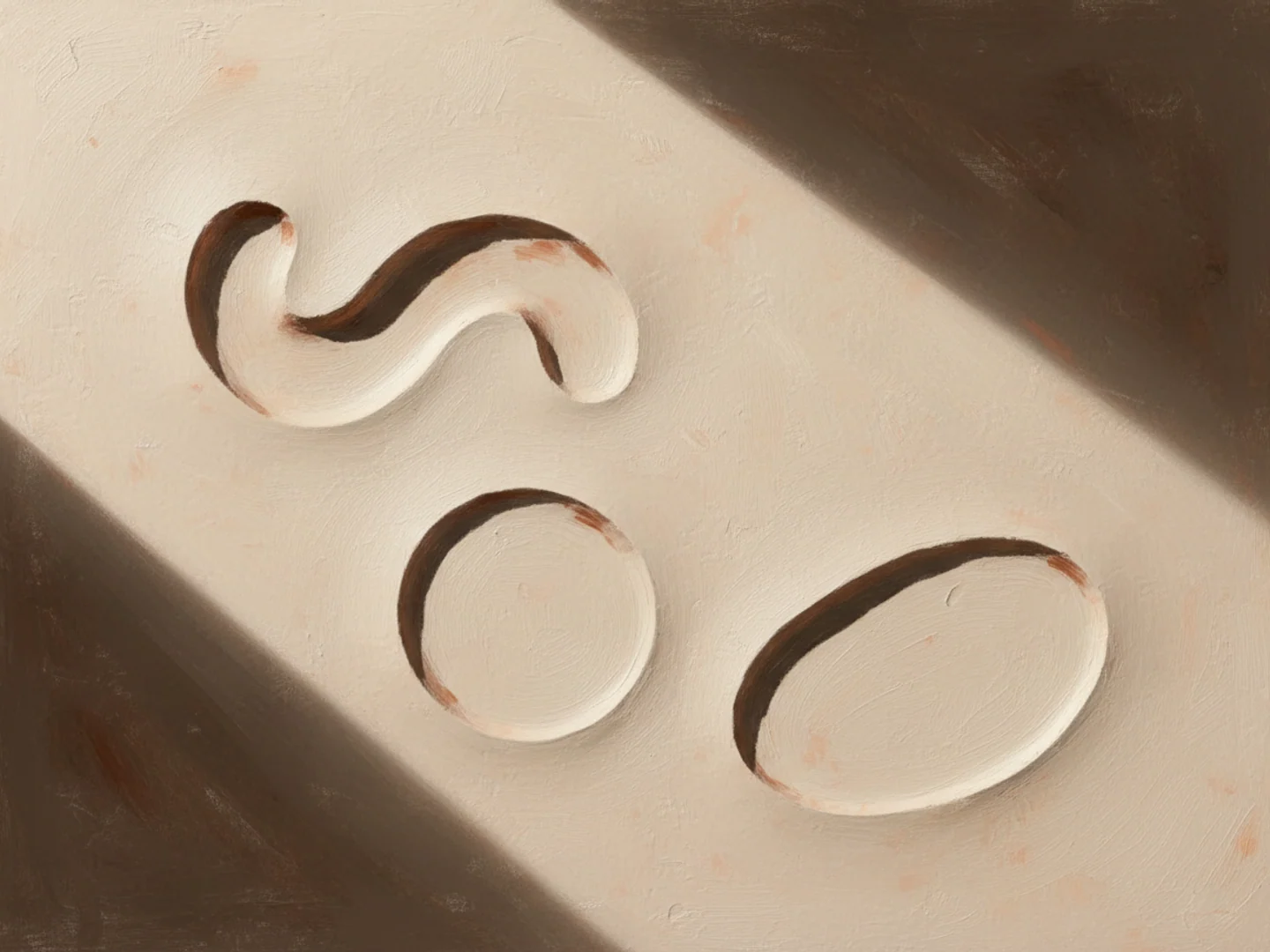
"Doctor, I've had laser done for my acne scars several times elsewhere, but they barely improved. Why?" This is one of the questions I hear most often. And the first thing I ask in return is: "Was the procedure you received actually matched to your scar type?"
Acne scars are not a single diagnosis. Depending on depth, shape, and the pattern of dermal damage, they are divided into at least four types, and the effective procedure is completely different for each one.1,2 Put simply, a treatment that works beautifully on a rolling scar does almost nothing for an icepick scar. So when a scar is treated with a generic "acne-scar package" of the same procedure repeated over and over (without diagnosing the type first), the usual result is wasted time and money with little to show. Below I lay out the four types and the treatment each one actually needs.
The biggest division: atrophic vs. raised
The first and most important split is by direction.
Atrophic (depressed) scars
These account for 80–90% of all acne scars.3 Collagen is not rebuilt sufficiently, leaving the skin sunken. Atrophic scars are further divided into three types:
- Icepick: 60–70% of atrophic scars
- Boxcar: 20–30%
- Rolling: 15–25%
Raised (hypertrophic / keloid) scars
Here collagen is over-produced, causing the scar to rise above the skin. These favor thicker-skinned areas such as the chest, back and jawline, and are more common in darker skin tones (Fitzpatrick IV–VI).4
- Hypertrophic: stays within the original wound boundary
- Keloid: grows beyond the original wound boundary
The four scar types in clinical detail
① Icepick: "like a pinprick"
- Shape: a narrow surface opening (under 2 mm) that plunges deep into the dermis in a V shape.1
- Common sites: cheeks, temples
- Cause: healing of deep inflammatory (cystic) acne
Clinical clues: stretching the skin does not flatten it (it is deep and narrow); it looks like a small, deep hole punched by an ice pick. Why it is hard to treat: ordinary fractional laser only resurfaces the top, so it struggles to reach the bottom of the deep V. Targeted treatments such as TCA CROSS (spot chemical peeling) or punch excision are needed.2
② Boxcar: "a box-shaped depression"
- Shape: a U-shaped cross-section with a wide opening and sharp vertical walls.5
- Size: usually 1.5–4 mm wide, variable depth
- Common sites: cheeks, temples
- Cause: broad destruction from superficial inflammatory acne
Clinical clues: a sharply demarcated depression, subdivided into shallow and deep. Why it is tricky: shallow boxcars respond fairly well to fractional laser and microneedle RF. Deep boxcars require more intensive treatment: high-energy fractional laser combined with subcision.2
③ Rolling: "a wave-like undulation"
- Shape: wide (4–5 mm or more) with sloping, soft edges. Fibrous bands tether the dermis to the subcutis, producing an M-shaped rolling contour.5
- Common sites: cheeks, forehead
- Cause: dermal damage plus a fibrous dermal–subcutaneous connection that pulls the skin down
Clinical clues: pulling the skin sideways flattens the scar (unlike other types); in natural light it shows as a soft, shadowed undulation; it looks deeper as aging progresses. Key treatment consideration: rolling scars only truly improve when the fibrous bands beneath the dermis are physically released with subcision. Surface laser alone has limits.2,6 Microneedle RF is also effective for deep collagen stimulation.
④ Hypertrophic / keloid
- Shape: a firm scar raised above the skin surface
- Common sites: jawline, chin, chest, back, shoulders (thicker-skinned areas)
Distinction: hypertrophic scars stay within the original acne boundary and may settle over time; keloids extend beyond it, often with itch or pain and a strong genetic tendency. Clinical clues: red or dark in tone, firm to the touch; keloids are common in darker, thicker skin.4 Why they need different treatment: ordinary fractional laser or atrophic-scar procedures can make keloids worse.1 Instead they need anti-inflammatory / anti-fibrotic treatment: intralesional steroid injection, 5-FU combination, and pulsed-dye laser (PDL).
Recommended treatment by type
| Scar type | First-line | Adjunct | Caution |
|---|---|---|---|
| Icepick | TCA CROSS, punch excision | Pico fractional | Laser alone is not enough |
| Shallow boxcar | Pico fractional, microneedle RF | Chemical peel | Multiple sessions needed |
| Deep boxcar | CO₂/Er:YAG high-energy fractional + subcision | Filler | Longer recovery |
| Rolling | Subcision + microneedle RF | Filler, pico fractional | Surface work alone has limits |
| Hypertrophic | Intralesional steroid, PDL | Silicone sheet | Ordinary laser contraindicated |
| Keloid | Steroid + 5-FU, cryotherapy | (surgery risks recurrence) | Never use ordinary fractional |
In clinic this maps onto our acne scar treatment planning, with Potenza microneedle RF and pico laser among the core tools.
The real key: most scars are "mixed"
When you actually look at patients' scars, a single pure type is rare.1,6 Usually icepick + boxcar + rolling coexist, often with post-inflammatory hyperpigmentation (PIH) and enlarged pores on top. That is why we recommend a multimodal approach rather than one procedure. The most common sequence is:
- Subcision: cutting the fibrous bands of rolling and deep boxcar scars
- Microneedle RF / pico fractional: collagen regeneration
- Superficial resurfacing · LED: finishing and recovery
These three stages are performed within one session, or are spaced 1–2 months apart.2,6 Meaningful improvement usually takes 3–5 sessions over 6 months to a year.
When is the right time to treat scars?
Before starting, confirm:
- Active acne is under control: new breakouts make scar treatment pointless
- PIH has stabilized: procedure irritation can worsen active PIH
- At least 3–6 months after finishing acne medication, especially isotretinoin
- A lower-UV season (autumn/winter favors recovery)
Why starting sooner helps: scars are harder to treat the older they are. Over time collagen hardens, the dermal fibrous bands strengthen, and pores widen further. So once acne is stable, beginning scar treatment gives the best results.
Common myths vs. facts
- "One fractional laser fixes all scars." Fractional laser is superficial collagen stimulation; it has limits on deep scars (icepick, deep boxcar, rolling). Type-matched treatment is the key.
- "Stronger is always better." Strong settings raise the risk of PIH, redness and prolonged recovery. Korean skin in particular carries a high PIH risk, so a conservative, multi-session approach is often safer and more effective.
- "Filler is just a stopgap." For rolling and boxcar scars, HA filler and PLLA are very effective combined with subcision. Collagen-stimulating PLLA (e.g. Juvelook) gives good long-term results too.2
- "Keloids can be lasered away." Anti-fibrotic treatment (steroid injection, 5-FU, cryotherapy) is the answer.
How we approach scars at Delight Dermatology
- Diagnosis first, procedure second: assess the four types accurately, then plan
- Assume a mix: always consider that one patient carries several types
- Multimodal: staged combination of subcision + microneedle RF + pico fractional
- Realistic expectations: the goal is improvement, not complete erasure
- Long-term plan: multiple sessions over 6 months to a year is the standard
What matters most in scar treatment is not "a procedure that promises fast results," but "the right procedure for my scar." Accurate diagnosis plus a staged approach ultimately produces better outcomes than a single aggressive session.
Bottom line: acne scars are not one thing. If you don't know the type, the treatment will be ineffective. Icepick, boxcar, rolling, hypertrophic, keloid: different shapes and depths need different procedures, and most patients need a multimodal plan. If repeating the same procedure hasn't moved the needle, start again from a scar-type diagnosis. Accurate diagnosis is, in the end, the fastest route to improvement.
References
- Jacob CI, Dover JS, Kaminer MS. Acne scarring: a classification system and review of treatment options. J Am Acad Dermatol. 2001;45(1):109-117.
- Tao K, et al. Advances in the treatment of acne scars. Front Med. 2025.
- Connolly D, Vu HL, Mariwalla K, Saedi N. Acne Scarring: Pathogenesis, Evaluation, and Treatment Options. J Clin Aesthet Dermatol. 2017;10(9):12-23.
- Bhargava S, et al. Acne Scarring Management: Systematic Review and Evaluation. Am J Clin Dermatol. 2018.
- Chilicka K, et al. Acne vulgaris scars: a review of disease mechanisms. J Adv Biotechnol Bioeng. 2024.
- Jfri A, et al. Acne Scars: An Update on Management. Skin Therapy Letter. 2023.
- Levy LL, Zeichner JA. Management of acne scarring, part II: a comparative review of non-laser-based, minimally invasive approaches. Am J Clin Dermatol. 2012;13(5):331-340.
- Alster TS, West TB. Treatment of scars: a review. Ann Plast Surg. 1997;39(4):418-432.
Medical disclaimer. This article is general information and does not replace individual consultation. Acne scars require an in-person diagnosis of the scar type before any treatment plan is set; the choice, number and intensity of procedures should be decided after consultation with a dermatologist. Recovery time and results vary between individuals, and some procedures (e.g. ordinary fractional laser) are contraindicated for keloid-prone skin.
ご案内: この記事の情報は一般的な教育目的であり、医学的助言に代わるものではありません。個別の施術計画は皮膚科専門医との相談を通じて決定されます。
関連施術