
The Hidden Cost of Choosing a Clinic by Price Alone
Why bargain-hunting for dermatology in Korea can backfire — peer-reviewed data shows complications are 7.7x higher at non-specialist clinics. Corrective procedures, complication management, and repeat travel often cost more than choosing a board-certified clinic from the start.

The math that catches most international patients off guard
Medical tourism websites love to highlight the headline price difference. A treatment that costs $3,500 in New York or London might be advertised at $800 in a Seoul "discount clinic." On paper, it looks like an easy decision. In practice, the headline price is rarely the price you actually pay.
The Korean Dermatological Association has publicly warned about the rising number of complications from cosmetic procedures performed at non-specialist clinics — with peer-reviewed data showing adverse event rates 7.7 times higher than those at clinics led by board-certified dermatologists.
The statistic you won't see in a clinic brochure
At Korea's 23rd Skin Health Day press conference (September 2025), the Korean Dermatological Association disclosed the scale of the problem: there are approximately 2,950 board-certified dermatologists in Korea — but approximately 30,000 clinics advertise "skin" services. That means roughly 9 out of 10 skin clinics are operated by physicians who completed medical school but did not complete the additional 4-year dermatology residency required for specialist certification.
According to data presented at the same conference, cosmetic complications at non-specialist clinics accounted for 88.46% of reported cases, versus 11.54% at board-certified clinics — a 7.7× difference. There is no legal requirement in Korea to disclose specialist status on a clinic's website or signage.
Where the hidden costs come from
1. Corrective procedures cost more than the original
A landmark 2019 study by Rossi et al. published in Dermatologic Surgery compared outcomes from cosmetic dermatology procedures performed by physicians vs non-physicians. The findings were stark:
- Burns: 34.8% at non-physician providers vs 7.4% at physician providers (p=0.03)
- Discoloration / hyperpigmentation: 43.5% vs 14.8% (p=0.031)
- The most commonly cited cause of adverse events was improper technique (43.8% of cases)
When something goes wrong — uneven results, burns from overcalibrated devices, asymmetry from inexperienced injection technique — the corrective treatment is almost always more expensive than the original procedure would have been at a qualified clinic. In some cases, the damage cannot be fully reversed.
2. Repeat travel erases any savings
If a complication arises after you return home, the only way to get it properly addressed is often to fly back. Round-trip airfare from North America or Europe to Seoul typically runs $1,500–$3,000, plus hotel, plus the additional procedure cost. A single follow-up trip can erase the original "savings" multiple times over.
3. Time off work and delayed recovery
A treatment that doesn't work as expected often means another round of recovery time, more days away from work, and additional planning. For patients who carefully scheduled the original trip around vacation days, this is a real cost that rarely appears in the initial price comparison.
4. The damage that cannot be undone
Some complications have permanent or long-lasting effects. A 2020 review of dermatologic laser complications in peer-reviewed literature documents cases of:
- Permanent laser-induced hyperpigmentation and hypopigmentation
- Scarring from inappropriate energy settings
- Ocular injury from improper shielding
- Filler migration and vascular events from poorly placed injections
The review explicitly notes that operator training is the single most important factor in preventing these complications. A recent 2025 review in Applied Sciences on HIFU (Ultherapy and similar devices) documents nerve injury, fat atrophy, and hyperpigmentation specifically linked to "improper device settings and inadequate practitioner expertise."
What Korean government data shows
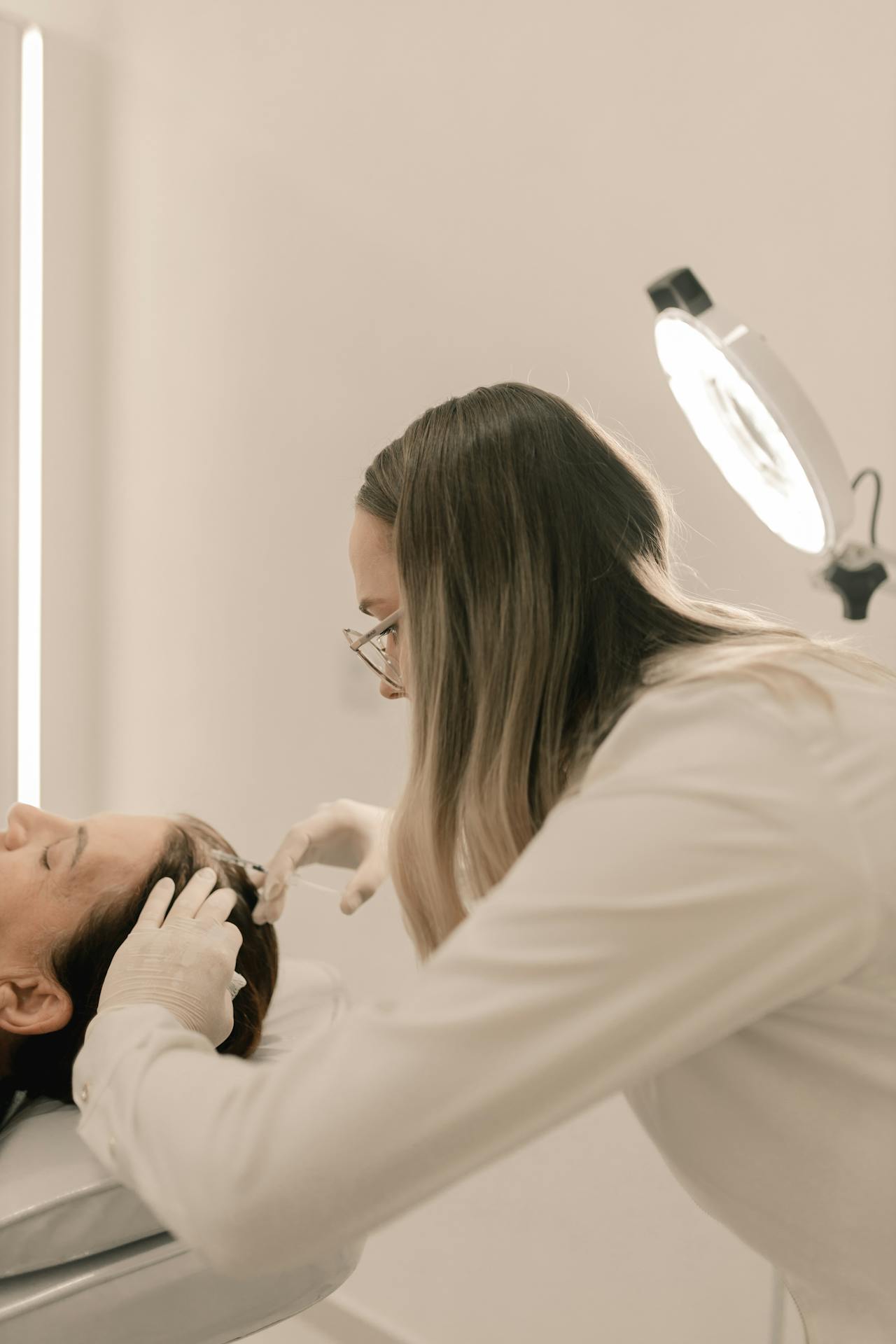
The Korea Health Industry Development Institute (KHIDI) 2023 Foreign Patient Recruitment Report confirms that approximately 606,000 foreign patients visited Korea for medical treatment in 2023, with dermatology and plastic surgery among the top categories. Importantly, 66.5% of the institutions treating foreign patients are small clinics (의원) — not hospitals — making clinic-level quality verification especially important for international patients.
The Korea Consumer Agency has also published advisories on cosmetic procedure complaints, noting that the majority of post-procedure complaints involve asymmetry, functional problems, and unsatisfactory outcomes — issues that often trace back to technique rather than the device itself.
The realistic comparison
When evaluating clinics, the comparison that matters is not "Clinic A is $800, Clinic B is $1,400." It is closer to:
- Clinic A (price-led): $800 base price + 7.7× higher complication risk + risk of unsatisfactory results + potential corrective procedure ($1,500–$3,500) + potential additional travel ($1,500–$3,000) + potential time off work
- Clinic B (specialist-led): $1,400 base price + published complication rate 7.7× lower + higher likelihood of getting the result you wanted on the first visit
The expected total cost of Clinic A is often higher than the expected total cost of Clinic B once you account for what actually happens to a meaningful percentage of patients.
How to evaluate a clinic before you book
- Verify board certification: Ask whether the doctor performing your treatment is a board-certified dermatologist (피부과전문의). You can verify specialist status through the Korean Dermatological Association's official clinic finder, which lists around 2,050 verified specialist clinics nationwide.
- Confirm who actually performs the procedure: Some clinics advertise specialist consultations but have nurses or non-specialist physicians perform the actual treatment. Ask directly: "Will the board-certified dermatologist personally perform the procedure?"
- Check device certifications: Reputable clinics use FDA or CE certified devices and can show maintenance records. Counterfeit and refurbished devices are a documented problem in some discount clinics.
- Read reviews critically: Look for reviews that describe outcomes 6+ months after treatment, not just the initial visit. Long-term satisfaction is a better signal than first impressions.
- Understand the consultation model: A doctor who recommends every available add-on regardless of your actual needs is often optimizing for revenue, not your outcome. The consultation should focus on what you need — and just as importantly, what you don't need.
The bottom line
The cheapest visible price is rarely the cheapest actual cost. For most international patients, choosing a board-certified dermatologist at a clinic with a documented track record costs less in the long run than choosing the lowest advertised price and hoping nothing goes wrong. When 9 out of 10 Korean skin clinics are operated by non-specialists, the price difference at a specialist-led clinic reflects training, experience, and accountability that directly affect your safety and your results.
Sources & references
- Korean Dermatological Association — 23rd Skin Health Day Press Conference (Sept 2025) — specialist vs non-specialist complication statistics (7.7×)
- Rossi AM, Wilson B, Hibler BP, Drake LA. "The Non-Physician Practice of Cosmetic Dermatology: A Patient and Physician Perspective of Outcomes and Adverse Events." Dermatologic Surgery. 2019 Apr;45(4):588–597. PMID: 30946699
- Korea Health Industry Development Institute (KHIDI) — 2023 Foreign Patient Recruitment Statistical Analysis Report
- Korea Consumer Agency — Cosmetic Surgery Complaint Advisory
- Korean Dermatological Association — Official Specialist Clinic Finder
- Dermatologic Laser Side Effects and Complications: Prevention and Management (2020 review)
- Complications and Risks of High-Intensity Focused Ultrasound (HIFU) in Esthetic Procedures: A Review. Applied Sciences 2025, 15(9):4958
Notice: The information in this article is for general educational purposes only and does not constitute medical advice. Individual treatment plans are determined through personal consultation with a board-certified dermatologist. Results may vary.
Related Procedures