
Ultherapy vs Shurink vs Thermage vs Density: An Honest Lifting Comparison
Ultrasound or radiofrequency? A board-certified Seoul dermatologist compares Ultherapy, Shurink, Thermage and Density by mechanism, depth and best candidate — and why combining often works best.
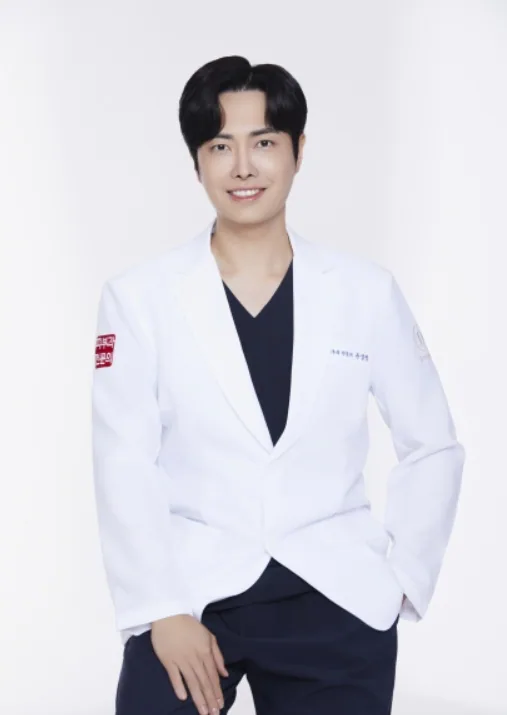
This is an English adaptation of a clinical article Dr. SangYoul Yun — board-certified dermatologist and Medical Director of Delight Dermatology in Gangnam, Seoul — originally published in Korean. Read the Korean original on Naver. It has been restructured and translated for international readers; all references are the author's own.
"Is Ultherapy really the best? Isn't Shurink the cheap one? And what even is Density?" People come to lifting consultations having done a lot of searching, and almost always ask this. Here is my answer up front: none of them is "the best" outright. They work by different principles and suit different skin and areas. So that you can choose by the real difference rather than the advertising, here is an honest comparison with the clinical evidence.
1. The biggest difference — ultrasound or radiofrequency?
The most important distinction is this. The four fall into two camps.
- Ultrasound (HIFU) camp — Ultherapy and Shurink: both use high-intensity focused ultrasound (HIFU). Ultrasound energy is focused to a point to create tiny thermal coagulation points deep in the skin, and as these heal, collagen regenerates.1 The key feature is that they reach the SMAS (fascia) layer — the very layer pulled in a surgical facelift. That is why HIFU is called "non-surgical lifting."1
- Radiofrequency (RF) camp — Thermage and Density: these use radiofrequency (RF). RF raises the dermal temperature to about 65°C to contract collagen and induce new collagen and elastin.2 If ultrasound goes deep as a "point," RF delivers heat broadly across the dermis as a "plane." So its strength is overall skin firmness and fine-line improvement rather than deep lifting.2
2. The difference by penetration depth
According to the research, penetration depths are as follows.3
| Feature | Ultherapy (HIFU) | Shurink (HIFU) | Thermage / Density (RF) |
|---|---|---|---|
| Energy | High-intensity focused ultrasound | High-intensity focused ultrasound | Radiofrequency (RF) |
| Penetration depth | 1.5 / 3.0 / 4.5 mm — precisely to the SMAS layer (4.5 mm) | 1.5–4.5 mm, adjusted by cartridge | Broadly across the dermis, about 1.5–4 mm |
| Feature | Treated while viewing real-time ultrasound imaging (MFU-V) | Same HIFU, but without image guidance | Heat delivered broadly across the dermis as a "plane" |
| Strength | Deep lifting (jawline, cheek sagging) | Reasonable cost, periodic maintenance | Overall firmness and fine lines, tone and texture |
The important point here is that Ultherapy's biggest differentiator is delivering energy at a precise depth while viewing inside the skin with real-time ultrasound imaging (visualization).4 Shurink is the same HIFU but is performed without image guidance.
3. So who does each one suit?
- Ultherapy (HIFU) suits: those wanting definite lifting of the jawline and cheek sagging, those wanting a non-surgical effect close to a facelift, and those for whom precision matters (real-time image guidance).
- Shurink (HIFU) suits: those who want to start HIFU lifting at a reasonable cost, and those who want to maintain results consistently over time.
- Thermage / Density (RF) suits: those whose concern is overall firmness and fine lines rather than deep sagging, those who also want to improve tone and texture, and those sensitive to pain (RF is relatively comfortable).
4. The more important point — combining works better
Here is the real key. Multiple studies consistently report that combining HIFU and RF is more effective than either alone.5 The reason is simple — they act on different layers.
- RF (Thermage / Density): collagen and elastin regeneration in the upper–mid dermis
- HIFU (Ultherapy / Shurink): lifting from the deep dermis to the SMAS layer
In other words, the two are not competitors but complements that fill different depths. So we often use combination protocols by patient status — "Ultherapy for the deep layer, Thermage to add surface firmness."
5. Side effects and precautions
All four are non-surgical and non-invasive with high safety, but there are points to know. Common to all: heat or stinging during the procedure (heat with RF, stinging with HIFU) and temporary redness and swelling (usually resolving within a few days).
- HIFU (Ultherapy / Shurink): at excessive energy, rarely, nerve irritation and temporary sensory changes are possible. A skilled specialist's control of depth and energy is very important.
- RF (Thermage / Density): with no target chromophore it is relatively safe, but poor technique can cause blisters or crusting.2
Lifting is a prime example of a procedure where the operator's skill, more than the device, decides the result. With the same Ultherapy or Thermage, the outcome changes greatly with who treats, at what depth, and how many shots.
6. How we approach lifting at Delight Dermatology
We look at the skin, not the device — first diagnosing the depth, location, and skin thickness of the sagging. We judge single vs combined (is one enough, or is combining better) and use real-time image guidance for precise-depth treatment to secure safety and accuracy. We explain honestly what non-surgical lifting can and cannot do, to set realistic expectations. We don't make exaggerations like "10 years younger in one session."
Bottom line: the key is not "which is best" but "what suits my sagging." Definite lifting → HIFU (Ultherapy / Shurink); overall firmness → RF (Thermage / Density); both → combination. The choice changes with your skin. Don't be swayed by device names — find what fits you after an accurate diagnosis.
References
- Fabi SG. Noninvasive skin tightening: focus on new ultrasound techniques. Clin Cosmet Investig Dermatol. 2015;8:47-52.
- Lolis MS, Goldberg DJ. Radiofrequency in cosmetic dermatology: a review. Dermatol Surg. 2012;38(11):1765-1776.
- Alhaddad M, Wu DC, Bolton J, et al. A Randomized, Split-Face, Evaluator-Blind Clinical Trial Comparing Monopolar Radiofrequency Versus Microfocused Ultrasound With Visualization for Lifting and Tightening of the Face and Upper Neck. Dermatol Surg. 2019;45(1):131-139.
- MFU-V Expert Consensus. Customized Treatment Using Microfocused Ultrasound with Visualization: A Pan-Asian Adaptation of the Gold Standard Consensus. J Clin Aesthet Dermatol. 2021.
- Combined HIFU and Monopolar RF Therapy for Skin Tightening: Retrospective Study. Malays J Med Sci. 2024.
Medical disclaimer. This article is general information and does not replace individual consultation. A procedure's suitability and its energy and depth settings should be decided after an in-person consultation with a dermatologist. The effect of non-surgical lifting varies with individual skin condition, and the result depends heavily on the operator's skill.
ご案内: この記事の情報は一般的な教育目的であり、医学的助言に代わるものではありません。個別の施術計画は皮膚科専門医の相談を通じて決定されます。
関連施術