
Repeat Masseter Botox: Timing, Upper Bulging and a Fading Effect
Planning another jaw Botox session? How long the effect lasted in studies, why the upper masseter can bulge, what weakens the response and what to ask.
本文目錄
Jaw Botox is rarely a one-off. The slimmer look wears off, so people who like the result come back, and by the third or fourth session the questions change. How soon is too soon? Why does the area just below the cheekbone look fuller than it used to? Why did the last session seem to do less?
For the jaw, Delight plans sessions about every four to six months, and the effect on a large muscle like the masseter takes two to three weeks to show. Studies agree the effect is temporary: in a trial that measured the muscle by ultrasound, it was thinner at one and three months and back in line with the untreated group by six. Booking sooner is not better. A 2025 review lists sessions less than three months apart, top-ups within three weeks of the first injection and higher total doses among the trigger factors for a response that fades, and a 2025 case report describes the upper part of the muscle bulging after two years of injections placed only in its lower part. Bring your treatment history to the consultation and ask where the toxin was placed last time.
What the trials and reviews say
Machado et al. (2026, J Plast Reconstr Aesthet Surg, PMID: 42379083) pooled five randomized, placebo-controlled trials with 536 participants. Compared with placebo, botulinum toxin type A improved masseter prominence scores at several follow-up points, made the muscle thinner and left people more satisfied. The authors also found substantial differences between the trials, described the benefit as short-term and concluded that the evidence cannot yet define an optimal dose or treatment protocol. Longer, standardized trials are still needed.
A 2025 review in Toxins by Ferrillo et al. (PMID: 39998108) comes to the same place from another direction: injections are the standard non-surgical treatment for an enlarged masseter, there is still no consensus on dose, and because the effect is temporary, treatment has to be repeated. The review also names habits linked to an enlarged masseter, including heavy gum chewing, clenching and teeth grinding.
How long the effect lasts
The clearest timeline comes from a small randomized trial by Taşdemir et al. (2025, J Oral Maxillofac Surg, PMID: 40935351). Its 48 participants had bruxism and an enlarged masseter, and the trial measured what matters here: masseter thickness on ultrasound at the start and at one, three and six months. At rest, the muscle was thinner at one month in the groups that had botulinum toxin, the difference held at three months, and by six months every group, the untreated one included, measured about the same.
The Ferrillo review puts the duration of effect reported in the literature at three to four months. On Delight's Botox page, the masseter is grouped with the calf as a body area that lasts longer than Botox for facial lines, with maintenance planned about every four to six months, and the clinic's 2024 article on Botox precautions gives two to three weeks before the effect on a large muscle shows.
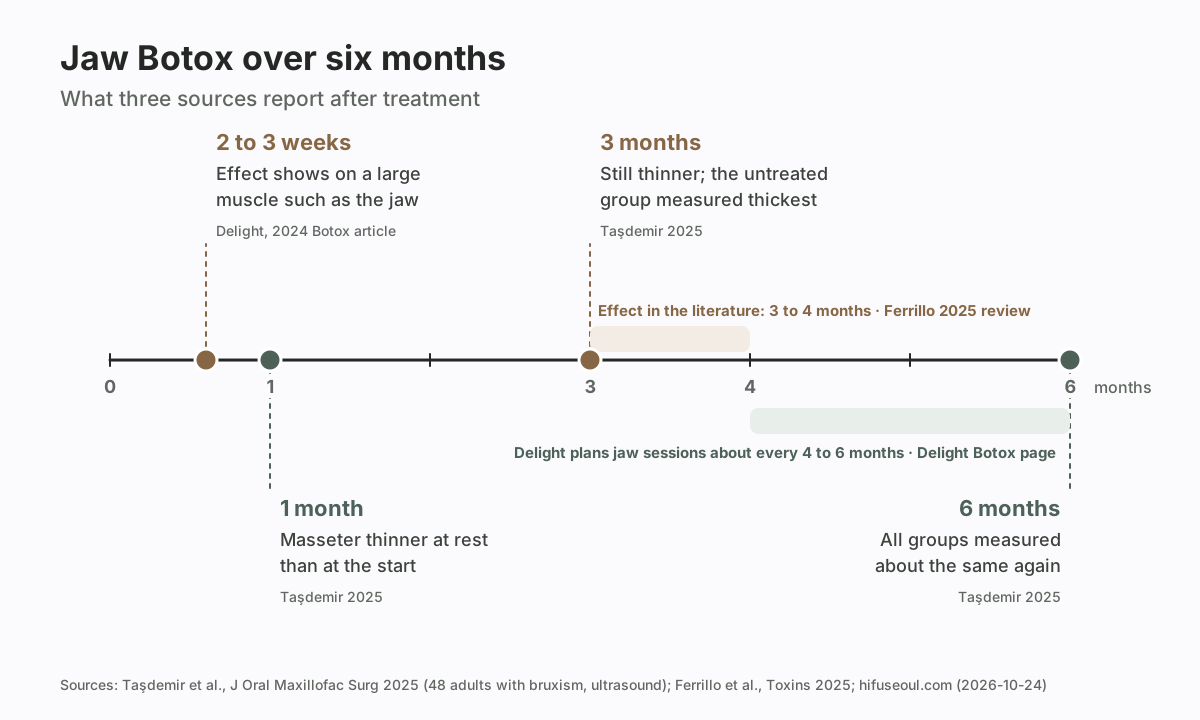
Two practical points follow. Judge a session after the effect has had time to show, not in the first week. And when the slimmer look starts to fade months later, that is the expected course rather than a sign that the toxin has stopped working for you.
When the upper part starts to bulge
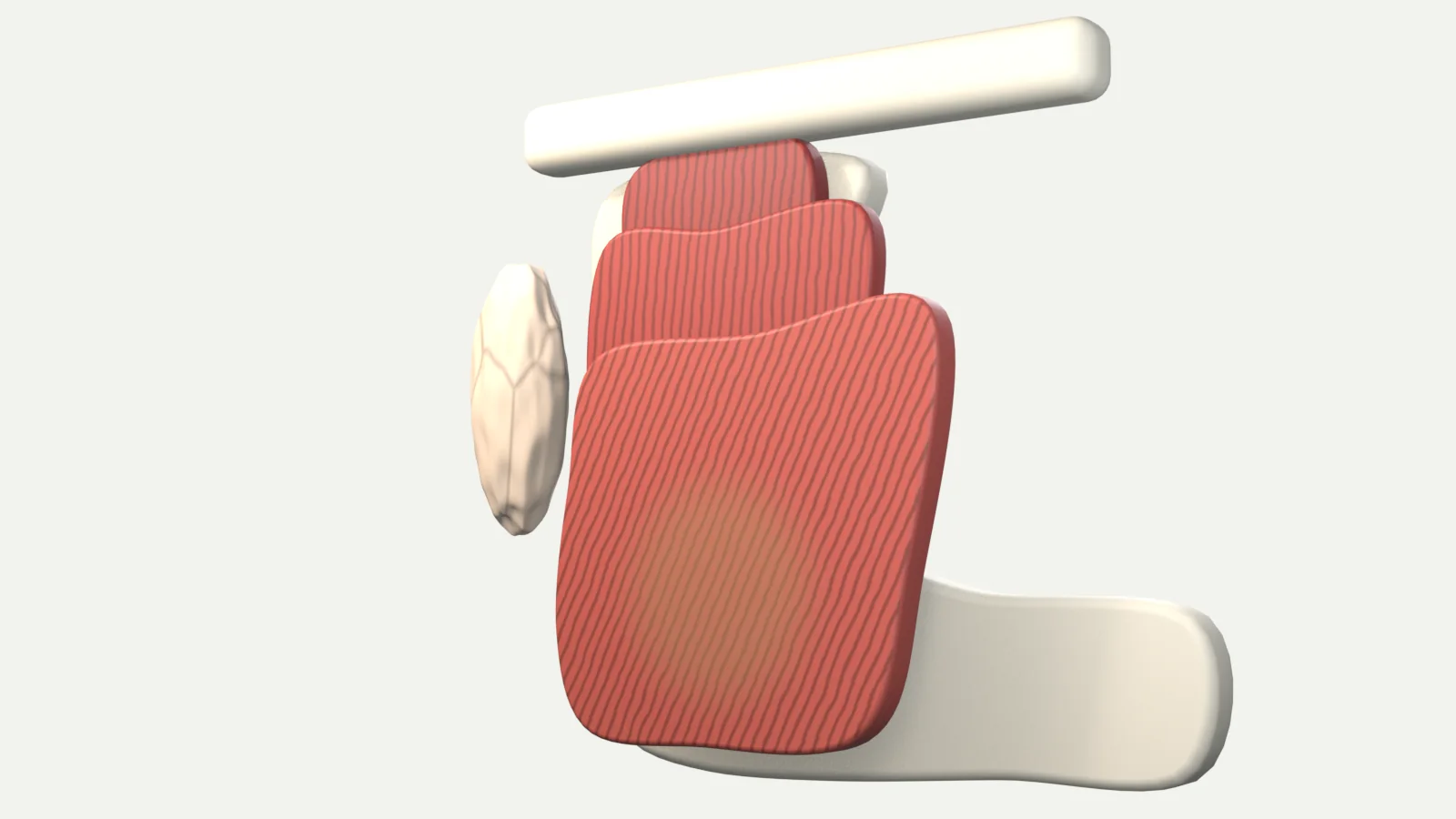
The masseter is not one block. It has three layers, superficial, middle and deep, each with its own attachments along the cheekbone arch and the jawbone. Injections for a square jaw usually go into the lower middle part, where the bulk is. Yi and Wan (2025, J Cosmet Dermatol, PMID: 40192955) described what they called compensatory masseteric bulging in a 34-year-old woman who had four sessions into the lower middle masseter, six months apart, over two years. The early sessions worked. Then the upper part of the muscle began to bulge and her jaw contour became uneven. On ultrasound, the upper part measured 12 mm and the repeatedly treated lower part 5 mm; after the upper part was treated, it measured 8 mm.
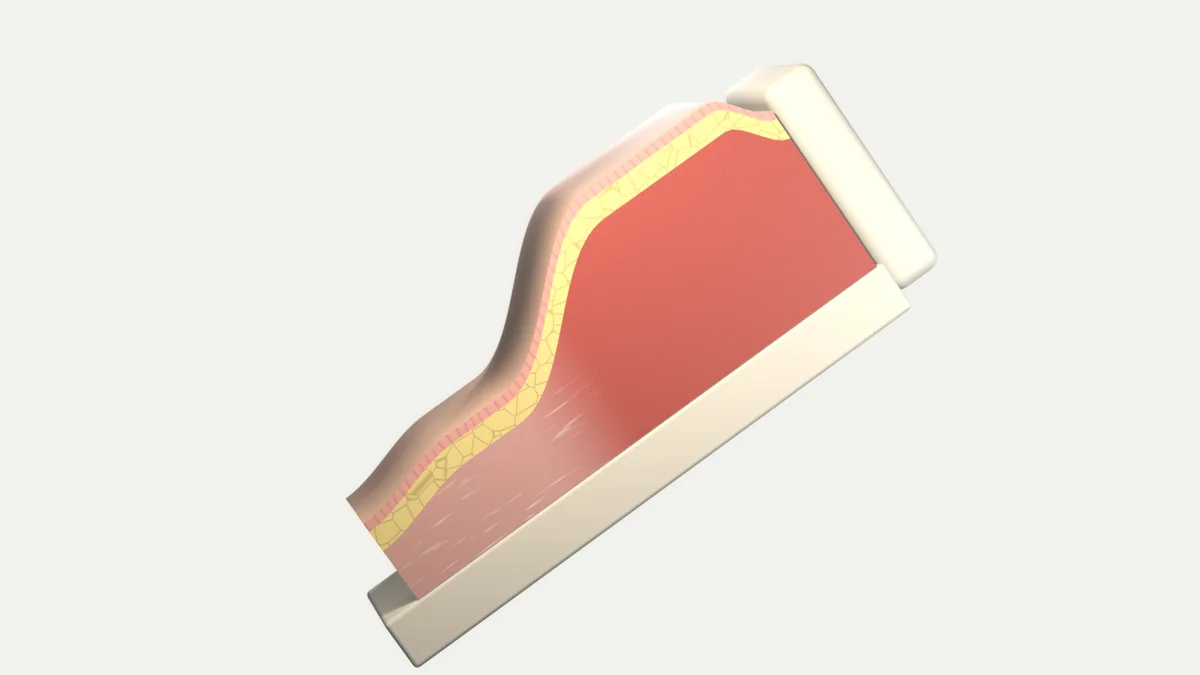
This is a single case, presented by its authors as a new observation. Their suggestions are to spread treatment across the upper, middle and lower muscle instead of only the lower part, to use ultrasound to see the layers, and to tell patients about the possibility before treatment. The Ferrillo review separately lists paradoxical bulging, a local bulge despite reduced muscle activity, as a rare complication linked to uneven spread of the toxin or to the tendon inside the masseter.
If you have had several sessions and the area under your cheekbone now looks fuller, say so at the consultation. A photo from before your first session makes the comparison easier.
When the effect seems weaker
A session that seems to do less than the last one can have several explanations. Kroumpouzos and Silikovich (2025, JMIR Dermatol, PMID: 40273416) define secondary nonresponse as botulinum toxin that worked at first and stopped working later, and note that data on how often it happens in aesthetic treatment are limited. The trigger factors they list fall into two groups. One is how the toxin is handled and injected, impurities such as complexing proteins in the formulation, infection and the patient's own characteristics. The other is the treatment pattern: sessions less than three months apart, higher cumulative doses, higher doses per session and top-ups within three weeks of the first injection.
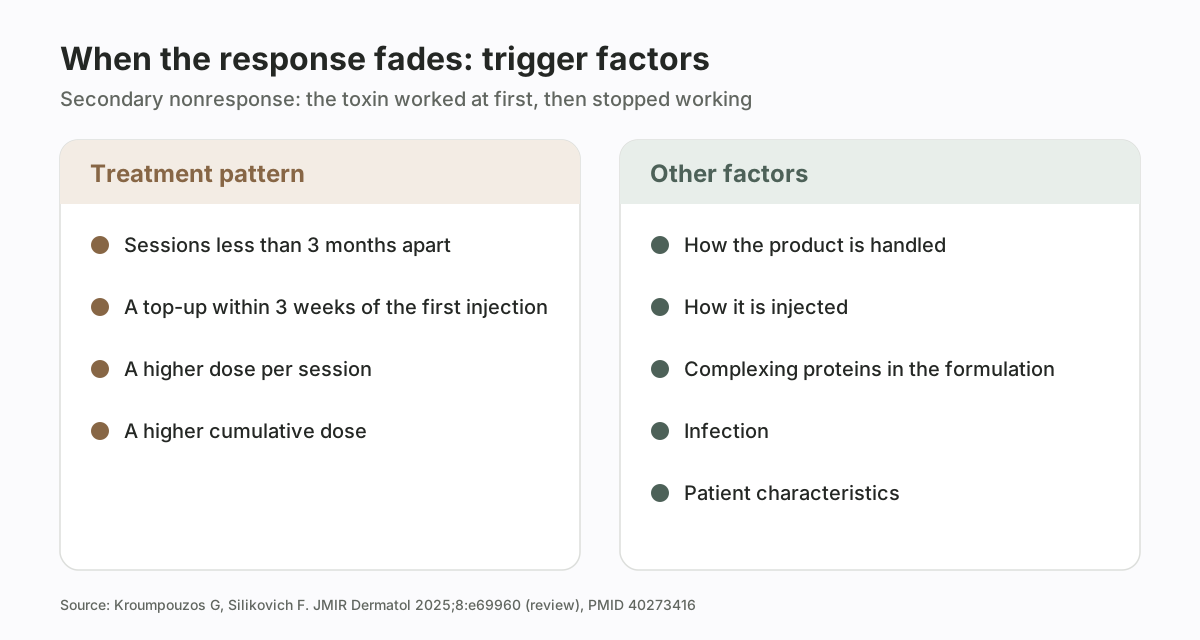
Because solid data on treating nonresponse are lacking, their advice is to keep these factors low, and they note that switching to a formulation without complexing proteins has been advocated once it develops. For immune responses to repeat treatment, the Ferrillo review makes the same point: smaller cumulative doses and longer intervals. It adds that injections repeated at shorter intervals can impair chewing and leave a lasting loss of muscle thickness, and that animal studies point to effects on the jawbone while clinical evidence is still insufficient for a conclusion, so it advises caution with prolonged or high-dose use.
Which product your quote names matters for this conversation. Delight's Botox page asks you to confirm the exact product, treatment area, dose and price basis in your quote before treatment.
Side effects to weigh before booking again
In the Ferrillo review, up to half of patients may have an adverse event, mostly mild and gone within one to two months: pain at the injection site, temporary chewing weakness, bruising (2.5%) and a less symmetric smile when the toxin reaches nearby smile muscles. Sagging along the jaw after rapid muscle loss was reported in 0.2% to 2.3% of patients, more often in older patients or those with thinner skin. Delight checks for a history of jaw joint (TMJ) problems before masseter treatment, and its 2024 article advises care with gum and hard foods afterward.
Price and what the quote should show
Delight's price list has one row for the jaw, salivary glands and temporalis: KRW 50,000 to 350,000 per session, with the brand varying. The final amount follows the examination, and in-person consultation and MetaView photography are separate paid items. Before you agree to a quote, check that it shows:
- the product name, so you can compare it with your last session;
- the area, including whether both sides are treated;
- the amount and the price basis, per session;
- any additional fees and how long the quote is valid.
Questions to bring to the consultation
- How long has it been since my last session, and does that fit the four-to-six-month plan for the jaw?
- Where was the toxin placed last time: only in the lower part, or across the muscle?
- What is the fuller area under my cheekbone, and is it muscle?
- If the last session seemed weaker, what else could explain it before anything changes?
- Could clenching or grinding at night be part of the picture?
To plan a session around a visit to Seoul, send your dates and treatment history through the consultation form.
Questions readers ask
How often can I get masseter Botox?
Delight plans jaw sessions about every four to six months. A 2025 review lists sessions less than three months apart among the trigger factors for a response that fades.
How long does masseter Botox last?
The effect takes two to three weeks to show on a large muscle like the masseter. In an ultrasound trial in adults with bruxism, the muscle was thinner at one and three months and similar to the untreated group by six months, and a 2025 review puts the duration of effect reported in the literature at three to four months.
Why does the area under my cheekbone look fuller after jaw Botox?
A 2025 case report described the upper part of the masseter thickening after four sessions placed only in the lower part, and called it compensatory masseteric bulging. The authors suggest treating across the whole muscle. An examination shows whether the fullness is muscle.
Can I become resistant to Botox?
Secondary nonresponse, where the toxin works at first and stops working later, has been reported, but data on how often it happens in aesthetic treatment are limited. A 2025 review links it to short intervals, top-ups within three weeks, higher doses and formulation factors.
How much is masseter Botox at Delight?
Delight's price list shows KRW 50,000 to 350,000 per session for the jaw, salivary glands and temporalis, with the brand varying. The final amount follows the examination, and in-person consultation and MetaView photography are charged separately.
相關項目