
GLP-1 Hair Loss: Is It the Drug or the Weight Loss?
Hair shedding on GLP-1 drugs like Wegovy or Mounjaro is usually telogen effluvium from rapid weight loss, not follicle damage, and usually reversible.
The short answer first
If you started a GLP-1 medication, such as semaglutide (Wegovy, Ozempic), tirzepatide (Mounjaro, Zepbound), liraglutide, or dulaglutide, and noticed more hair in the shower drain a few months later, here is the honest, evidence-based summary: the shedding reported with these drugs is most often telogen effluvium, a temporary, diffuse shedding triggered by physiological stress. The current evidence points to rapid weight loss and reduced nutrient intake as the more likely driver rather than direct damage to the hair follicle by the drug itself. In most reported cases it is gradual to start, diffuse rather than patchy, and tends to recover over several months once the trigger settles. None of this is a guarantee for any individual, but it is what the published data, read carefully, actually supports.
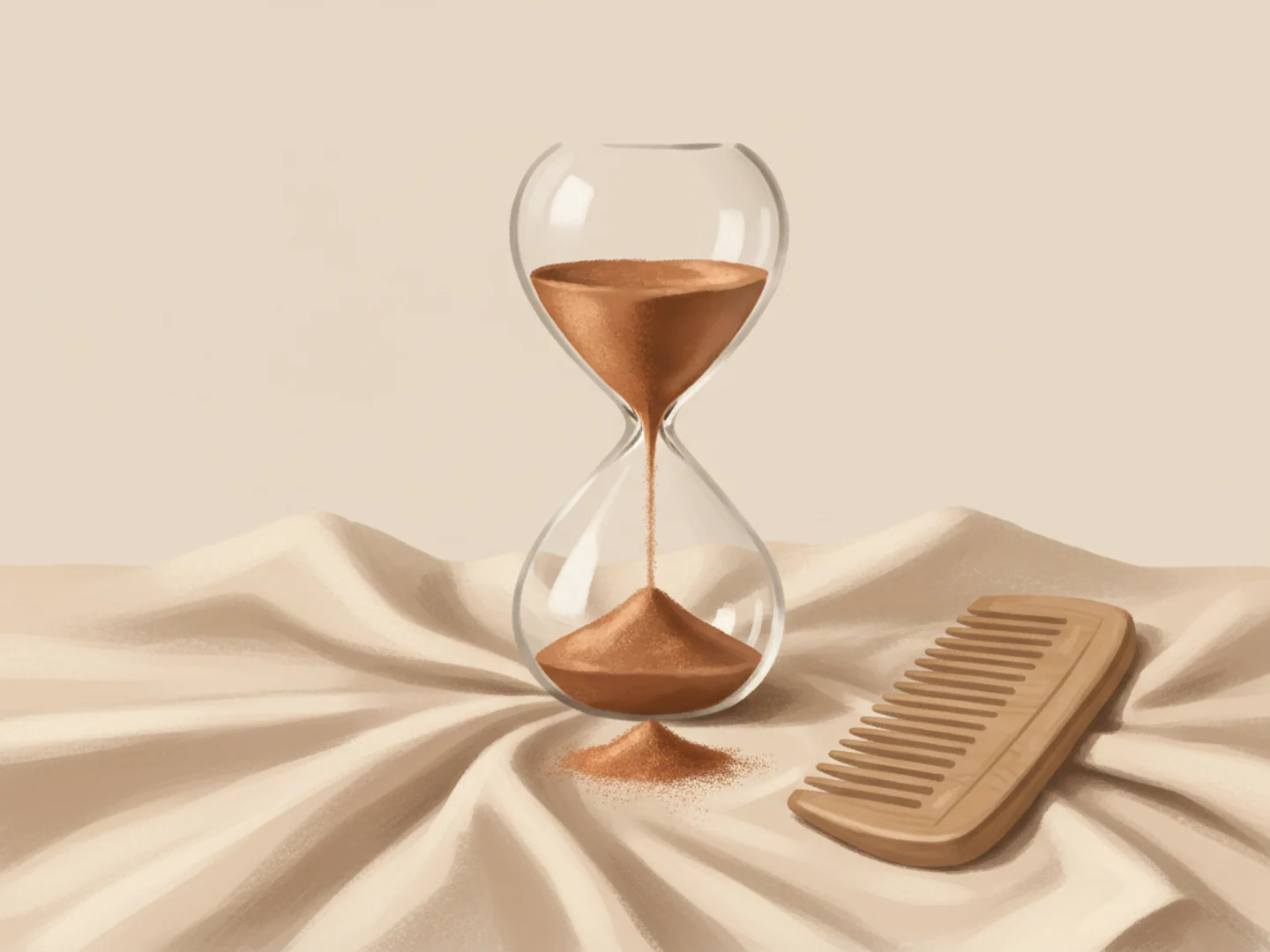
Why shedding shows up a few months after starting
Each hair follicle cycles between a growing phase (anagen) and a resting phase (telogen). Normally only a small fraction of follicles rest at once. A significant metabolic or physiological stress, such as rapid weight loss, sharply reduced calorie intake, illness, surgery, or childbirth, can push an unusually large share of follicles into telogen at the same time. Those hairs are shed roughly 2 to 3 months later, which is why people often notice it well after they started the medication and connect the two. This delayed, diffuse pattern is the classic signature of telogen effluvium, and it is the subtype most frequently described in the GLP-1 reports.
What the evidence actually says, and what it doesn't
A 2025 scoping review in Cureus synthesized the available studies on alopecia and GLP-1 receptor agonists. It found nine qualifying studies, identified telogen effluvium and androgenetic alopecia as the most frequently described subtypes, and noted more than 1,000 spontaneous reports in the U.S. FDA Adverse Event Reporting System (FAERS). Critically, the authors concluded that a causal relationship cannot be confirmed, and that most reports lacked dermatological diagnostic confirmation (Rojas Lopez et al., 2025, PMID 40951222, DOI).
A separate 2025 retrospective analysis in the Journal of Drugs in Dermatology reviewed cutaneous adverse events across GLP-1 agents in FAERS and found alopecia among the five most commonly reported skin reactions. Interestingly, it reported a higher rate of alopecia signals when the drugs were used for type 2 diabetes than for weight management, a finding that complicates any simple "the drug damages hair" story (Daniel et al., 2025, PMID 40196945, DOI).
The important caveat: FAERS and pharmacovigilance databases capture signals, not proven cause and effect. Anyone can file a report; reports are not dermatologically verified; and they cannot separate a drug effect from the effect of the rapid weight loss the drug produces. This is a genuine limitation.
Drug effect vs. rapid weight loss: why they're hard to untangle
GLP-1 medications produce substantial weight reduction. The SURMOUNT-1 program for tirzepatide reported mean weight reductions in the range of roughly 15–21% at higher doses over 72 weeks, with sustained reductions over a 176-week extension (Jastreboff et al., NEJM 2024, PMID 39536238, DOI). Weight loss of that magnitude and speed is itself one of the best-known triggers of telogen effluvium, independent of which method produced it: the same shedding is well documented after bariatric surgery and aggressive calorie restriction.
Reduced appetite is part of how these drugs work (a broader pharmacology review summarizes the mechanism and adverse-effect profile, Moore et al., Advances in Therapy 2022, PMID 36566341, DOI). Eating less can mean lower intake of protein, iron, zinc, and other nutrients the hair cycle depends on. So the practical picture is usually not "the molecule attacked your follicles" but "rapid weight change plus reduced nutrition stressed the hair cycle." That distinction matters because it points toward things that can actually help.
Limits and honest unknowns
- The evidence base is largely observational and pharmacovigilance-derived, useful for raising a signal, not for proving causation.
- Most reports were not confirmed by a dermatologist, so the true subtype mix is uncertain.
- It is currently not possible to fully separate a direct drug effect from the effect of rapid weight loss.
- Individual response varies; the patterns above describe tendencies in the literature, not predictions for any one person.
What can actually help
None of the following is a guaranteed fix, and hair concerns on a GLP-1 medication should be discussed with the prescribing physician and, where appropriate, a dermatologist. Reasonable, evidence-aligned steps include:
- Protect nutrition during weight loss: adequate protein and a balanced intake reduce one of the modifiable triggers. This is a conversation for your prescriber or a dietitian.
- Rule out other causes: thyroid dysfunction, iron deficiency, and other conditions cause similar shedding and are common in people losing weight. A simple work-up can clarify the picture.
- Allow time: telogen effluvium is typically self-limited and tends to improve over months once the trigger stabilizes. Hair regrowth is the usual course, though timelines differ.
- See a dermatologist if the shedding is patterned or persistent: diffuse shedding that does not settle, or shedding in a defined pattern, may reflect androgenetic alopecia being unmasked rather than simple telogen effluvium, and that distinction changes the plan.
At our clinic the role is diagnostic first: distinguishing telogen effluvium from other causes through history and examination, checking for contributing factors, and discussing whether watchful waiting or a hair-focused evaluation makes more sense. We do not position any single procedure as a cure for medication-associated shedding.
Key takeaways
- Hair shedding on GLP-1 drugs is most often telogen effluvium, the temporary stress-shedding type.
- The likely driver in current evidence is rapid weight loss and reduced nutrition, not proven follicle damage.
- Reports come mainly from pharmacovigilance data, a signal, not confirmed causation.
- It is usually reversible over months; persistent or patterned loss deserves a dermatologist's assessment.
FAQ
Will my hair grow back if I stay on the medication? Telogen effluvium is usually self-limited and tends to recover once the trigger (often rapid weight loss) stabilizes, even without stopping the drug. This is general information; your prescriber should guide any medication decision.
Should I stop my GLP-1 drug because of hair shedding? That is a decision only your prescribing physician can make, weighing the metabolic benefits against your concerns. Hair shedding alone is not, by itself, an established reason to stop. Do not change a prescription based on a blog article.
Can a clinic treatment reverse it? No procedure is established as a cure for medication- or weight-loss-associated shedding. The most useful first step is a proper diagnosis to confirm the type and rule out other causes such as thyroid or iron issues; the plan follows from that.
Reviewed by
Reviewed by Dr. SangYoul Yun: Board-Certified Dermatologist, AAD International Fellow (IFAAD). Last reviewed: 2026-05-30. Citations are anchored in PubMed and verified at publication. This article is general information and balanced by design; it does not promote a specific treatment.
Sources
- Rojas Lopez RF et al. Alopecia as an Emerging Adverse Effect Associated With GLP-1 Receptor Agonists: A Scoping Review. Cureus. 2025. PMID 40951222 · DOI
- Daniel S et al. A Retrospective Comparative Analysis of Cutaneous Adverse Reactions in GLP-1 Agonist Therapies. J Drugs Dermatol. 2025;24(4):413-415. PMID 40196945 · DOI
- Moore PW et al. GLP-1 Agonists for Weight Loss: Pharmacology and Clinical Implications. Adv Ther. 2022;40(3):723-742. PMID 36566341 · DOI
- Jastreboff AM et al. Tirzepatide for Obesity Treatment and Diabetes Prevention (SURMOUNT-1). N Engl J Med. 2024;392(10):958-971. PMID 39536238 · DOI
Disclaimer: This content is general information and not medical advice. Consult a qualified specialist before making any treatment or medication decision.
ملاحظة: المعلومات في هذا المقال للأغراض التعليمية العامة فقط ولا تحل محل الاستشارة الطبية.
علاجات ذات صلة